samedi, octobre 30, 2004

Inrocks hors-série sixties

Ca y est, il est sorti. Comme celui sur les trésors cachés du rock, il est pas épais parce qu'il y a un CD joint.
Pour les Stones, c'est Keith qui est interviewé par Kaganski en 94. Pas encore lu. Dialogue de sourds ?
Image Hosted by ImageShack.us

lundi, octobre 25, 2004

Mick Jagger Octobre 2004

Pêchée tout récemment dans le SFJ :
With Jagger's help, 'Alfie' making a comeback
October 17, 2004
BY CINDY PEARLMAN NEW YORK --
How does it feel ? A rock legend asked that question years ago and now Baby Boomers must revisit the inquiry. Specifically, how does it feel when the AARP starts sending that magazine? How does it feel when the gray hairs stage a mutiny and outnumber the darker ones ? And how does it feel when on a Saturday afternoon in SoHo, the guy in the Scholastic bookstore buying educational materials for his grandchildren is none other than Mick Jagger ? The lead singer of the Rolling Stones is 61 years old. When did this happen ? It's not like he's slowing down.
On another day in New York City at the Essex House, that randy rock 'n' roll twinkle remains in Jagger's eyes when he enters a hotel suite. Looking fit in a gray sweatshirt and jeans, he's athletic-looking, thanks to those marathon rock shows and daily swimming sessions. Despite a road map of facial lines, hints of a rebel remain.
"I can't handle the big questions today!" he says, feigning exhaustion. But he's not the least bit tired, just simply amused that his mere presence in a hotel means bodyguards in the hallways, publicists in large groups and second glances from every single woman in the vicinity. But he's not here to talk about being an icon -- more on that later. Jagger just released a critically acclaimed CD featuring the music from the upcoming film"Alfie." He sings several songs and was the soundtrack's producer, along with Dave Stewart. In November, a new double live CD set of Stones songs is due out in stores, plus a new Stones album is in the works. All of the above leave him with little time to be buying little train books for the grandkids, but that's fine with him."The key is to keep going. You never stop," says the man who is living thelyrics: "Start me up and I'll never stop."
Q. You recently wrote the music for the new film "Alfie," about a notoriousplayboy. Is this a topic you know well ? And how is the life of a rock star differentfrom the life of a playboy ?
A. First of all, there aren't any playboys anymore. They don't exist thesedays. It's rather sad, really. Our modern playboys just wrap themselves around treesin badly driven sports cars. I don't know what the difference is between a rock star and a playboy.
Q. So, you are not a playboy ?
A. I've always been a rather career-minded person and any vague resemblance of my life to a playboy's is merely coincidental.
Q. How did you link up with Dave Stewart to write the "Alfie" songs ?
A. One of the first things we ever did was a song for this movie "RuthlessPeople," which starred Bette Midler. We got paid lots of money, which we then spent on worthless consumer items. [Laughs] So it was easy to say yes again.
Q. What are the challenges ?
A. Doing a soundtrack, you don't have this complete freedom to write. You have to write a specific song around a specific character and enhance a specific scene. So it's very disciplined in that way. In a way it's kind of interesting because it'sanother form of writing. You have to get it right for the scene, which is ratherinteresting. And on top of that, there's a lot of craft that goes on. You have to look at other scenes and make these songs work in other scenes. For example, one of the lead songs on "Alfie" is "Old Habits Die Hard," which is a rather happy-go-lucky tune when you first hear it. But when you put it in another scene and slow it down and take out some instrumentation, it becomes a much more romantic or sadder tune than it initially appears. You need to fit the movie's mood.
Q. Was it different writing songs with Dave vs. Keith Richards ?
A. I write songs a lot with different people. I write a lot of stuff with Dave, I write a lot of stuff with Keith, and I write a lot of stuff on my own. There's hundreds of different ways of writing songs within that formula. I just spent two weekswriting songs with Keith and some are songs where I'm just there on my own and Keith walks in and plays the bass on what I've written. And some days it's the reverse, I go in and play the piano on something he's written. Dave and I are very concentrated and we're quite detailed. We force one another to finish everything. We like to do our work and get it done.
Q. The original movie "Alfie" with Michael Caine was such a hit in the1960s. Were you familiar with his world ?
A. To be honest, I saw the original movie "Alfie" at the time and I don't remember an awful lot about it, except that the character made Michael Caine a bigger star than he already was. But I know of the theme. The Alfie character is a guy that doesn't want to commit to a relationship. I think that's a character throughout the last 300-400 years in literary history that comes off again and again. He's a young guy who has lots of girlfriends before he realizes he has to settle down somehow with one of them.
Q. You've acted in and produced movies. What's the attraction ?
A. It's very exciting to get a good part. But it doesn't happen very often in my case.Some actors don't ever get good parts, so it's very competitive. There aremany good people out there who can sing, dance and act. There shouldn't be a greatdivision between these things. Some people get really annoyed if they specialize in one field and someone else moves into it. But I don't care. A lot of people in music can do all things to varying degrees of success. I don't see why not. I admire people who can do more than one thing.
Q. Will the Stones tour again ?
A. I don't know who's going be ready first -- [the new] Wembley Stadium or the Rolling Stones. Charlie's [Watts] a lot better. He's had all his treatments andhe's been pronounced sort of free and clear of everything, so we're very pleasedabout that. And Keith and I have been writing new material for the Stones' new albums. I don't know when the Stones will actually tour, but I suspect we'll do the album and then we'll do a tour.
Q. So how does it feel to get up onstage these days ? Is it the same thrill as when you were younger, hearing the roar of the crowd ?
A. It's still a wow. Of course, it's the same thrill. It's exactly the same thing. You get in front of an audience. It's a similar feeling to when I first started. when I get up now. You know, in a lot of ways, it's exactly the same. I don't think that the thrill or the excitement that drew you to it in the beginning is the same.But it's still a thrill.
Q. Can you define that thrill ?
A. It's about never really knowing what's going to happen. You never never know what the audience is going to be like. You never know how they're going to behave. You expect them to do certain things, but they don't always do that. You don't always do the same things that you've done the night before. I think that's what brings you into live playing and what makes live playing so interesting as opposed to being in the studio.

Gassian, suite

Bon, donc ce qui précède est un merveilleux bouquin à 38,11 euros "Photographies 1970-2001" où beaucoup de ceux qui portent ou portèrent guitare ou micros - mais pas que - dans le laps de temps en question figurent.

dimanche, octobre 24, 2004

Sir Claude Gassian

Image Hosted by ImageShack.us
Bouquin paru chez la Martinière, où le photographe égrène ses clichés rock qui n'en sont pas. Du grand grand art, cette faculté de capter l'artiste et ses fêlures, dans des moments particuliers, loin des regards parfois. Mick qui repasse, Keith dans quelque mauvais snack qu'on imagine dans le middle west profond, le regard vague et triste, ou complètement allumé dans cette photo qu'il repiquera sur son 45 t Run Rodolph run... Imaginez un mec comme Doisneau photographiant des rock stars, on en est pas loin, même regard, même humanité.

Inrocks hors-série

Ca, c'est un peu de teasing, deux numéros spéciaux
des Inrocks sur les 50 ans du rock.
Le premier, Trésors cachés du rock est pas top.
Mais le 2ème, spécial 70ies, merveille ô merveille !
Y'en a eu un sur les 80/90 (que je n'ai pas),
et on attend donc celui sur les SIXTIES,
où seront les Stones.
A suivre...


Image Hosted by ImageShack.us Image Hosted by ImageShack.us

Mojo 2004

Image Hosted by ImageShack.us

NME Originals

La machine à fantasmes est en couverture,
mais dedans Keith est interviewé lui aussi :
ça date de 74, c'est à Cheyne Walk
(pas encore vendue pour payer les frais d'
avocats), et il parle à Nick Kent.
Pas encore lue.
Numéro toujours en vente à ce jour.
Signaler leur très beau hors-série spécial
Stones années 60 avec plein de coupures
de presse de l'époque. Hélàs je l'ai filé à
quelqu'un et n'ai pu le retrouver ensuite en
vente...

Image Hosted by ImageShack.us

petite bête qui monte

Oooooopppssss.... les ayatollahs vont mugir (et alors ?!)
Dommage que Mojo ne fasse pas des éditions françaises
pour les numéros stoniens également.
Le marché du scarabée serait il plus porteur ?


Image Hosted by ImageShack.us

Mojo 2003

Ah celui-là, pour tout l'or du monde...

Image Hosted by ImageShack.us

Uncut 60 ans de Keith

Ils en parlent tous, ils prennent des pincettes,
mais ils disent quand même quelques vérités,
à l'anglaise, entre les lignes...

Image Hosted by ImageShack.us

Uncut 2002

Contient une belle et très longue interview du K
à la veille de la tournée US,
l'occasion de vérifier une nouvelle fois que la presse
musicale anglaise, c'est quelque chose !!!


Image Hosted by ImageShack.us

Mojo à 4 couv' (2002)

Special Keith edition, c'était la seule qui restait !!

Image Hosted by ImageShack.us

Stones News

Très beau numéro du fan club français des Stones,
tout entier consacré à Exile à l'occasion de la sortie
du bouquin de Tarlé.


Image Hosted by ImageShack.us

Inrocks 2002

Image Hosted by ImageShack.us

R&F 99

Image Hosted by ImageShack.us

se définissant comme le magazine des Stones (mais Monsieur Manoeuvre vous z'avez encore du boulot avant de savoir l'interviewer comme vos confrères anglo-saxons !)

Peellaert & Cohn

Image Hosted by ImageShack.us

Encore des images pieuses...

lundi, octobre 18, 2004

Tarlé...

... la seule qu'on s'autorisera à mettre ici...

Image Hosted by ImageShack.us

Des amygdales en or...

Image Hosted by ImageShack.us

Lucie de la Falaise & Marlon

Elle (1994)

Image Hosted by ImageShack.us

Quand Bill m'écrit...

Merci à Jean Mi pour cet autographe, merci aussi de lui avoir raconté l'anecdote du Little Red Rooster, et de m'avoir dit que ça l'avait fait rire...
Image Hosted by ImageShack.us

Anita - Marie Claire (1ère page only)

Image Hosted by ImageShack.us

dimanche, octobre 17, 2004

Best cover (1974)

En attendant de me décider à le mettre ici, au moins la couverture.
A venir aussi : Rolling Stone 71 & Guitar Player 76 (2 itw du K.).
Vu sur le site journaux collection, les vieux Rock'n Folk y sont (pas tous !) à des prix prohibitifs (45 euros ceux de 1970!!!).
On va regretter longtemps encore d'avoir jeté tout ça...


Image Hosted by ImageShack.us

STP cover (new US edition)

Bouquin disponible sur Amazon, sans, hélas, les photos centrales de l'édition française (objet rare et précieux !) :

Image Hosted by ImageShack.us

Liens divers

(en relation avec la musique :
presse, photos, …)


http://imageshack.us/index2.php
http://www.creemmagazine.com/
http://www.guitariste.com/forums/
http://www.guitarplayer.com/
http://www.guitarworld.com/
http://www.journaux-collection.com/
http://www.lesinrocks.com/
http://
www.lostsongs-and-otherblues.com/
http://www.mojo4music.com/
http://www.nme.co.uk/
http://www.nmeoriginals.com/
http://www.novaplanet.com/
http://www.picsearch.com/
http://
www.q4music.com/
http://www.rexfeatures.com/
http://www.rockcritics.com/index.html
http://www.rockhall.com/home/
http://www.rocknfolk.com/
http://www.rocksbackpages.com/index.html
http://www.sefronia.com
http://www.technikart.com/
http://www.uncut.net/
http://www.villagevoice.com/

Another blog

http://belzebuth.blogspot.com/

Paris & MJ - 2004 (4)


Et sinon... plus au sud... pour l'hiver...
www.mustique-island.com
chercher Stargroves

Paris & MJ - 2004 (3)


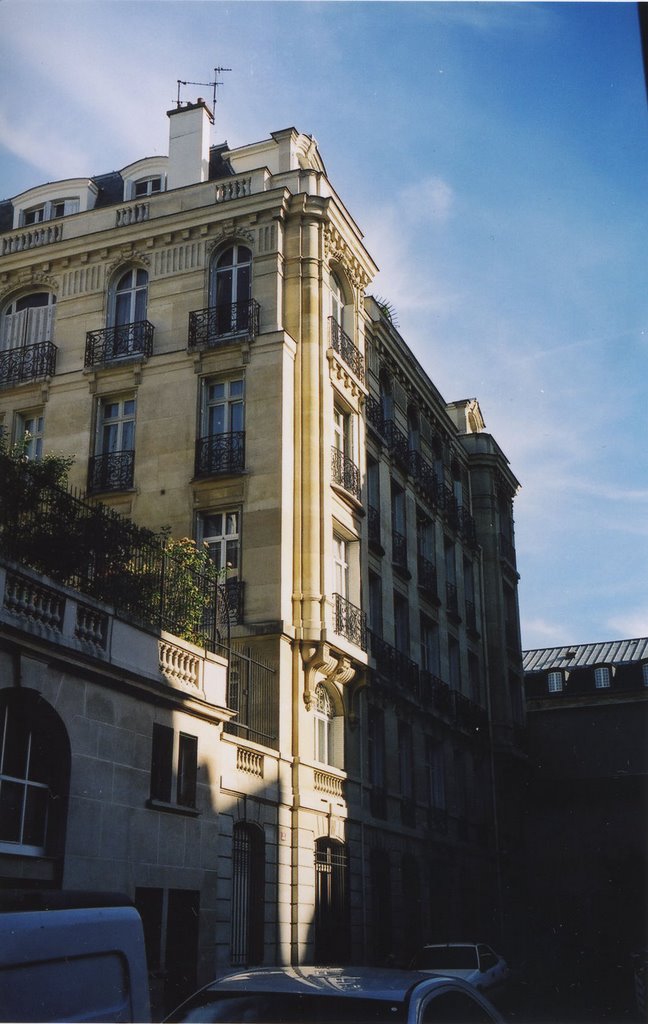
La rue ? L'étage ?
Ah non !

Paris & MJ - 2004 (2)


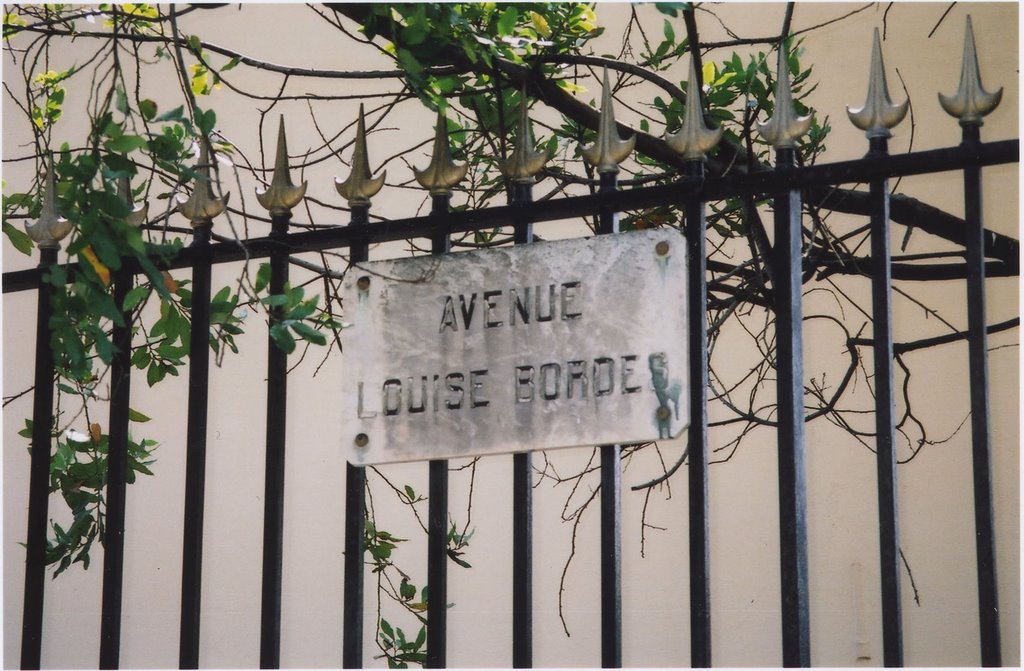
On approche, vers chez l'Idole, c'est sur la droite

Paris & MJ - 2004


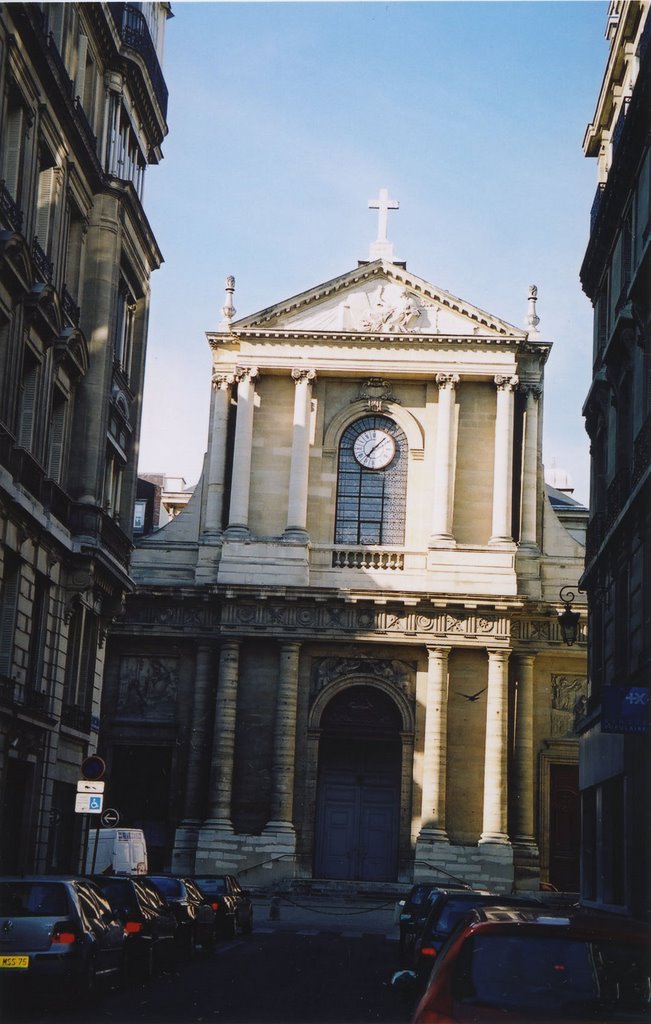
L'église qu'on voit là, et ses cloches bruyantes qu'on n'entend pas ici, sont causes de probables réveils matinaux de l'Idole...
Ora et labora, même chez les Stones.

Nellcôte 2003 (10)


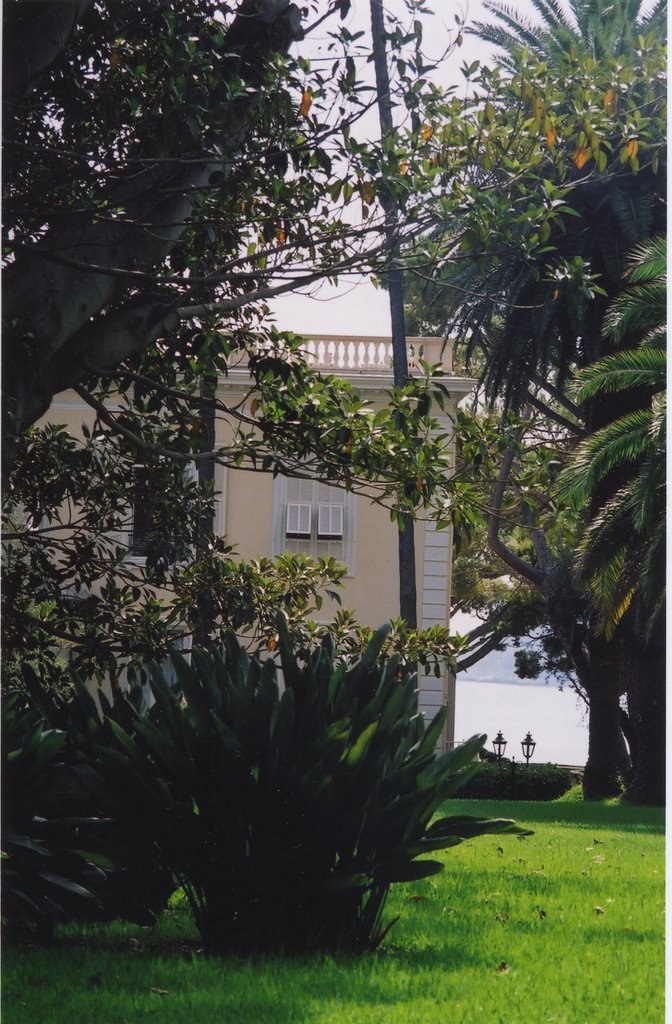
Vue depuis Nellcôte sur Villefranche :
& pour prolonger sur Nellcôte :
http://perso.club-internet.fr/iduneau/papawas2.html
http://www.darse.org/patrimoine/vill_055.html

Nellcôte 2003 (9)

Nellcôte 2003 (8)

Nellcôte 2003 (7)


Un bout de l'arbre monstrueux qui cache la maison...

Nellcôte 2003 (6)


Le portail, mal cadré (plein de bagnoles qui gênaient). Un type de l'EDF venait de sortir du domaine, espérons pour lui que le compteur était à la cave...

Nellcôte 2003 (5)


Domaine de Nellcôte, ça c'est juste la maison du gardien !

Nellcote 2003 (4)

Nellcote 2003 (3)

Nellcote 2003 (2)

Nellcote 2003

dimanche, octobre 10, 2004

Archéo (James Phelge)

No Stone Unturned
Author James Phelge provides a first-handlook at the early days of the Rolling Stones
by Chris Parcellin
Have you ever wondered what Keith Richards and Mick Jagger were like before the models, private jets and drug busts? Well, get ready, because your questions are about to be answered...in graphic detail. Just released in the United States Nankering with the Stones (originally titled Phelge's Stones ) chronicles the early, poverty-stricken days of Rolling Stones Keith Richards, Mick Jagger and Brian Jones---living in a small flat in London's Edith Grove section. The man who provides us with this window into the making of the legendary rock group is James Phelge. Phelge was a roommate and friend to the Stones in the early-'60s, and had a front row seat as they evolved from an unknown local band into international superstars. And Phelge proves to be more than up to the task of capturing the real people behind the public facade. His biting humor and incisive commentary show the Stones as three-dimensional human beings, as no other biography has. And his genuine fondest and respect for the band shows through at all times. D-FILED had the privilege of speaking to Phelge recently, and he did not disappoint.
How long did it take you to write Nankering with the Stones?
James Phelge: I suppose the real answer is thirty-five years, although physically, it was only three. There were lots of little myths and facts about the Stones that were getting out of perspective, or just being told totally wrong. I decided to write the book just to correct some things and also tell what actually happened. It became an evening job after I returned home from running my business. I did have 'off' periods though, where I did nothing for two or three months.
Was it something that you'd planned to do for a long time?
JP: I had thought about it occasionally over the years but it was really a part of my life that was extinct. I'm not a great believer in going back. You usually get disappointed
When you first heard the Stones---what did you think?
JP: I thought they were great. Maybe it was just that they were playing a different kind of music compared to the pop pap being put out at the time. And playing it good. Maybe it was because they were my age and part of my local scene. Whatever it was, they had an air of rebellion about them. Maybe we all did back then, and it was a mutual recognition among those visited the clubs on Stones nights. On the other hand maybe it was just the fact that it was cheap to get in.:-))
It seems like Bill Wyman didn't like you very much. What was his problem?
JP: Wyman is aware that they never wanted him the band from the start. One of the Stones office staff told me after Bill left the band that Wyman had himself said that it had stayed like that for thirty years. Although he was in the band, I still don't think he ever grasped or understood what the Stones were about. Maybe it was because he was boring......yawn.
It sounds like--from reading your book---that even in the early days, Keith was someone who'd never backdown from a fight. Did you see him get into many scraps?
JP: Not really. It is just that he would stand up for himself. He was never afraid to be outspoken. I could not imagine him giving way to someone if he thought he was right or had just been insulted. Sometimes people would find with Keith they'd bit off more than they could chew and backdown. Talk is cheap as they say...unless you're Marlon Brando, then it's about ten dollars a word. In Stanley Booth's book The True Adventures of the Rolling Stones he gives a brief overview (mostly from Keith's perspective) of the same era your book covers.
Did he have his facts straight?
JP: Dunno. I never read it. Nothing against his book but I have never read any Stones book. Never felt the need. Most of the people who write about them don't or won't ever really know them. Anyone from the outside is going to already be tarnished by the hype around band. They will never get to grips with the normality of the guys as ordinary people. They never knew them then of course.
Is the stuff about Jagger wandering around Edith Grove in a housecoat true? Do you think his sexuality was questionable---or was he just goofy?
JP: He had a womans nylon dressing gown he wore occasionally. I think he nicked it from one of the girls downstairs. His sexuality is not worth arguing over. Mick's been in the papers for 30 years with a different chick each week and the same before he was famous.
Where does this gay bit come in...? Do you think Brian Jones has gotten a bad rap over the years?
JP: There is no doubt that his memory has been maligned over the years. It's sad to still see that no one ever quotes anything nice about him. I don't mean just in terms of his music ability which would have grown over the years and moved with the progressive music, he was that capable. People always quote his drugs problem and the various kids etc. He could be difficult to deal with, sure, but so are many people. I can think of one or two others who have had a drug problem not to mention illegitimate kids. Should be easy to pick two names to go in that last sentence. Maybe the fact that Brian's memory won't die bugs some people.
Did success change those guys a lot?
JP: I can still see the original guys and their attitudes come through on occasion. They were bound to have changed in someways - maybe a few airs and graces with Jagger. As I said earlier, most people never knew them so would not know what to look for. They are expected to be entertainers now and that is what they do. They still have their original attitudes, if you know where to look. I sometimes see the fleeting looks that cross their faces when they're pissed off, although the mask only drops for second.
Has the book been a big success for you?
JP: Not as much as I would have liked. Distribution was the problem. Big book stores won't buy books anyway, they want them on consignment. Like, I wanna sponsor Barnes and Noble? Things have improved for me. The US rights have been sold to a Chicago publisher and the new American Edition came out April 1, 2000. It is now called Nankering with the Rolling Stones. Not my choice of title, but I guess it's better than Eating Shit with Keith, Maybe not tho'...
Where can fans order it?
JP: It is now available from any US bookstore, as well as Amazon.com. It is also now part of official Stones merchandising and will be available from their website soon. More details are on my website.
Any plans for a follow-up book?
JP: I'm working on a second, but nothing to add to that at the moment.
Have you heard any reaction to Nankering with the Stones from Keith or the other Stones?
JP: Not at all, apart from the fact Jane Rose rang after a year saying 'If I give Mick my house he won't sue.' Just kidding. She rang about it becoming official merchandise, so I guess it's okay. Wyman actually bought a copy while I was in America. I gave another copy to Keith personally, but he was on his way to gig. Knowing him, he probably lost it.
©2000 Chris Parcellin, All rights Reserved.

Long View Farm 1981

Jane Rose
"People think I get my way a lot more than I do," Keith continued." You don't know what it's like dealing with the people I have to deal with. If it wasn't for the music, I wouldn't be doing it.""Oh, Keith! Keith!" Jane Rose tends to shriek a bit when she talks. Her job is to take care of Mick Jagger and Keith Richards, and she's very protective of them. "Oh, I knew I'd find you in here, in this ice-cold control room, talking to Greg and listening to records." Keith hit the "mute" button on the console, lowering the volume level in the room. "Gil's his name," he said. "Gil, then. Listen, Keith-eee, we simply must begin to think about getting on our way. Greg, here — Gil, I mean — has those two pilots waiting inside that gorgeous airplane, and we simply can't keep them waiting, can we? You know what you have to do for tomorrow. There's the dentist again, and there's the Consulate, and there's Renaldo, in Rome, and we're way up here in goodness-knows-where. And I know Patti must get back to the city, too, mustn't you, dear, and I know ..." "We're not going anywhere," Keith said, returning the level of the studio monitors to full, undistorted blast. "We're not going anywhere," he said again, I think, judging from the way his lips moved. I smiled, having only moments ago taken Keith behind the moose head in the library with our two full glasses of Stolni' and orange juice. "You don't have to go anywhere tonight, Keith," I had said. "It just starts to get fun here after supper. You can hang out, listen to some records, fool around, anything you want. The place is yours." "Yeah," he muttered through a smile. "I don't have to go anywhere, do I?" "No, Keith," I said, "you don't." And he didn't go anywhere. Jane brought the word back outside to Alan, who was tired and just as happy to stay, and the pilots were released from any duty within Gil's gorgeous airplane. Keith stayed, and stayed largely inside the control room, playing and listening to music, for the better part of three days.
"Get Jane up," he said at one point. It's always dark in the control room, particularly when the black velvet curtains are pulled, and so it's difficult to tell what time it is, or whether it's night or day. I think it was about 5 AM. We had just gone through a half a dozen versions of Merle Haggard's "Sing Me Back Home," Keith singing and accompanying himself on the piano. "Tell her to get Woody on the phone, and Bobby Keys, too." "Keith," I asked, "do you know what time it is? I don't." "Doesn't matter. I never get a chance to do this. You don't understand. I suppose you think it's all fun being me. Listen, I never get a chance to sing by myself like this — play the piano — without some bastard weirding out and asking me why I wasn't playing the guitar, and looking mean. People have their ideas about me. I bet you didn't think I could play the piano, did you? Or sing classics from the thirties. Well, I can, and I want to talk to Woody. He'll love it here. Where's Jane?" "Upstairs, Keith, in the Crow." "I'll go, Keith," volunteered Patti Hansen, and she slithered out the door and up the staircase to the bedroom we call the Crow. Muffled female voices indicated that Jane had not been sleeping all that soundly, if at all, and that she had some reservations about calling Woody and Bobby Keys. "I know what you mean, Keith," I continued down below. "It's not all that great when you get what you want. Me, I've got a lot of things happening, but also a lot of screwed up relationships, like with my girlfriend, who's the mother of my kids."
"Me, too," Keith said, slapping his vest pocket and looking about for something he had obviously misplaced. "I did the same thing. Her name's Anita. Kid's Marlon." "Here's what you're looking for," I said. "Use the razor in the editing block." "People think I get my way a lot more than I do," Keith continued. "You don't know what it's like dealing with the people I have to deal with. If it wasn't for the music, I wouldn't be doing it." Sniff! "Let's do 'Dream' next, what d'ya think?" "Let's do it, Keith. Gimme a minute, though. I want to put some two-inch tape on the big machine for this one. Something I want to check on the machine first, too." "No hurry, man. No... hurry." Keith stretched out the "no's" until they wouldn't stretch any more, and addressed the mirror once again. Sniff! Patti Hansen leaned her full weight on the heavy studio door, opening it a crack and looking in on Keith and me. "Look at the two of you. I mean, I can't leave the room for a minute. I need to talk to you, Gil. Come here, will you?" "What's up, Patti?" I asked, a bit blinded once outside the door by the early morning light. "What's up?" "You've got to invent some excuse, Jane says. He may never leave here if you don't. You don't know Keith. He likes it here, too much maybe. But he's got to be in Rome before next Monday to get his visa fixed. Jane's worried. Can't you say something about the plane, or something? Really, Gil, he may not ever leave here, at all." Patti Hansen is a very beautiful woman, and it was clear that she was asking me to take action, too. Not just Jane. "Something about the plane?" I asked. "Like there's bad weather coming in, and we'd better make a move soon." "That would be great," Patti said, eyes flashing. "Not before the Everly Brothers' tune," I said, somewhat automatically. "He wants to do the Everly Brothers' tune, and he really should. That's next. Don't worry, Patti," I said. "He's really doing fine in there." "O.K., Gil, that's all great. But what do you think, I mean, what should I tell Jane?" "Tell her after the Everly Brothers' tune," I laughed. "O.K., Gil," Patti said, smiling. "You know, you're not bad for forty-one. That's how old you are, right?" "You read the article in the magazine in the plane?" "You put it there for us to read." "Yeah, I guess I did. Listen, don't worry about Keith. I'll get him out of here somehow. Just so long as it's not before we do the Everly Brothers' tune, O.K.?" "O.K.," Patti said.

Keith Richards
Keith looked up at the chimney, then back at me. I saw a gleam in his eye. We had this one.Keith ambled out of the airplane, legs stiff from the 45 minute trip from Teterboro. He smiled. Keith looked like warm, friendly leather. Soft eyes. "I'm Gil Markle, Keith. Welcome here." "Hey, yeah. Nice, man. Nice trip." "And I'm Alan Dunn, Gil. Sorry for the delay, but here we are." I was then introduced to Jane Rose, who was talking to Keith and looking at him while shaking my hand, to Alan's comely wife Maureen, and to a smiling Patti Hansen, who looked me right in the eyes. "Let's go," I said. "Black car, over there. " "We all going in one car?" Keith asked. "Yes," I said. "We'll all fit." I made a mental note to investigate the purchase of a second black Cadillac. (Except they didn't build big ones anymore.) We squeezed into the car. Keith, Patti, and Jane Rose in the back seat; Alan Dunn and his wife up front; me driving. "Car got a radio?" Keith shouted up. I flipped to WAAF, The Police; then to WBCN, an old J. Geils cut; then to some Hartford station, Jerry Lee Lewis. "Yeah," Keith erupted. "Yeah." I turned up the volume, and by the end of the tune, which was "Personality," we were gliding up Stoddard Road, past the Long View pond and rowboat, and up the long gravel drive. The Farmhouse glistened white, and the enormous barn glowed cherry red under a dark but very starry summer's night sky. There was a new moon. It was silent, except for the crickets. "Welcome to Long View, Keith," I said. "Yeah," Keith replied. "Nice place." We were scarcely inside the house, drinks ordered up but not yet in hand, when Alan Dunn motioned to me and took me aside, behind the fireplace. "Look," he said, "this has got to be quick tonight. I've got to be back in the city for a day's work tomorrow. So does Jane Rose. Keith's got to be in Rome before the weekend, and he's nowhere near ready to go. Just got evicted from his apartment, and there're a lot of loose ends to tie up. So give him a quick tour, and let's take a look at your plans for the loft. Don't get your hopes up. There's just not time for us to do much tonight." "Here's your wine, Alan," I said. "And here's a screwdriver for Keith. Where'd he go?" "Into the control room, I think. With Patti. Let's meet up in the loft in ten minutes, and you better call your pilots and tell them to be ready to depart Worcester for Teterboro at eleven, at the latest. Sorry it's got to be so rushed, but this was your idea, not mine." "Ten minutes, Alan, in the loft." It took us twenty minutes to get up there, not ten. Keith was in no hurry, and neither was I, if you want to know the truth. We hung out in the control room for a while, and I explained to him how we have tie lines between the two studios, and how we sometimes record over across the way, in the barn, but mix here in Control Room A. We then took a look at the bedrooms upstairs, the balcony overlooking our antique Steinway, and our collection of records. "You keep all your fifties in one place, too," he remarked with apparent relief. "Easier that way, isn't it? That cassette deck work?" "Sure does, Keith. What you got there?" "Bunch of stuff all mixed up. Starts with some Buddy Holly, I think." Keith slammed the cassette into the cassette deck, which hangs at eye level just as you enter the kitchen, and hit the "go" button. "Select tape two on the pre-amp," I shouted over to him, which he did. On came Buddy Holly, as expected. Keith turned it up, loud, very loud, until it began to distort the JBLs hanging overhead, then down just a notch. Maximum undistorted volume, that's called. He extended his glass to me, which now had only a bit of yellow left in it, way down at the bottom of the glass. He needed a refill. "Good idea," I said. "Then let's go across the way and I'll show you what we have in mind for the stage." "Yeah," Keith said. "Let's go over to the barn. Got to find Patti, though. Hold on a minute." Patti materialized, and we headed out, through the library, under the moosehead, past the fish tank, and out onto the driveway. "Look down there, Keith," I said. "Those lights down there are Stanley's, and he's our nearest neighbor. Farmer." "Hope he likes rock 'n' roll," Keith laughed. "He better by now," I said. "He's been hearing it from us for almost eight years now. Up these stairs here, and straight ahead." Alan Dunn and Jane Rose were waiting for us in the loft, and had already been briefed by Geoff Myers, who was talking in an animated fashion, and moving his arms in wide arcs. He was explaining how deep the stage was going to be, and how strong. Keith listened for a moment, then walked over to one of the massive support beams, and kicked it. He looked up, whistled softly through his teeth, and spun around slowly, on his heel. "Yeah," he said. "What's down there?" "Come on, I'll show you," and I scrambled down the rickety ladder into what we now call the Keith Richards bedroom suite. Keith followed, with Jane Rose telling him to be careful. "We don't really know how strong that thing is, now, do we? Gil, are you sure you need Keith down there? Why don't you just leave Keith up here and you can talk to us from down there. Keith, are you all right? Keith!" "Figured we'd do a bedroom and living area down here," I said. "Right beside the chimney here. A place for people to hang out during the rehearsals, but still be out of the way. Look up there. The stage will be on the level of those transverse beams. You'll be able to see the whole thing from down here. We'll build staircases, fix it up nice. Cassette deck will be over there; speakers hanging so, on either side of the chimney. Should sound good down here." Keith looked up at the chimney, then back at me. I saw a gleam in his eye. We had this one. Keith and I made our way back up the ladder, Keith first, much to Jane Rose's pleasure and relief. Geoff Myers was jumping up and down on the plank floor, trying to make it move. "See? And this is just one layer of two-inch pine on top of two-by-eights. Nothing compared to the strength of the stage, which will have three layers: beams of hemlock, pine sub-flooring, and oak finish. You could drive a truck up there and the floor wouldn't give a bit." And that's all Keith needed to hear. He walked up to Geoff, and gave him a friendly slap on the lapel with the back of his hand. "It won't bounce, right?" "No bounce, Keith." "We're coming, then. What a place I found!" "We're what?" Alan interrupted. "We're coming to this man's barn. Where's Mick now?" "India, Keith." "Let's go ring him. What a place I found!" "How's your screwdriver, Keith?" I asked. It was plainly down to its ice cubes, and needed refreshing. He looked at me, and at my screwdriver, which was still quite yellow, and full of Stolni'. I poured my glass into his; he laughed, and we walked back across the driveway to the Farmhouse. Keith and I were getting on just fine.

Charlie Watts
Charlie Watts turned, looked me straight in the eye, and lifted his glass of Tequila. "Think if I ever grew up I'd get out of rock 'n' roll, too," he said."Charlie Watts," I said. "What are you doing up this early in the morning?" It was 7 AM, and I was getting no sleep at all in the water bed in the Flat. I had been dreaming my nightmare, which had been recurrent for me now ever since the Rolling Stones arrived. Was always the same. Nancy, my sweetheart, making love to some other guy, yet smiling at me with her tender, enigmatic Mona Lisa smile — checks becoming ever more flushed — until I would end the dream and wake up terrified in the heaving, sloshing water bed, aware once again that it was the Rolling Stones playing upstairs on our new and gleaming sound stage, and that I had gotten my wish. I mean, that the Rolling Stones had come to Long View Farm. Charlie Watts was alone in the kitchen in the Farmhouse, looking out over the valley toward the east, and toward a sky which was now gray, streaked with orange, just a few moments after sunrise. "How'd the practice go last night, Charlie?" "Gil," he said, "let me look at you." Charlie was swaying slowly back and forth, seated on the wooden bench overlooking the front porch and the deep valley below. There were patches of mist in the low spots in the valley. "Let me look at you," Charlie continued. "I want you to tell me this one thing, Gil." "What, Charlie?" "What . . . and I want you to tell me the truth . . . what are you going to do, Gil, when . . . when . . . " "When what , Charlie?" "When you grow up, Gil. What are you going to do when you grow up?" Charlie said each word by itself. Distinctly, and without any consideration of count, or cadence. "Jesus, Charlie," I said. "I'm already forty-one." "Know that. Know that, Gil. Know that very well. But the question still remains, what, Gil, are you going to do, when you grow up ?" "Think about getting out of rock 'n' roll, for a start. I can now." I was amazed that I had said that. "Ha, ha! Watts spoke. Ha, ha. That's already a beginning my good man. A beginning for us to con-tem-plate, the two of us. Out of rock 'n' roll. Which way, Gil? Which way is out of rock 'n' roll? That way? Down past the riding ring? Ha! You really forty-one?" "I don't know, Charlie. Sometimes I lose track. That's what it says in the papers — in the articles. I guess that's how old I am." "Treated you easy so far, rock 'n' roll did. Unless you have an aging portrait upstairs in the attic. Ha! Knew someone like you once. Looked great, he did. Didn't show it all as much as me. And I've been showing it a bit. But was that bastard ever miserable! You miserable, Gil?" "Charlie," I said, "what kind of a thing is that to ask?"
"Aw, fuck," Charlie said. "Wasn't asking. Trying to say something. Trying to say something to you, Gil, who's just forty-one. Played drums all night, trying to say something in the morning. In Massachusetts. I don't know why they make such a fuss over us. Never did understand it. Still don't." "You're the Rolling Stones, Charlie. That's why." Charlie Watts turned, looked me straight in the eye, and lifted his glass of Tequila. "Think if I ever grew up I'd get out of rock 'n' roll, too," he said. He then rose unsteadily to his feet, acquired some stumbling momentum in the direction of the fireplace, the staircase, and his bedroom two flights above us, just across the hall from Mick's room. "G'night, Charlie," I shouted after him. "Nite, Gil," he said softly. "Nite, Gil."
Mick and Freedom
Mick's eyebrows arched. He's still holding his empty plate in one hand. I could see that this was going to have to be quick. Just time enough for the abridged version of my prepared speech.It was time for the Rolling Stones to leave Long View Farm. Their first really big show — the first of two back-to-back performances, and in front of 80,000 persons, was scheduled for Friday, in Philadelphia. So they would leave Long View on Thursday. It was now Monday, or Tuesday if I'm wrong. Dr. Rose, who's Jane Rose's father, and a semi-retired physician, had stopped by with his wife and had given vitamin B-12 shots to all the members of the band. That's a no-nonsense measure designed to eliminate the possibility of any sore throats, fevers, or other infectious diseases. It's almost impossible to get sick once you've had a shot of vitamin B-12. Billy Maykel, the local Svengali and chiropractor, had stopped by and had cracked all available backs. Mick requested the treatment, but once Billy was on the premises, his popularity spread like wildfire. Keith, once "cracked" and relieved of a bothersome shoulder pain, instructed Woody to "get cracked, too." Bill and Astrid came next. Patti Hansen officiated at the assembly-line back-crackings, which occurred downstairs in the barn, just outside the sauna. She "got cracked" herself, and immediately joined the ranks of the proselytizers and converted. The Rolling Stones thought Dr. Billy Maykel was a genius, and he's still prescribing adjustments and diet changes for them by mail. I "got cracked," too, over in the Flat, and was briefed by Maykel on the state of the spines of the members of the band. " Mick's the worst," Dr. Billy said, gravely. "Don't see how he can carry on, in the state he's in. Internal organs? I don't want to talk about it. He's better now, though. Three consecutive sets of adjustments I've put him through, and he's obviously improved. Now, Gil, breathe out. That's it. All the way out." "CRACK!" "Hmmm. Not doing too well yourself, if you want to know." "How so, Billy?" "Liver, Gil. I've been telling you this now for years. Liver." "Whaddaya mean, 'liver'?" I asked Dr. Billy Maykel. "You know, Gil. Without my telling you. You're also not doing the pressurepoint exercises either, like you've been told. There, get up. That should loosen you up for a while. Your fourth lumbar was way out. Not as far as Mick's though. His was practically out of joint. Keith, he had another problem altogether..." "Please, Billy, don't tell me things like that. They're all better now, though, you say?" "No problem. They'll perform in Philly, if that's what you're asking." That was good for me to hear. Didn't want it said that we'd sent the Rolling Stones out into the world in anything less than fighting shape. I thanked Billy, and made my way across the driveway to the Farmhouse, feeling particularly light on my feet. The cracking had been a good one. It was now suppertime, or just a bit later than that. Cracking of the back loosens up the mind, that's why I'm a fan of chiropractics. I was thinking particulary well, all of a sudden. Hallucinating for a start; then tying the rush down to earth, in the form of a determination — of an intention. Always works, that. If you start with an hallucination, and then focus, you're home-free-all. The thing will then happen. Some shrinks will charge you $250 per hour, and still not tell you that. Tonight, I intended to say goodbye to Mick Jagger. Mick and I had been circling around one another for almost two months now — keeping our distances, playing our roles, each very well. We had only good things to say about each other, but had never done so directly, to the other, one-on-one. That would have been superfluous, and possibly dangerous to boot. Mick Jagger wasn't a person for me; and I wasn't a person for Mick Jagger. We were instead two intelligent men caught up in rock 'n' roll, with clearly defined objectives. Mick figured temporarily on the horizon of my objectives; I figured temporarily on his. And that was fine with the two of us. All this aside, I still wanted to say goodbye to the man, and had been rehearsing my goodbye speech for at least a month now — tinkering with it, scrutinizing it for any remaining traces of ego, bombast, and bravado, and waiting for my moment. It was now very shortly to arrive. People were just getting up from the table, after an evening meal which must have been fish, since there was a profusion of empty wine bottles in evidence. White wines, from Bordeaux. I know. I selected most of the titles. A fire — large for the month of September — was raging in the fireplace. Keith would occasionally throw on a log. So would Woody, and Charlie Watts. One of them, at least, had done so. I rounded the corner by the fireplace, toward the table, just as Mick was rounding the fireplace, empty plate in hand, heading toward the dishwasher. It's a sign that guests are fully at home at Long View, and aware of what has to be done to keep the place running, when they take their empty plates back to the dishwasher. Mick was doing just that, which impressed me. Now was the time. He knew this, too, and we stopped, facing each other some six feet in front of the blazing fire. "So," I said, jauntily, "looks like you're on your way. Seems like you just got here." "Right, Gil," Mick said. "Very pleasant stay, I'd like you to know. Very pleasant." "Something I wanted you to know, Mick, on your way out. Something I've been meaning to say to you, for some time." Mick's eyebrows arched. He's still holding his empty plate in one hand. I could see that this was going to have to be quick. Just time enough for the abridged version of my prepared speech. "Thought you'd like to know that you've made me a free man. "People often say the opposite to you — I know that. Complain that the Rolling Stones captured them, dragged them along, imprisoned them in a series of events they couldn't control — burned them out. I've heard it all." Mick was now listening intently. "But you did the opposite for me, I want you to know. Finally, after years, I don't have to worry any longer about bringing a bigger and better band to Long View Farm. That cross is off my shoulders, once and for all. And that's a very liberating feeling, and I wanted you to take the credit for it. There's one man, at least, whom you've made free." "Very nice, Gil," Mick said. "A very nice thing to say." I believe Mick would have said more, had he known that this little ceremony was going to occur. We smiled at each other, we shook hands, and he continued on his way to the dishwasher. He was thinking about what I had just said as he slid his plate onto the counter. I could tell.

Woody
"Lemme tell you something. I've been in the band for years now. I never ate with them all before. All at one table, I mean. I never saw 'em all together over a bottle of wine before I came here."
Ron Wood, who's sometimes called "Ronnie," and at other times "Woody," is by far the friendliest member of the Rolling Stones. He will always say hello to you, for example — even go out of his way to do so. And he will address you using your first name, and in a manner which is always upbeat, happy, confident, and selfless. Selfless. Yes, that's exactly the word I wanted to use. Woody — who's a most talented guy — doesn't make you wrestle with this fact day in and day out. He seems interested in you, instead. He hangs out with fellow guitarist Keith Richards almost all the time. Keith beats on Woody, which is funny most of the time, and a concern to Woody's friends for the remainder of it. The door to the Game Room was closed, and I figured no one was in it, since it was 11:30 in the morning, so I burst through as though I owned the place, figuring I'd check things out a bit, and see if the Advent TV was working. Sometimes it did, sometimes it didn't. "Woody," I said. "Fancy meeting you here!" Woody was prowling around the pool table, taking an occasional shot. He'd not yet been to bed, as I could tell from the prowl, which was a touch unsteady. He relaxed his aim on the ball, which was teetering on the edge of falling into a pocket, straightened up, and smiled broadly. "Hi, Gil!" he said. Woody was genuinely happy to see me. "Howya doing?" he asked me. "O.K., Woody, I guess. You'd know the answer to that question better than me. I'm just hoping things are going well for you guys, and that we're doing a good job for you... " "You mean, you don't know already?" "Well, Ronnie, I've been staying out of sight, mainly — not jumping into the middle of things, you know?" "Gil. The band loves it here. Loves it here. Honored to be here, Gil. First time I heard talk like that from any of 'em."
"Lemme tell you something. I've been in the band for years now. I never ate with them all before. All at one table, I mean. I never saw 'em all together over a bottle of wine before I came here. Here, take this." Ron Wood passed me a large and healthy-looking cigarette. I can only assume it contained English tobacco and black hash. Then he grabbed a cube of blue chalk off the shelf, applied it to the business end of his cue stick, and continued his playful taking-of-shots at whichever ball seemed closest to him on the pool table. "Never happened under one roof before," Ronnie continued. "No problem if more than one roof is involved. Bill and Astrid, they'll disappear almost right away. Mick'll be up in his penthouse with his friends, and his telephone. Charlie not far away probably. Keith and me'll be messin' up in some dungeon downstairs letting out our energy. People in different places, usually. But under one roof? Never saw it before." BLAM! The door to the Game Room flew open, propelled by Keith Richards's right boot. It slammed against the wooden wall, and bounced back again, catching Keith on the elbow, and partially spilling the orange juice and vodka Keith was carrying in that hand. "Ronnie, that was yours. Always carry yours in my right hand." Keith gave the half-filled drink to Ronnie, slapping him on the back as he did, and causing him to spill even more of the screwdriver onto the cement floor. He spied me on the other side of the large TV couch — an infrequent visitor here in the Game Room. "Hey, Gil, whaddaya doin' here in the crypt?" "Just checking out that everything's working, Keith," I said lamely. Keith swings a leg up and over the couch. It lands right in the middle of the cushion. Keith steps up onto that leg. He's now standing in the middle of the couch on one foot, Advent video projector immediately to his right — three circles of blue, red, and green, shining cone-like through the air, and illuminating Keith Richards in three basic colors. Keith lands on the floor beside me, cat-like, and now on two feet. "Haven't seen you to talk to since the time before, when Patti and me were here." "I know. I've been concentrating on the gig. There's not been much time. I want to talk to you about that tape of yours, however. I haven't found time yet to do the edits. So how are we doing, Keith? I mean, the Farm and everything." "Yeah," Keith said. "Everything's fine, man. Just don't schedule any more 'a those meetings down here, or Ron and me'll revolt." Ronnie looked up, smiling over his cuestick.
"Meetings? You gotta be joking, Keith," I said. "You must be joking." "Wasn't much of a joke in here yesterday. A dozen of Mick's clothes designer friends in here watching videos on that damned wide-screen TV of yours. Who brought 'em down here anyway?" "I did. Keith," I confessed. "Yeah," Keith acknowledged. "Good thing you like rock 'n' roll, or Ronnie and me'd gang up on you." Ronnie had just got off a shot from the far end of the pool table which had miraculously put three balls into three different leather pockets. He smiled up at us once again. "Don't listen to him, Gil," he said.
A Typical Rehearsal
"Always a bit rough around the edges. You expect them to be." The band forges on, and starts "Hang Fire" all over again from the top.""Oh, they're playin' tonight, Gil. No doubt about it. Didn't last night, even though everybody was here and ready. Think it was Keith who just couldn't get it together. The night before it was because Mick didn't get back from New York. So that was two nights people were basically just lying around. They'll play tonight for sure." It's Jesse Henderson speaking, Long View Chief Engineer, standing up against the Dempster Dumpster in the shed, nursing a beer. He caught my attention as I walked past. It was now after supper for the "regular schedule" eaters and their guests, of whom there were many tonight. A Saturday night in mid-September. Kurt Loder from Rolling Stone magazine had arrived, hoping to get some material for his cover article on Keith Richards. Nancy Griffin, who wrote the copy for the eventual spread in Life magazine, was also there, demure, out of the way, and taking notes. Abe Brenner and Mark had just arrived. These were friends of Keith's, as best we could tell. It was rumored that Abe Brenner —who looks old enough to be Keith's father — had once gone to jail for Keith in some drug-related police action. We didn't ask too many questions about Abe Brenner and Mark, who didn't seem to sleep much — either of them — and who always seemed to arrive just minutes before the best parties began. They had somewhat sallow complexions and traveled via a different chartered airplane each time. "Yeah," Jesse repeated. "Gotta play tonight. Piano's tuned. Rhodes, too." "Space heater for Bill Wyman?" "That's up there, right beside his stool. He should have no bitches. Works great." "And overall, the place looks O.K. up there?" "Except for the butts on the floor. They won't listen to me, Gary and Chuch. They put 'em out on the floor on purpose. Their way of getting even, I suppose. Everyone else beats on them, they beat on the studio. Weird, but I can understand it." Gary and Chuch were roadies, and this was not the first time that they had worked for the Rolling Stones. They were in charge of all the gear — like the amps, and guitars, and the dozen or so packing cases full of assorted paraphernalia. They also functioned somewhat as court jesters whenever they were in presence of the band. They would do errands, roll joints, and — most important — absorb punishment otherwise meant for the band members themselves. Gary and Chuch would lose things that were somehow fated to be lost; it's either Gary or Chuch who would get his front tooth chipped on the corner of the pool table in the Game Room, not Keith Richards. A door swinging open unexpectedly would catch one of them square in the forehead, not Mick Jagger. Hangovers the morning after? Not the band members, as best we could tell. Gary and Chuch would suffer instead. They provided Karmic insulation, you would say, in addition to the usual services provided by professional road men. They rendered themselves up for poundings and punishment in service of the myth, and that's what they were really paid to do, if you ask me. And they put butts out on the inflammable wooden floor of Studio C — at one point almost prompting an ultimatum from me which would have been served up to Mick himself. Fortunately, this never had to occur. "Thought I'd hang out up there a bit tonight, Jesse," I said. "See how things are going." "Might as well, man. They won't kick you out. That's for sure." "I've been trying to set an example, Jesse. They don't need us up there, even though they say we're welcome. We're welcome, but we're not either, if you know what I mean." Jesse knew what I meant. He'd seen Long View staffers hustled quietly away by Jim Callahan or Bob Bender upon the raising of an eyebrow from Mick Jagger, and hadn't seen me up there very much at all. Oh, I'd take a tour through, once a night, but these were official visits only, not listening visits. As owner, I'd appear sometimes during the first few hours of the rehearsal, pass a remark or two in the company of lovely Patti Hansen, take an approving puff of the everpresent "joint a l'anglaise", dim the house lights a touch in evidence of Owner's Concern for Creative Environments, and then get the hell out of there. In a straight line, no detours, no dallying about, no mesmerization even .nh contemplated, much less acted out. I had to be the one to lead the charge in this whole area of professional self-image. We were doing this as paid "pros," and that left no room for any personal displays — affected or genuine. They didn't come here to see us, or hear our theories about their music, their personal lives, or whatever. Nor did they coome here to be friends with us. So enter, bow, depart; and don't get your feelings hurt if you fail to establish eye contact with all five members of the band. It was a bit earlier than usual that night, when they started playing. Patti Hansen had appeared in the kitchen about 10 PM, willow-thin and a touch wan, wearing only a robe. "Keith's up," she said to John Farrell. "Wants his breakfast." "Usual?" "Usual," Patti said, and John disappeared into the pantry for some raw hamburger and for the potatoes to make the home fries, and for the bottle of H. P. sauce. Patti would bus the completed "breakfast" over on a tray. She didn't mind; it gave her something to do "in the morning."
An hour later, Keith was up on the stage — wire-haired, crazed looking, and full of Long View protein. He stands still as Gary slings one of a dozen or so guitars around his shoulders, which are bare, and rippling with muscle tone. The guitar settles down and hangs low — as low as Keith can reach with his long arms. Keith slices across the metal strings with a guitar pick, and a massive, barn-rattling "SPRONG" issues forth from the Cerwin-Vega monitors. "SPRONG . . ." Keith goes again. That "SPRONG" was in the key of "A", I thought, which made sense, since "Hang Fire" was the first tune on the top of tonight's "list." Mick's list, I mean. He kept it over on the packing case behind the piano, and he referred to it constantly during the night. Mick was very organized, and was writing things down all the time. It's unusual to see people "write things down" in rock 'n' roll. Practically unheard of. We "feel" in rock 'n' roll, and don't need to think. Keith's ready, and the band lurches into "Hang Fire" — little Jade's favorite tune off the new album. The barn sounds great. Loud. Wooden. Almost cathedrallike. There's natural "slap" on the snare drum — echo from the far wall — and it sounds just like the "slap" engineers labor to synthesize in the studio, using delay lines. About a third of a second. House lights are off; only spots illuminate the stage. Red night lights — the sort that glow in the cockpits of bombers and supersonic jets — shine warmly over each of the Rolling Stones packing cases beneath the stage. Some of these cases are open with their drawers slid out —others half open, guitar cords snarled inside — others closed, but with a visitor sitting on top, fidgeting, looking about, and trying to stay out of the way. You'd find your reporters on top of these cases — those few who, after cooling their heels for as long as a week in Sturbridge, were finally allowed in.
Back to "Hang Fire." The harmony "doo-doops" sound terrible; and everyone in the band knows it. They stop playing, and Mick, Ronnie, and Keith try to figure out who's going to sing what. It's easier in the studio, where you can overdub voices, taking them one at a time if you want. Live, it's much more difficult. The three of them reach a consensus. Now they sound better, but not really great. "Always a bit rough around the edges — the Rolling Stones," to repeat what Keith Richards said later that night to Kurt Loder — the writer from New York City. "Always a bit rough around the edges. You expect them to be." The band forges on, and starts "Hang Fire" all over again from the top. "Here, Gil. Do you want some of this?" It's Patti Hansen who has materialized at my side, out of the shadows and the thunder, and she's extending a large cigarette to me which is quite lit, and giving off lots of smoke. She's holding her breath, about to exhale. "Don't mind if I do, Patti," I said, taking the joint from her. I see Gary the roadie only a few feet away, dusting specks of tobacco off the top of the packing case. He winks at me, and gives me the "thumbs up" signal. He had created this cigarette only moments ago, and he was proud of it. We'd get to smoke it for a minute or two — to "warm it up," as it were. Then, upon a signal from the stage, Gary would snatch it away, run with it up the stairs, and feed it to Keith, on whose lower lip the thing would dangle, through several re-lightings, until it was all gone except for the cardboard mouthpiece. This cigarette was not ours forever. So I took another toke. "You ready to give all this up for the movies, Patti?" I asked. Patti was going to be in a movie soon, and there was some question as to how much time she could be on the road, with the band. "I don't think about it," Patti said. "It is great, though. I know what you mean. I've never seen them play this way before. Never. They actually seem to be enjoying it." "Here," I said. "Do some more of this." Suddenly, Jane Rose appears out of the darkness with a screech. "Hi, every-body. Well, don't the two of you look comfortable there. I was wondering where you ran off to, Patti. Here, Gil. Come here, please. I want you to meet someone." I get to my feet, and am given to meet Lisa Robinson — noted rock 'n' roll gossip columnist. I say hi to Lisa, and we chat for a second as best we can with "Hang Fire" playing live, just twenty feet in front of us. Behind her, moving quietly along the wall, are two Japanese photographers. A satellite tracking lens has been adapted to fit a standard Nikon, and brought all the way from Tokyo by these gentlemen. It's set up behind us, shooting over our heads toward stage center. A third, small Japanese gentleman is fussing with it, tinkering, and staring into the viewfinder. Pictures of Mick Jagger for an All Nippon Rock Extra. Printed on glossy paper and sold in millions of copies in Japan. Kurt Loder from Rolling Stone magazine is down by the fireplace, banging loudly in time to the music on our antique oak table. Nancy Griffin from Life is sitting on a packing case, legs crossed at the ankles, wondering how to package what she's seeing for Middle America. A new gaggle of visitors appears in the doorway of Studio B. They nod respectfully toward the stage, and disseminate themselves in ones and twos along the walls — timid, silent, and awed by the dimensions of the room, the loudness of the sound and the spectacle before their eyes — the Rolling Stones, live.
Suddenly the lights come on, the music stops abruptly, and at least two dozen reporters, photographers, fashion designers, free-lance writers and other assorted Stones watchers freeze in their tracks — checking nervously over their shoulders in the direction of the stage. As well they should. Mick is not pleased; that much is clear. His eyes run over the faces in attendance — the writers, the reporters, the gentlemen from Japan — and his scowl deepens. He puts down his wireless microphone, and walks in careful measured steps down the beamed staircase, around the oversized packing case at the foot of the stairs, through the door to Studio B, and out into the night. It's break time.

Say it all together (RS - 1997)

Ah les interviews de Rolling Stone ! On se croirait presque revenu aux temps où la barrière infranchissable avec eux n'existait pas. Enfin, Jagger est sur ses gardes, faut pas pousser.
Du Ron, du Charlie, du Jag, et du Keith, séparément mais tous.
___________
Notes from the Babylon Bar
On the road with the Rolling Stones

Backstage, on the second night of the Rolling Stones' Bridges to Babylon tour, most of the world that will cosset and comfort them over the next year is up and running -- a world that is serviced by at least six chefs, including a dedicated dessert chef, and that allows two full-time tour employees to have their job listed in the tour program as Backstage Ambience. In the area known as Bar Babylon, I float on the edge of a conversation with some non-performing Rolling Stones insiders. The hot topics of conversation: the best face creams, the rise of Krispy Kreme donuts. Over on the other side of the room, Keith Richards greets the visiting blues wives (Muddy Waters', Willie Dixon's). Keith's father, Bert, wanders by, smoking a pipe, talking about the twenty lengths he swims each day. Ronnie Wood has some glitter on his face, which he excuses as (a) "posh cocaine" and (b) a side product of all the women he has to greet. "Where's wardrobe?" he asks. "And why am I asking now? We've already done one show...."
Keith Richards is scooping ice into a glass with his right hand when we are introduced. My first moment with him. Warm pirate grin; ice-cold handshake.
These shows start with a bendy, overexcited, unanchored "Satisfaction." Each Rolling Stone easily slips back into role. On Mick Jagger's face, there's the determination and the scowling effort and, when it's going well, that swagger.
He shimmies and contorts himself in a flurry of hyperactivity, always as though he is trying to prove something. Charlie Watts has that slightly bemused, patient look, his head turned slightly to one side, half-smiling: It's silly, really, isn't it? Ron Wood assumes his customary jack-the-lad demeanor. Whenever a camera for the overhead screen comes close, he displays his casual repertoire of daftness: the stuck-out tongue, the stupid face. As for Keith Richards . . . anyone who is cynical about the Rolling Stones' motives in touring the world once more -- as plenty, quite reasonably, are -- would struggle to explain Richards' exploding grin, at once childlike and old-man wise, stuffed with delight and reverie.
This is the Bridges to Babylon tour. Except . . . well, I'll let Mick Jagger explain it. "We haven't got a fucking bridge yet," he pouts. It won't arrive until ten days into the tour. "I ordered it," he laughs. He says it's like decorating your flat: Everything's supposed to be ready for a party on Friday, but when Friday comes, there are no curtains.
"And," he repeats, "there's no fucking bridge."
What's the worst part of getting old?
Ronnie Wood: When your ankles start to change color [lifts up an ankle and shows off discolored blotches]. It's not serious. It's probably just broken veins. I still feel like I'm twenty-three. My kids are, like, "You're so old." That's the hardest thing about old, when the kids kind of rub it in.
Mick Jagger: I suppose you do think about the time that's allotted to you more than when you were younger. The mortality thing obviously has a stronger pull for you. It's an imminent truth; it's not necessarily a bad thing. You realize -- much earlier than my age now -- that you won't be able to play for England's football team, just to take a really crass example. So you can't have that life again. Unless you believe in reincarnation or whatever. Reincarnation? That's a whole other question. I find people who talk about that sort of thing in interviews idiotic. And I don't want to go down with them.
Charlie Watts: It's only if my wife mentions growing old, because I think it affects women a lot more than men, this stuff. It'd be nice to be rich and grow old -- I'd hate to be shuffling 'round Brixton Market in a pair of slippers. Then again, I'll probably be shuffling 'round the garden.
Keith Richards: I haven't found it yet. I still zoom around and do what I do. I'd hate to have to go 'round thinking about [derisively] health and shit like that. It's never occurred to me. This is what I am, this is what I've got, and I do what I do. It's such a sturdy frame, this; I even abused it to see how far it could go, but that was a long time ago. Hey, I've got the measure of this thing. [Lights a cigarette] There's only one really fatal disease, I've concluded. It's called hypochondria. And it is deadly.
Some Myths Addressed, Some Propagated #1
The Rolling Stones history has been repeated and regurgitated and mulched over and over. I read all the books: the smart ones, the sturdy ones, the dumb ones. It is, I decide, only the occasional pithy detail that demands revisiting.
Me: You are, I believe, one of the few rock stars who actually has pushed a TV out a window.
Keith Richards: Yeah. In the old days, motel TVs were bolted to the floor, so that was the challenge. Room service had pissed us off by refusing to serve us.
Me: They weren't just late?
Richards: No. We didn't do it for little things. That was 1969, and as I say, it was a very strange year.
Me: How far down did it fall?
Richards: About it stories.
Me: Was it exciting?
Richards: Well, by then it had become a project. You do things like that on the road when you've been up four or five days.
Me: Do you still skip nights?
Richards: I'll do two days sometimes.
Me: On this tour already?
Richards: Yeah. A couple of times.
Me: But no three-dayers?
Richards: Not unless I have to. Nine was as far as I could go. And loads of four and fives, especially with Ronnie in the '70s. But after three days, another thing clicks in. It's a fascinating world. I was so interested in what I was doing, whether it was music, songs, tapes, listening, talking, that sleep seemed superfluous.
Me: Presumably you can't do the long multiples without the right drugs.
Richards: [Nods] Oh, no, the chemistry comes into play here. Incredibly important, of course. It was a laboratory. As far as I was concerned, the whole thing was a scientific expedition.
Brief scenes from an interview with Mick Jagger
There are two chairs and a sofa. Mick Jagger takes the sofa. I take a chair. That leaves one chair spare. I move to put my tape recorder on it. "I was going to put my feet up on it," says Mick Jagger. "But it's all right. We can do both." He looks around. It is the middle of the afternoon. "So have we got any drinks? Water, or martinis, or whatever we're drinking?" We are, as I am sure he is aware, drinking Evian. He squints toward the window. "Bit bright, isn't it?" he says.
It's difficult interviewing Mick Jagger. He is not a man who enjoys being pinned down. "Why should you be?" he reasons. "One's pinned down enough in life. You're so pinned down...." There is a way he talks that seems to be a perpetual smirk, as though he wants you to know that the very act of sitting here, answering your questions, is an absurd indulgence. Of the tour he says, "It is a great thrill It's my vocation. It's what I do. If I can do it well, I enjoy it. And if I can't do it well, I'll make sure I do it better." When he says things like this, he seems so careful in what he says that he sounds insincere. In the end, I will wonder whether the strangest thing about Mick Jagger might be that beneath this veneer of insincerity, what he is actually hiding is sincerity itself.
The pre-tour Jagger media frisson has been provoked by Paul McCartney. McCartney says, in his new as-told-to memoir, that he turned Mick Jagger onto drugs. Jagger shakes his head, amused. He has a theory. "It's all to do with John Lennon being a saint and being the edgy one. Paul definitely had his edgy moments.... People now think he's this old wanker, that he never did anything and John did everything." He certainly seems paranoid.
"That's what I think, anyway. And he wants to say stuff that indicates that he was on the edge of things."
Do you mind being brought into it?
"I don't mind at all. Whatever he wants to say. Even though it isn't true. You know -- what does it matter? It's a lot of mythology, isn't it?" Jagger says that he first smoked outside England. "What does it matter? It's a load of old trollop, all of this stuff. How would he even know, unless I said, `Wow! I've never tried it before!' or `I'm so grateful!'? And how would he ever remember?"
Mick Jagger was once, in the early '80s, contracted to write a book. The story went around that when he tried, he simply couldn't remember. In fact, a version of the book was written by a ghostwriter whom Jagger employed. It's locked away in some vault. "It was just boring, trying to remember everything," he says. "It wasn't I couldn't remember everything, it was just . . . 'Euchhhh.'"
Some Myths Addressed, Some Propagated 2
Me: Did you read Marianne Faithfull's book?
Jagger: I couldn't read the whole thing. You only read what's serialized.
Me: Do you mind that she said Keith was a better lover than you?
Jagger: She had to say something. Something to sell it.
Me: So she didn't mean it?
Jagger: I've no idea if she means it. She said to my mother the other week that I was wonderful in bed and embarrassed my whole family.
Me: What on earth was the social situation that allowed this conversation?
Jagger: Do you really want to know? It was a cricket match at Paul Getty's house, in the tea interval. She said it to my mother and my father.
Me: But how does that just come up in conversation?
Jagger: Yes, exactly. She just came out with it, after a few Pimms or something.
I raise the subject with Keith Richards.
Richards: [Grins] She should know.
Me: Did it have the ring of truth?
Richards: Well, I wouldn't know. I've never made love to him.
What do your children nag you about?
Mick Jagger: [Gently indignant] They don't nag me! They're not allowed. [Puts on a daft Germanic voice] You vill not nag me!
Ronnie Wood: There are a few things. 'Oh, are you still in bed, Dad?' And then they jump on you. The worst thing is when they don't jump on you.
Keith Richards: That they don't see me enough. Which is true. But it's the nature of my job. They'll nag me, 'Ok you haven't sent me a fax,' because that's the way we communicate. Drawings, mostly, and little letters. I might be, `Guess who I'm with?' and draw a nose, and they'll know it's Ronnie.
Charlie Watts: My daughter? Playing jazz, I suppose. The same goes for my wife. I think the secret of a successful marriage is separate bathrooms.
Scenes From an interview with Charlie Watts
I am invited to Watts' hotel room, which is meticulously tidy. He reluctantly turns down his jazz, in deference to my tape recorder, but doesn't seem pleased with the compromise. His wife has just flown off to a horse show in Germany; he seems a little melancholy, but he oozes gentle dignity. When I ask a question that seems foolish, he furrows his brow, like a kind uncle trying to be patient with the wayward next generation, and simply says "Good Lord . . . " before gamely attempting a reply. "Mick's good at interviews, you know, and you get only so much, and he doesn't want you to have any more," he says. "Whereas I'll prattle on forever. But it's not of much importance . . . ."
He has mixed feelings about being on tour. "It's still a huge pressure," he says. "All I really like to do is play the drums with this band. The rest of it I find very difficult to take. The world of this is a load of crap. You get all these bloody people, so incredibly sycophantic. Us sitting here doing this is a bit. . " He looks along the sofa at me with friendly distaste. "Well," he says, definitely. "It is."
So we talk about the twenty-nine dogs Watts lives with on his stud farm in the English countryside. The numbers are growing because his wife is on a mission to save ex-racing greyhounds. "I used to have a pig, actually," he says. "Billy Pig." Billy Pig lived in the house until he got too big. Watts tells me of his sports memorabilia; of his earlier cowboy obsession; of the 1937 Lagonda Rapide that sits in the garage because he has never learned to drive; of his vintage guns. He is a collector and, one might deduce, a compulsive.
One of the most fascinating things about Charlie Watts is how, after sitting out some of the most extreme drug abuse of the late 20th century, he quietly and privately became a heroin addict himself for a period in the mid-'8os. I don't exactly bring it up, but he misunderstands a question I ask about Mick and Keith's fractured relationship during that decade. He nods. "I was very fucked up," he says. "I was warring with myself at that time."
We talk about the band. "I'm closer to Mick than I've ever been," he says. "I think Jerry's done that. The children and that. He's grown up a lot."
Would you accuse Keith of having grown up?
"No. He's a bohemian. They don't work by the book. He'll either miss very badly, whatever it is, or he's 100 percent and two weeks ahead of you. I've seen Keith fall asleep at business meetings about millions of dollars for him -- because of heroin, just nod out, and then wake up and answer a question."
And Ronnie?
"I don't really know him as well like that. He's a very likable person. He's not grown-up. He doesn't need to be. He's not at all sensible, Ronnie. It's not his role. He's a maniac."
For decades, Charlie Watts has followed an on-tour ritual. In each hotel room in which he stays, he sketches the bed. (Sometimes other things, too: a lamp, hotel signs, his meals.) It began when he was bored, which was often, and now he has to do it. He can't leave a room without doing it. "It's a panic," he says. "I always try to do it when I get there." It's a diary, of sorts. "All the rooms look the same, really," he says.
Some Myths Addressed, Some Propagated # 3
Me: Did you really use to own a Hovercraft?
Keith Richards: Yes. But it was the size of this table. I bought it for my son to play with. It went 'round the lawn for about two weeks. We hovered in there for a while. Interesting sensation. And then it went in the moat. It never came out the same.
(Perhaps that is the perfect metaphor for true, untrammeled, insulated '70s rock stardom in all its pointlessness and gloriousness. The Hovercraft went in the moat, and it never came out the same. But what the hell. It was your Hovercraft. And your moat.)
What Mick and Keith Did On Their Holidays
Keith Richards is discussing his lead singer's acting career. "As far as I'm concerned, I like to keep Mick busy doing rock & roll to stop him doing those things," he says. "Mick, to me, is a purely physical and audio person. I don't really think acting is his forte and metier. But at the same time, if you've got to do it, have another bash, boy."
You sound like someone who's seen "Freejack."
"No," he says. "Just the ads."
Nonetheless, Jagger has a new film awaiting release. Richards says he had no idea it even existed. The film, Bent, is about gay prisoners in a Nazi concentration camp. Jagger appears for the first twenty or so minutes as a faded drag queen, both in and out of drag, and he is quite splendid in it.
"Did you like Bent," Jagger asks me carefully, "or did you get bored?"
I reassure him. He says that he was a little wary about slipping into another frock. He's since been offered another drag part: "A gay man that's mad about Latins. I haven't read it yet."
Why do people come to you for that?
"I don't know. Because it's a laugh and they know that I'll . . . do things."
You have a great expression in Bent, as though you have done every last debauched thing but you simply don't care. I was vaguely wondering where you got that look from.
He smirks. "It's acting, darling."
Keith Richards has another new album, Wingless Angels, which he co-produced, played on and shepherded into existence. He has been hanging around and playing with a group of Rastafarians in Jamaica for twenty-five years. This music -- mostly drum rhythms and voices performing slow, soaring versions of traditional songs -- isn't, he says, just nice; it is "good for you. These people understand the necessity for trance in one's life. The beat they play is designed to be just slightly under heart-rate."
This is one of the mistakes people make with Keith Richards: They see him punching out the chords to a rough rock song, and they imagine that's where the whole of his heart is. But, more and more, Keith Richards' strength is his sentimentality. The closing two songs on Bridges to Babylon "Thief in the Night" and "How Can I Stop" -- are, even with Richards' strange voice curled around them, two of the most affecting. "See, chicks see the other side of me, which guys don't," he says. "I have a good empathy with women. I mean, nobody has ever divorced me." Quite who that is directed at, I think we should leave to the parties concerned.
When did you last cry?
Charlie Watts: When I last left home, because I hate leaving home. And I was a bit sad today because our remaining cat died. Jezebel. A bit sad, really. Well, not a bit sad. Very sad.
Mick Jagger: This morning, when my toast was burned. When I read your Madonna interview. She shouldn't have let you in the flat, I reckon.
Keith Richards: I cry quite often. I look at a picture of my grandfather sometimes, listening to music that he loved. And I cry for dead Jackie, my dead Rastaman who is on that record we just brought out.
Ronniee Wood: Watching Princess Di's funeral. All those poor people. So sad. It silenced everything, didn't it? Two days before, I was on the plane with Dodi. My wife used to go out with him. He proposed to her and everything. In fact, she dumped Dodi for me. I think that was a good move on her part.
A Conversation About David Duchovny and Premature Ejaculation
Me: Did you read what David Duchovny said about you recently?
Mick Jagger: David Duchovny?
Me: Do you know who he is?
Mick Jagger: I do indeed. X-Files. Actor. What did he say?
Me: He was talking about how much he liked you when he was young, and he said you "offered the promise of premature ejaculation."
Mick Jagger: [Slightly amused] What does that mean?
Me: I thought you could help me here.
Mick Jagger: The promise? In a sort of gay-sex way, I suppose. I assume. What else could you assume? [Pause] I met him.
Me: And he didn't mention this?
Mick Jagger: [Shakes his head] He didn't talk about premature ejaculation. It was more of a business meeting. About an action thriller called, at the moment, "All the King's Horses."
Me: And not a word about premature ejaculation?
Mick Jagger: No, nothing [laughts] . . . There were other people there.
Me: Do you think it's a compliment?
Mick Jagger: Yeah. Anything that lures you with a promise of something like that has got to be a compliment.
Me: Yes, but premature ejaculation can be a bad thing . . . Mick Jagger: No, I assume it was when he was younger . . . [Stops short, reconsidering] Well, maybe it isn't such a good thing. If I go to the second meeting, we'll bring it up.
Scenes From An Interview With Ronnie Wood
Ronnie Strides In, Bearing Cans
A Guinness for him, a Guinness for me. We are in Philadelphia, two weeks into the tour. I accept enthusiastically, and from then on, whenever I am in the same room as Ronnie, he will get me a Guinness. Perhaps this is a common form of Ron Wood bonding. Later he will recite the last fax he got from Bob Dylan: "Hey, Woody. How are you doing? I'm sending you this from East Asia. You can't get good Guinness down here. Send a truck. Love, Bob." Bob Dylan visited him in Ireland last July. They recorded lots of Dylan's songs and a couple for Wood's next solo album, After School, which he plans to release first as an instrumental because "that way people can't criticize my voice."
Wood is another on-tour sketcher: "I do views from hotel windows when I'm not allowed to go out walking," he says. "There's a lot of old, fat people outside that make it hard for you, and they've usually got guitars in their hands."
Until fairly recently, Wood sometimes had to support himself by selling his portraits. He was made a full member of the band only in this decade.
"I didn't mind doing, like, a seventeen-year apprenticeship," he says with a broad, but somewhat wistful, smile.
Of course you bloody did.
"No. I mean, I wasn't treated like a skivvy," he says. "I was always respected. But it's a hard nut to crack, the Stones' financial side. Everything comes to he who waits." He has other reasons not to be bitter: "Luckily, the big money only came when I got cut in."
A final, odd detail. Ron Wood does not know the lyrics of many of the Rolling Stones' most famous songs: "Brown Sugar" and "Jumpin' Jack Flash," for instance.
"I like to keep them preserved as I've always heard them," he says. Recently he's been sneaking a glance at the teleprompter, particularly during rehearsals, if he's got his glasses on. It's a fresh new world of discovery. "I was reading 'Bitch,' " he says, "and I was cracking up at some of the words."
Scenes From An Interview With Keith Richards Since Our First Chilled Handshake
Keith Richards has been involved in a pop tiff. In an interview for Entertainment Weekly, he was asked about the death of Princess Diana and shared a few thoughts about her funeral singer, Elton John. John's main talent, he said, is writing "songs for dead blondes."
"He's so pathetic, poor thing," Elton John retorted. "It's like a monkey with arthritis, trying to go onstage and look young."
The second part of the accusation is strange -- if a Rolling Stone is guilty of trying to look young, it's not Keith Richards -- but it's the phrase "monkey with arthritis" that caught the public imagination.
Richards ushers me into his Philadelphia hotel room and fixes himself another vodka and cranberry. The room is as you would imagine seeing Keith Richards' Room in a rather heavy-handed biopic. Incense is burning. Scarves are draped over the lamps. There is a photo of '60s soul singer Garnet Mimms across the room, a small framed photograph of Richards' grandfather Gus on the desk. We sit at a table littered with books: The Rastafarian, Erotica Universalis, Antonio Vivaldi. Some Portuguese guitar music booms from a hefty music system.
Richards talks in a deceptively lazy drawl, and -- just as he brazenly ignores the shifting dictates of fashion and still wears thin, colorful, silken shirts open halfway down his chest -- somewhere in his life he found the manner of speech that suited him and stuck with it. Women are "chicks" (except when they are wives, in which case they become "the old lady"); sentences frequently have a ". . . man" appended to their end; and anyone -- including me can be referred to as "baby" if it will help the sentence to roll right.
Keith Richards' room always has a name, and on this tour it is known as the Baboon Cage. The simian reference is a coincidence. "The baboon cage was my room way before Elton got into this thing," Richards says before I can ask. The Elton John feud is not for discussion. "You can forget about that," he pre-empts, "except I'll say this: I guess the truth hurt."
What do you mean?
In his eyes I see the beginning of a glare. "I don't have to explain any more. If you don't get it . . ." He shrugs. "The only reason Elton spoke out like that is in response to something that I said, and I guess the truth must have hurt. I was talking about a funeral, and the rest of it doesn't bother me. It's all on him. He's got to live with it, not me."
I begin another question, but I am clearly pushing my luck. "That's it," says Richards firmly. The glare deepens, and I understand why people used to be scared of Keith Richards. "That's that subject gone."
Almost. He will later note that he is enjoying singing "All About You" onstage -- "There's some lines in there I'm really relishing right now: `Hanging around with dogs like you'; it's nice to sing lines like, 'You're the first to get laid but always the last to get paid'" -- and that on the night the news broke, he dedicated the song to Elton John. And there is one further, small irony worth observing. Elton John triggered these events by singing for royalty in Westminster Abbey. But it is Keith Richards who, more than forty years ago, sang Handel's Messiah for the Queen of England in the very same building, as part of one of the country's finest school choirs. "Some of my most prestigious gigs," he smiles, "were when I was still at school" Those experiences taught him an early lesson about stardom's ugly side. "The real thing I learned was that when your voice breaks -- shrrrmmttt! -- you're out of here. Then you go back to the real world, where you haven't done chemistry for a year because you were let off for the choir."
I think you caught up on chemistry. "Maybe," he grins. "It took me a while. I have a very good laboratory."
There are others who knock him. In the world of David Letterman, Richards has replaced Bob Dole as the totem of everything impossibly aged. "I can only put it down to jealousy," Richards says. "They can't understand why I can do what I do 'at my age.' What is it with these guys? Because they can't do it? Just because chicks throw their panties at me and I'm fifty-four? So? So I'm sorry, you little boys who can't get that action. Well, stuff you . . .,p> What would you say if you met him?
"If I walked into his studio, I'd say, 'As usual, it's too cold.' It's terrible to play in. It gives a horrible ambience to the whole show. Just because he doesn't want to sweat, you know. Well, I like to sweat, and I sweat every night."
Last night in Charlotte, N.C., he tells me with great excitement, his fingers remembered a little flourish in "Jumpin' Jack Flash" that he swears he hasn't played since he made the record. "Just a curly little lick," he says. "The songs keep on teaching you."
The drinks and questions roll on. I ask him about his dreams, and he says: "The only recurring dreams I can remember are all on cold turkey, and it was always that the dope was hidden behind the wallpaper. And in the morning, you'd wake up and see fingernail marks where you'd actually tried to do something about it."
I ask him what Mick Jagger would never do, and Richards says: "You know, there's nothing I can think of. He'd say he'd never take drugs again. I mean, it depends who he's talking to."
I ask him which cliches about himself have become most tiresome. "Sometimes," he says, "you feel a certain pressure of being wished to death. That kind of can get to you. It just stinks a bit. Shit, they've been wishing me dead since the early '70s, man."
The Baboon Cage is open most nights for anyone on the tour who wishes to hang out. There is a small Baboon Cage suggestion box to which visitors are invited to contribute anonymously. It gets opened once a week. "I've had a few 'Fuck off, you cunt's,'" Richards laughs, "but you expect them. Last week there was 'The wicked get wickeder' and 'You should get some sleep tonight.'"
As a rule, Richards does not get some sleep on any night. He normally crashes out at about 7 a.m. or 8 a.m. in the morning, and he talks about having breakfast or going to the shops as activities you stay up to do. His is a body with its own rules. "The permanent night shift," as he calls it. The night energizes him, he says, but there's nothing like drawing back the curtains and seeing 10-in-the-morning, happy-new-day sunshine to make him feel tired and drive him into bed. He'll generally rise around 3 p.m. in the afternoon and start to get going around 5 p.m.
In this and many other ways, convention is something that Keith Richards has been careful not to respect. But he does not wander aimlessly -- he has thought these things out. "Why do you think there's this three square meals a day?" he asks. "This is about factories. You eat, you go to work, you get a break for lunch; when you're finished you get your dinner. But people should never eat like that. They should have little bits every two hours." And, consequently, that is what Keith Richards does.
Two days later, one of the Rolling Stones gets ill, and they have to cancel an MTV concert. It is Mick Jagger.
That night, backstage in Philadelphia, I am invited into the tuning room. Wood gets me a Guinness. "This is the sanctuary," Richards explains. "This is the string section's room." For a couple of hours before the show, the two guitarists gravitate between here, where they noodle about together on guitars, and the bar, where they play each other at snooker.
Wood stands up. "I've got a bee up my nose," he complains. "It could be anything up to the size of a large bat," mutters Richards. "The sun's not down," he adds quietly.
Wood nods. "Can't wake up till the sun goes down."
Richards breaks into a spirited boogie; Ronnie sits back down and joins in. Richards breaks off and holds up his guitar. "Some guitars are too good for the stage. This is a '54." He points to Ronnie's. "That's a '47." It's a nice flourish, within all the ritual excess of such tours: these guitars traveling from city to city, tuning room to tuning room, never to be seen in public, forever a private pleasure.
An emissary tells Richards and Wood that they will be required in ten minutes for the meet 'n' greet with people of local importance -- in particular the representatives of their sponsor, Sprint.
"Meet 'n' greet," grumbles Richards. "That shit. Sprint in and out. Can we do it by phone?" He plays on. "We had enormous gunfights about which song to play," he says. "Everything was cool. Once the smoke cleared."
Mick Jagger joins us. This is a different Jagger from the one I met in a hotel room or the one I see onstage. Those have a certain swagger and a king-of-the-castle-and-I-don't-care insouciance about them. But this man looks like the other Jagger you see in those early-'60s clips -- already cocky, no doubt, but also delicate, slightly effete and curiously deferential, his arms always likely to fold over in front of his body when they have nothing else to do.
Wood has something to ask Jagger. Tonight is Blues Traveler's final night opening for the band, and maybe this can be the night when John Popper satisfies a small dream. "The bloke from Blues Traveler," Wood says, "offered his services as an extra harp player...." "Fuck off," says Jagger. "I thought you'd say that," says Richards. "The dueling harps -- I don't see it."
"He's a pretty good harp player though," Jagger reflects. "Too good. He plays an awful lot of notes."
Which Book Have You Read Twice?
Ronnie Wood: Silence of the Lambs. I like evil books.
Mick Jagger: Travels With My Aunt, by Graham Greene, comes to mind instantly. I've read quite a lot of Graham Greene twice. He's a very good prose stylist.
Charlie Watts: I've just been through all the Wodehouse books: Jeeves and Wooster. I think he's very funny.
Keith Richards: Loads of them. I never catch it all the first time. There's an excellent book I've quite often read called Hashish, by a couple of French guys. Very interesting. It's an education in chemistry and folklore. I've done the Bible and the Koran a few times. Sometimes just for the prose, sometimes for information. The Kamasutra I've been through a few times, come to think of it. [Laughs] I've done the chandelier, and the revolving table with the melon. I've done it all, mate.
A History of Intraband Fisticuffs in the Rolling Stones
Sometimes they have come to blows. Keith Richards enjoys telling of the Amsterdam Watts vs. Jagger affair in the '80s, when a drunk Jagger phoned up Watts' room at 5 a.m. in the morning and referred to him as "my drummer." Legend has it that Watts got dressed in his best clothes, went to find Jagger and nearly punched him out a window.
"It never actually happened like that," says Jagger. "He pushed me, but I don't think he actually punched me. There's quite a lot of difference, in my book."
Watts acknowledges the incident -- "I was drunk. I was really pissed off" -- but looks mortified at its mention. "It's not something I'm proud of," he says.
Then there was the great Richards vs. Wood set-to sometime around the end of the '70s or the beginning of the '80s. "There was too much stuff going on in his room," Richards recalls. "He had some dodgy people in there."
"He came at me with a broken bottle," remembers Ronnie. "He was going for the face. So I said, 'Keith, I may be stupid, but I'm not a cunt.'" Ronnie fought back: "He'd have gone out the window if someone didn't catch him."
Do you think he would have used the bottle?
Ronnie nods. "Yeah."
And, as it happens, there has been a third, more recent, altercation. Holed up in Toronto before the tour started, the band had decided, unusually, to rehearse on a Saturday. Ronnie had pointed out that he would want to stop to see the boxing: Oscar De La Hoya vs. Hector Camacho. He had a bet on it. "Everyone watched it as well," says Ronnie, "but I got the blame for dragging everyone away from the rehearsal. But, unknown to me, Keith was pacing during the whole fight, waiting for everyone."
After the fight, Ronnie went upstairs to the rehearsal room. "I was totally surprised. I walked back in and . . . hrrggghhhhh-eurgghhhhhhh!" explains Wood. Richards leapt on Wood, his hands around Wood's throat. "Everyone was in shock," says Wood. "But it's something I have to be aware of with Keith, you know. I could say, `OK, I can't live with this shit,' but he's my mate. He's my pal."
Were the others there?
"Yeah," he says. "Just. . . shocked." Keith doesn't look too happy when I bring this up. As it turns out, there is another side to this story. "I had to go to a funeral the next day, and I made a mistake," he says quietly. "I was pissed off at being there, and I was left alone. When Ronnie came back . . . I'd asked him to stay with me, because I should have been with my old lady, whose sister had died, and I felt very bad about that. The next day I had to fly to New York and carry a coffin, so I wasn't really compos mentis. But in a band, anyone got a problem, it's best to flash it out straightaway . . . "
Some Myths Addressed, Some Propagated #5
Me: Have you ever performed with anything stuffed down your trousers?
Jagger: Oh, no. Do people actually do that?
"How you doing, Philly?" Richards beams. "Smells the same."
Often, watching the Rolling Stones in Chicago, I found myself forcing my enthusiasm: Too much of the show was theoretically exciting, but I simply didn't feel it. Two weeks later, in Philadelphia, it's a quantum leap. They play better songs ("Gimme Shelter," for instance, but none of their recent songs with "rock" in the title). The dumb pom cartoons that illustrated "Bitch" and "Miss You" are gone. And they have a bridge, which rises out of the center of the stage and -- extending as it arcs above the audience -- curves all the way, unsupported, to a small stage in the arena floor, which itself rises to greet it. It's hokey and dumb -- it's just a bridge -- but it's worth a little gasp.
The music is rougher and less clipped. Tonight, it is as though Mick Jagger is less concerned with showing off his impressive physicality; it's as though . . . well, it's as though he has joined the band. And it is as if they are all trying less and succeeding more. Afterward, Jagger will complain that his throat is bad and things will start being canceled, so possibly some of this is caused by illness and necessity. Nevertheless, I would like to suggest that when the Rolling Stones feel they have something to prove, they're not bad, but it is when they feel they have nothing to prove that they're at their finest.
The Hair Of Keith Richards: A Short Cosmetic Note
Keith Richards' hair is now, Suddenly, authentically gray-white. He can explain. "The last tour, I was talked into 'keeping it constant,' so they kept putting this crap in," he says. "I got sick of that stuff. This is the way it's going to stay. I just couldn't be bothered to fake it."
That individual 17-length, 12-direction, pointy, icicle-and-feather style is sculpted by Richards himself. He says that he last allowed a professional hairdresser to cut his locks when he was fourteen. After that, he realized that he could handle it himself and keep the haircut money for cigarettes. "Nobody's ever touched it since," he says. "I mean, a few chicks have had a snip here and there when I'm asleep. The Samson bit. Those damned Delilahs! Otherwise, no. I never say I'm going to cut my hair. I just walk into the bathroom and there's a pair of scissors and I say, 'That bit's got to go.'" He doesn't look in the mirror. His hair, like its owner below, does what it will. And why would he want somebody else's idea on top of his head?
One other thing that steels his hair-autonomy resolve: "I don't like people around me with sharp objects. That's my job . . ."
It was at this stage of our meeting that Keith Richards produced a sheathed bayonet from the chair next to him and placed it on the table between us. Its blade was about five or six inches long. When quizzed, he replied that it travels with him. "For the unexpected," he said. "One has to be prepared." That devil smile. "You want another beer?"
CHRIS HEATH (RS 775 - December 11, 1997)

Interview Stanley Booth

The True Adventures of Stanley Booth
Steven Ward
Stanley Booth is one hell of a writer. The evidence is clear once you pick up his book on the world's greatest rock 'n' roll band, The True Adventures of The Rolling Stones. Many writers and Stones fans feel like Booth's tale is not only the definitive book on the Stones, but one of the definitive rock books ever published.
Why? Like I said before, Booth is one of hell of a writer. Also, because a younger Booth actually was there. He went to parties, sat in on press interviews, ate dinner with, did drugs and drank with, and toured with the band during one of their most creative periods -- after Brian Jones died but before Exile on Main Street took shape. Booth was at Altamont during the filming of Gimme Shelter and the stabbing death of Meredith Hunter. He also witnessed the awe-inspiring, passionate performance the Stones gave after Hunter passed away -- maybe the only way the band could deal with the evil and destruction that was growing out of the community that was the free concert's audience that day in 1969.
But Booth is much more than a guy who followed the Stones around in the late '60s. He's an intellectual Southerner that learned to read before he was three and wrote his first novel at nine. A voracious reader who is as comfortable with Twain and Faulkner as he is with Eastern philosophy scribes, Booth is a man consumed -- passionate about good writing, and not just music writing. Like the Waycross, Georgia native said in the interview below, he does not have much use for people who write "about" music. He writes stories about people. His history of the musicians who represent the South, Rythm Oil: A Journey Through the Music of the American South is about to be re-released in October by Da Capo Press. Run out and buy it. Booth is currently working on a biography about his buddy and fellow Waycross native, Gram Parsons.
Below are some of Booth's thoughts on rock journalism, The Rolling Stones, the best books and authors on the planet and the answer to a question many people like to pose to Mick Jagger and Keith Richards today: "Can you ever be too old to rock and roll?"

Steven: The first thing that pops into my mind is, do you still keep in touch with any of the Stones and what do you think of the last few albums and tours?
Stanley: Yes, I still keep in touch with the Stones, though we do go for long periods without communicating. This happens when friends grow older and have kids and grandkids. The Stones still do more or less what they used to, but history has changed the context in which it happens. The Stones' actions will probably never again carry the weight they bore in 1969. I don't enjoy the big stadium shows, and I find the precision of the later tours off-putting. Keith, Charlie, Ronnie, Bobby Keys, are still great. But I prefer the earlier Stones records, up through Tattoo You, I guess. On that album Sonny Rollins plays more and better than any Rolling Stone ever played on anything.
Steven: I know you grew up in Georgia. Give me some bio info connected to that experience. How old are you, where exactly did you grow up, etc.?
Stanley: I lived in Georgia from 1942 till the end of the fifties, seventeen years. I was born in Waycross, near the Okefinokee Swamp, a heavily Protestant area with many blacks and many white racists. In fact practically all the whites were racist to some extent. Racism was in the air one breathed. Physically it was a great world for a boy -- pine trees, alligators, horses. I lived for a time in a turpentine camp in the pine woods near Waycross and even when I didn't live there, stayed there a lot with my grandparents. I thought it was Heaven until one of the black woods hands tried to stab my grandfather. I was five years old then and it opened my eyes to the fact that the world wasn't perfect.
Steven: When did you discover you had a love of music and writing?
Stanley: I learned to read at a very early age, before I was three. I always loved books and wrote in them before I could read them.
Steven: Do you remember the age you were when you decided to become a writer and the books and authors that might have been behind that decision?
Stanley: I wrote a novel when I was nine. I loved Perry Mason (whom I knew not from TV but from a book of my Aunt Blanche's called The Case of the Negligent Nymph) and wrote a novel, or what I thought was a novel, in a blue composition book. When I was fifteen I made a conscious, serious decision to try to become a writer. I thought I might fail but at least I could die trying. That's what I'm still doing.
Steven: First you decided you were going to write a book about the Stones.
Stanley: Well, not exactly. Many things happened before I decided I was going to try to write a book about the Rolling Stones, among them the death of Brian Jones, which made the story infinitely more interesting.
Steven: By the time you were finished, you really not only captured the Stones between hard covers, you captured a chunk of your own autobiography as well. Was that done on purpose when you set out to write the book?
Stanley: I did have the intention of writing about myself and others in the book, such as Gram Parsons, in the same spirit as its ostensible subject, the Stones. I wanted to write a book that readers could walk around in and know what it was like to be in London in 1968 or America in 1969. I felt that I had to treat celebrities and non-celebrities alike or I'd be writing publicity.
Steven: Many music writers (including heavyweights like Peter Guralnick) and non-music writers (Like middleweight Robert Stone) call your Stones book one of the best, if not the best, rock book ever written. How do you react to that kind of praise?
Stanley: If Guralnick's a heavyweight, I'd say Robert Stone is an Immortal. Stone's ten times the writer Guralnick is. I appreciate praise from any source but never do anything to seek it out. Basically I write for myself. I mean if it pleases me it should be good enough for anybody. I'm hard to please.
Steven: Do you think your personal story, which is woven into the book, helped set it apart from the hundreds of other books about The Stones?
Stanley: What sets The True Adventures apart is that I can write and I know what I'm writing about from first-hand experience.
Steven: It seems to me that a Southern boy from Georgia was the perfect person to tell the real story of the Stones since the South was the real inspiration for everything the Stones aspired to musically. Do you agree with that.
Stanley: I was the best person to write the book partly because I was Southern, but there were many other reasons.
Steven: Did you feel like you and the Stones had some sort of bond or did you feel like an outsider looking in?
Stanley: A writer is always an outsider even in his own family. But sure, the Stones and I had bonds. For one thing, I knew such people as B.B. King and could introduce the Stones to him. They had a use for me.
Steven: The book takes place around the time of Let It Bleed and Sticky Fingers-era Rolling Stones. What the heck took so long. The book did not come out until 1984 -- almost 15 years later.
Stanley: In order to write the book, I had to become a different person from the foolish young man who went on the road with the Stones. That took a while.
Steven: The original title of the book was Dance with the Devil.
Stanley: The original title of the book was The True Adventures of the Rolling Stones. Somebody at Random House dreamed up that other title and believe me, I hated it. About five years later the actor Kirk Douglas published a novel at Random and the title was, you guessed it, Dance with the Devil. Somebody there loves that title and intends to keep calling books that until one's a hit.
Steven: Was the new title for the reprint your idea and what do you think of it?
Stanley: When the book came out in England, spring '85, the publisher, hating Dance with the Devil as much as I did, gave it my title. The book did very well in England, better than here, so when Random House's paperback imprint, Vintage, published the book, they reverted to my original title and it's been called that ever since.
Steven: Your other music book, Rythm Oil: A Journey Through the Music of the American South is about to be re-released in October by Da Capo Press. How did that happen and are you excited about it?
Stanley: I'm not sure how it happened. Da Capo got in touch with my agency and arranged the republication. They have a distinguished list and I'm delighted to be on it.
Steven: I understand you are currently working on a biography of Gram Parsons. Did you read Hickory Wind by Ben Fong Torres and are you approaching Gram's life story from a different perspective?
Stanley: Ben F-T's a newspaperman from San Francisco who thinks there are a lot of things around Waycross called "Swamps" instead of one big one of 680 square miles. Yeah, my perspective will be different, I expect.
Steven: You were never a rock critic were you? You were more of a rock feature writer, right? What publications have you written for throughout the years?
Stanley: I've written hardly any criticism. I don't understand people who listen to records and write about them. I write stories about people. I've worked for most of the thieves in the periodical business: Esquire, Playboy, Rolling Stone, Granta, the Saturday Evening Post, Musician, Guitar World, Request, StereoType, Mojo, Smart, Grammy magazine, the Atlanta Weekly, Creative Loafing, I can't remember them all.
Steven: Who are your favorite rock critics and writers, and do you still read rock journalism?
Stanley: Greil sends me his books to proofread, or used to. I don't read any others. I reviewed Guralnick's Godawful Elvis II for Playboy. If I want to read somebody writing well about music, I'll read Otis Ferguson, Henry Miller (Colossus of Maroussi) or Jack Kerouac (On the Road). Or a great book by a great musician, Art Pepper's Straight Life.
Steven: Many in the biz say rock journalism is dead. That's because writers like Lester Bangs and Richard Meltzer (for the most part) are gone and most newspapers and magazines have a rock critic which has killed off much of the experimental writing that was happening in the '70s. Do you agree with that?
Stanley: I think rock is dead, and thank God. Rock journalism was never anything worth paying attention to.
Steven: Who were your favorite authors as a reader and some of your favorite books?
Stanley: Were? Nay, sir, I know not "were." My heroes ARE Homer, the poets and prophets who wrote the Bible, Lady Murasaki, Basho, Issa, Shiki, Lao Tzu, Chuang Tzu, the authors of All Men Are Brothers and The Dream of the Red Chamber, the authors of the sutras, the author of the Gilgamesh epic, Geoffrey Chaucer, William Shakespeare, Christopher Marlowe, Saint Thomas More, the Cavalier poets, the Romantic poets, Cervantes, Gerard Manley Hopkins, Jonathan Swift, Henry Fielding, Laurence Sterne, Edgar Poe, Walt Whitman, Stephen Crane, Robert Louis Stevenson, Pushkin, Tolstoy, Chekhov, Flaubert, Maupassant, Yeats, Mark Twain(!), Joel Chandler Harris, Jane Austen, E.M. Forster, Denton Welch, Hemingway, Faulkner (Bill and John), Dashiell Hammett, Raymond Chandler, James M. Cain, Isak Dinesen, Eudora Welty, Flannery O'Connor, Evelyn Waugh, Nancy Mitford, P.G. Wodehouse, Vladimir Nabokov, Berry Morgan, Cormac McCarthy's first five novels, Mary Hood, Kandia Crazy Horse, Tim Gautreaux. And many others.
Steven: Are there any new bands or music that you listen to now that are giving you the same kind of thrill the Stones did back in the 60s?
Stanley: I love the North Mississippi All-Stars. I love Bobby Rush, Marvin Sease, and Lynn White. I love Ellis Marsalis, Dr. John, Allen Toussaint, Calvin Newborn, Harold Mabern, George Coleman, Col. Bruce Hampton, Unknown Hinson, Toni Price, Jimmie Dale Gilmore, Billy Joe Shaver, Bill Parker, Ben Robinson. Music itself is not today what it appeared briefly to be in the sixties.
Steven: Do you think the Stones are too old to rock and should gracefully walk away from the stage and recording studio?
Stanley: Anyone who saw Howlin' Wolf and Muddy Waters -- or Furry Lewis, Bukka White, Fred McDowell -- knows that when you get too old to rock, you're ready for the grave.
Steven: My last question. Was Charlie Watts as cool, jazzy and dapper back in the old days as he appears today?
Stanley: Charlie has grown cooler and more dapper with each passing decade.

samedi, octobre 09, 2004

Mick Taylor R&F 1975 [extraits]

Mick Taylor le merveilleux fluide aérien superlatif ange arrêté enplein vol... sans même avoir eu besoin de mourir pour ça...
Mick Taylor ou la conscience oubliée des Stones comme disait un ami hautement stonophile à qui je dois beaucoup en ce domaine...
Interview donc, la seule, que j'ai depuis peu, merci à un intervenant sur un forum.
________________________
H.M tu n'as jamais eu l'occasion de composer avec eux ?
M.T oh, si je l'ai fait, ce fut enregistré, mais ce n'est jamais sorti, il y a une ou deux chansons. Plus quelques chansons que j'avais commencé à écrire avec mick, mais qui n'ont pas été enregistrées
H.M il y avait déjà des rumeurs concernant ton départ des stones en octobre dernier, soit deux mois avant qui ne soit effectif. J'ai eu l'occasion de demander à keith ce qu'il en était, à l'époque il a démenti
M.T tu sais, ça me manque d'être un Rolling Stone d'une certaine façon. Socialement, parce que je les aimais tous tellement et qu'on s'amusait bien, mais moi j'était dans une position différente des autres, parce que j'était beaucoup plus jeune. Et il faut que je fasse mon truc tout simplement. Eux ils sont une sorte d'institution rock n'rollienne, tu sais, ils seront toujours pareils ils auront toujours la même image. Et fondamentalement ils joueront toujours de la façon dont ils ont joué depuis des années. C'est parfait, parce que c'est cela même qui les rend si extraordinaires, mais pour moi ce n'était pas aussi bien parce que je voulais évoluer faire autres choses
H.M de quelles façon penses-tu que les stones t'ont affecté musicalement?
M.T je crois qu'ils m'ont influencé à tous les points de vue, musicalement aussi, bien sûr. justement parce que qu'auparavant avec john mayall, je ne jouais que des blues à douze mesures, et qu'avec les stones c'était de vraies chansons. Et certains trucs que nous avons fait étaient vraiment assez aventureux, tu sais, mais ceux-là ne sont jamais sortis
H.M - tu crois qu'ils ne peuvent pas sortir des trucs comme ça parce que ça ne collerait pas avec leur image?
M.T - je crois qu'ils peuvent se permettre n'importe quoi. C'est à ce point là H.M- mais alors pourquoi ne les sortent-ils pas?
M.T - eh bien ......je je ne sais pas trop, il te faudra le leur demander
H.M - qui décide de ces choses- là ?
M.T - mick et keith , à vrai dire, parce qu'ils écrivent les chansons, je pense qu'en ce qui concerne mon rôle de guitariste, ma contribution était plus importante en scéne. C'est seulement pour ça qu'ils ont besoin d'un autre guitariste. S'ils ne tournaient pas, ils n'en auraient pas besoin, il leur suffirait d'utiliser divers guitariste pour les sessions
H.M- pendant ces cinq années, te sentais-tu vraiment un Rolling Stones à part entiére?
M.T- oui totalement. En fait, ça m'a pris jusqu'à maintenant pour réaliser que je n'en suis plus un. C'est vrai. Quand quelqu'un commence à me parler des Rolling Stones, je me mets parfois à parler comme si j'en faisait toujours partie, ça fait un drôle d'effet aprés cinq ans, parce que c'était tout un mode de vie. Lorsque nous voyagions ensemble autour du monde, nous vivions ensemble, c'était tout un contexte social.
H.M - comment ressentais-tu tout le trip rock star que cela comportait ?
M.T - tu sais, je crois que des gens comme Led Zeppelin, par exemple se comportent beaucoup plus en rock-stars que les Stones. Eux ne prennent pas ça trop au sérieux
H.M - ne penses-tu pas qu'inversement tu as également apporté quelque chose à la musique des stones?
M.T - oui, je pense. Dans le temps je ne le croyais pas, mais ça a marché dans les deux sens , ils m'ont énormément influencé. Le jeu de keith, par exemple , il est totalement différent du mien, mais d'une façon étrange il l'a influencé
H.M - ton jeu rythmique?
M.T - oui... je pense que keith est quelqu'un d'absolument unique. C'est ce qui est fantastique à propos de la musique des Stones : si quelqu'un d'autre la jouait ce serait nul, parce qu'elle n'a rien de cérébral, elle n'a pas non plus une grande profondeur technique, tout est dans leurs personnalités et la façon dont ils les projettent. C'est pour ça que personne d'autre qu'eux-mêmes ne peut la jouer.
H.M- y'a t-il beaucoup d'enregistrements sur lesquels tu tiens la basse?
M.T - tumbling dice, dancing with mr D, plusieurs autres, et puis fingerprint file, mais là-dessus la basse aurait pu être tellement meilleure, nous étions seulement en train d'apprendre le morceau quand cette prise a été faite, mais comme ça sonnait pas mal, ils ont décidé de la garder, on a enregistré le chant et la deuxième guitare par dessus, et ça y était. Moi j'aurais préféré la refaire
H.M - d'un point de vue strictement personnel, cela a dû représenter un changement considerable dans ta vie, à l'époque, de passer droit des bluesbreakers aux Stones, sans transition
M.T - oui, ça, c'était un changement énorme, bien plus important que celui que je viens de traverser, c'était totalement différent..... C'est-à-dire qu'alors je n'étais pas trés connu, et puis que tout d'un coup.....Oh, tout a changé
H.M - t'es-tu adapté facilement à tout le contexte que cela représentait, devenir un Stones?
M.T - oui, je me sentais trés bien avec eux, trés détendu. Tu vois, le probléme c'est que nous ne tournions jamais tellement et que pendant la derniére année que j'ai passée avec eux , nous ne nous voyions même plus beaucoup les uns les autres. Je n'étais pas tellement pris par les Stones, et personne ne l'était parce que rien ne se passait, nous avons enregistré "it's only rock n' roll" il ya presque deux ans.... Pour une raison quelconque , tout ce temps s'est écoulé entre son enregistrement et sa sortie et nous ne faisions absolument rien d'autre, sinon nous rencontrer occasionnellement à des réunions d'affaire. On se disait "salut comment comment ça se passe en france ? et "hello mick, comment ça se passe à new york" parce que on vivait tous dans des endroits différents
H.M - keith m'a effectivement raconté que c'était un problème d'arriver à réunir tout le monde
M.T - ça n'aurait pas été un probléme si nous avions eu quelque chose à faire, mais ce n'était pas le cas, alors nous continuions simplement à vivre chacun de notre côté
H.M - quand tu entends parler de cette tournée qu'ils font, ne regrettes-tu pas parfois de ne plus faire partie de tout ça?
M.T - D'une certaine façon, oui, parce qu'on s'amusait toujours tellement en tournée avec eux
H.T - comment en es-tu arrivé là?
M.T - l'idée était dans l'air depuis presque deux ans , c'est andy johns l'ingénieur du son, qui voulait nous réunir jack (bruce) et moi, en fait j'ai cru que ça allait se passer il y a un an, quand j'ai entendu dire que jack avait l'intention de former un groupe, mais ça ne s'est pas passé. Principalement parce qu'il a entrepris d'enregister "out of the storm" je crois.... Et puis, ne me connaissant pas, je ne pense pas qu'il est pu envisager que j'allais quitter les Stones (rire). C'est drôle, personne ne semble compendre ça. On me dit : comment avez vous pu quitter un groupe pareil?" Bien sûr, j'aurais pu rester avec les Stones et sombrer petit à petit dans l'ennui et la frustation. Et puis je suppose qu'un jour le groupe aurait fini par se séparer, et qu'est-ce que j'aurais fait à ce moment-là? J'aurais été dans une position bien pire pour faire ce que je voulais faire
H.M - les méthodes de travail des Stones étaient-elles trés différentes de celle que tu aurais pratiqué par toi-même?
M.T - oui, j'aurais travaillé à peu prés cent fois plus vite ! J'aurai fais un album en trois semaines (rire), pas en trois mois ! Mais ce n'était pas vraiment de leur faute, c'est seulement qu'à leur niveau on se trouve facilement dans une situations qui vous empêchent de vous concentrer sur une seule chose
H.M - Participais-tu à la production des albums des stones?
M.T - vers la fin oui. Surtout sur le dernier album, il ya un ou deux morceaux ou j'ai eu beaucoup à voir avec les arrangements et tout ça "time waits for no one" en particulier
H.T - a part ça , il t'est arrivé de jouer avec d'autres gens pendant que tu étais avec les Stones...
M.T - oui, j'ai joué sur l'album solo de nicky hopkins, il y a deux ans, j'ai bien aimé ça, je trouve que c'était un bon disque, même s'il n'a pas bien marché. J'ai fait beaucoup de choses sur l'album de ron wood, aussi, avec keith...... J'ai également eu beaucoup de contact avec des musiciens américains, billy preston en particulier. Et puis Andy Newmark et Willie Weeks, qui étaient également sur l'album de ron wood. J'allais même faire un groupe avec eux, en fait, mais ça n'a abouti nulle part.... Je crois que maintenant ils sont tous les deux avec billy Preston, justement.... Il vient de former un groupe
H.M - dont jeff beck à failli faire partie, non ?
M.T - Oui, c'est exact, mais ça n'a pas marché (sourire), alors il joue avec son propre groupe... Il est fantastique et ombrageux, mais il est vraiment trés bon. Il son propre style absolument unique. Il à fait des sessions avec les Stones à Munich, récemment. Il a simplement débarqué avec sa guitare, il a joué avec eux pendant quelques jours et puis il a disparu! (rire) Et mick m'a dit qu'aprés avoir joué avec lui, il était complétement insatisfait avec tous les autres guitaristes qui venaient, parce que jeff avait été tellement bon... Mais finalenent ils ont décidé de prendre ron wood avec eux pour la tournée américaine. Je crois que c'est une bonne idée
H.M - je ne sais pas. Avec son style, je ne l'imagine pas comblant le vide que tu as laissé
M.T - je crois que personne ne pourrait le combler, parce que maintenant ça fait onze ans qu'ils sont ensemble....Moi ça m'a pris quatre ou cinq ans pour me sentir vraiment complétement intégré au groupe, et ce sera la même chose pour quiconque se joint à eux
H.M - Ce que je voulais dire, c'est que ron wood a un style trés similaire à celui de keith
M.T - oui c'est exact. Keith à fait la même remarque, et c'est pourquoi il ne pense pas que ça pourrait marcher sur une base permanente. Je pense d'ailleurs que ronnie est trés satisfait de ce qu'il fait avec les faces et en solo, et qu'il ne peut pas vraiment être dans les Stones.... Mais il y a un trés bon guitariste que j'ai recommandé à mick, c'est Danny Kirwan qui jouait autrefois avec le fleetwood Mac... Il était trés jeune et tellement bon. C'est le seul auquel je puisse penser qui ferait vraiment l'affaire...
(propos recueillis par HERVE MULLER pour rock & folk du mois d'aout 1975)

Liens stoniens


non exhaustifs, par ordre alphabétique.

Sites :

http://home.swipnet.se/~w-35264/
http://membres.lycos.fr/YORKA/chess.htm
http://members.tripod.com/~Blue_Lena/
http://micktaylor.free.fr/
http://mypage.bluewin.ch/aeppli/tug.htm
http://mywebpages.comcast.net/cindystones1/
http://perso.wanadoo.fr/doctorstones/
http://rolling-stones.startkabel.nl/k/rolling-stones/index.php?nr=1
http://stoneslib9.homestead.com/files/stpvisuals.html
http://www.angelfire.com/ny/JonesStones/index.html
http://www.beggarsbanquetonline.com/
http://www.billwyman.com/
http://www.brianjonesfanclub.com/
http://www.djolley.com/silver/silver.htm
http://www.genesis-publications.com/books/exile/index.html
http://www.geocities.com/SONICBARBECUE/
http://www.geocities.com/SunsetStrip/Lobby/4537/wallpaper.htm
http://www.iorr.org/
http://www.juneshelley.com/book.htm
http://www.keithrichards.com/
http://www.messyoptics.com/bird/contact_sheet.html
http://www.metrolyrics.com/showthis/artist/10223/Rolling_Stones/
http://www.mickjagger.com/
http://www.nzentgraf.de/
http://www.publie.net/livres/stones.html
http://www.rollingstones.com/home.php
http://www.rollingstones.cwc.net/stones.htm
http://www.rollingstonesnet.com/Stones.htm
http://www.rosebudus.com/watts/
http://www.rsvp2000.com.ar/
http://www.stickyfingersjournal.com/
http://www.stonessessions.com/
http://www.sympathyforthedevils.com/
http://www.under-cover.net/index.htm
http://www.warr.org/stones.html


Forums :

http://groups.google.fr/groups?hl=fr&lr=&group=alt.rock-n-roll.stones
http://membres.lycos.fr/stonesforum/phpBB2/index.php
http://www.theworldisstones.com/forum/
http://novogate.com/board/968/index.php
http://p081.ezboard.com/bshidoobeewithstonesdoug
http://www.iorr.org/talk/list.php?1


Keith Richards - 1988

by DAVID LANGSAM
The Politics, Philosophy and Psychology of the Rolling Stones
Keith Richards interviewed at his Broadway, New York office.
December 1988 Keith Richards confidantly predicts the Rolling Stones willback on the road with a new album and a world tour in 1989 -but if it takes time to organise, the X-Pensive Winos - hisTalk Is Cheap album band - will tour Australia and Japanbefore the Stones work begins. However his trenchantcriticism of Mick Jagger as in this interview ''He has nofriends, he has no character''and Bill Wyman ''they take itfor granted that people love the shit that comes out oftheir arseholes'' makes it difficult to imagine the fiveworking together again ... Keith, a heroin-clean family of four man is very hung upover Mick. He thanks him immensely for saving him throughhis heroin habit days and admits a great love for hislifelong friend. But Keith is adamant that he has his acttogether and is at one with himself, while Mick has nofriends (other than Keith), only yes men and Mick needs helpto come to terms with his future. Mick may well havedifferent views on these matters. In fact the phrase ''He protesteth too much'' comes to mindas Keith carves into Mick's lack of character and then needto find himself. Maybe Mick doesn't agree with Keith. Maybethey have just gone their separate ways after 40 yearstogether and 25 years on the road together ... It's sad butit does happen. Whether the Stones regroup, record and tourthis year will depend on the five principals and if, asKeith claims below, he really wants to keep his bandtogether, he'd better soften some of the body blows he'slanding.
DAVID LANGSAM flew to New York from his homebase in London,to attend the last gig of Keith Richards' US tour at Meadowlands New Jersey, went to the end of tour party andmet Keith in his office on Broadway, above one of the fewliquor stores that sell Rebel Yell bourbon north of theMason Dixon line.
David Langsam: You've just finished your first solo tour -your first time on the road without Charlie, Bill, Ron andof course, Mick - well, what do you think?
Keith Richards: It was absolutely great. At the moment I'mjust realising that it's finished - the body keeps going,''Where's the gig?'' Nine o'clock and my body wants to goonstage and there's no stage to go to anymore. You get apost tour depression. It always sets in. The tour was fantastic, the crowds amazing. For me the wholething was an experiment, which is why I decided, except forMeadowlands, to do small theatres and stuff where I didn'thave to think about the sound and I could figure out whetherI could carry this thing off or not as a front man ... andthat worked. I'm very happy.
DAVID: I liked you as a front man, doing a Mick Jagger does Keith ­Richards, bouncing around the front and centre stage... and then you'd break it with a self-deprecating grin asif to say ''this is just crap, yeah I can strut my stuff butI don't need to.'' How do you feel about being able to fronta band?
KEITH: It was mainly a matter of whether I could personallyhandle it or whether I would just dry up having to handle awhole show by myself. I was unnaturally calm at the firstgig, in Atlanata. Usually I get excited, nerves don't reallycome into it, but I get an ''open the cage, let me out, letme at them'' feeling, but for the first gig I must havenumbed myself in some way, because I had this unnaturalclarity of what was going on and wasn't actually feelinganything at all until I got into the show. It was after thefirst show that I realised, ''Yeah I can handle this.'' The first one's the toughest always. After that it's amatter of mech­anics, whether the voice holds out. Then ifyou can get through one show you can get through hundreds.The next gig, the next day, was Memphis and that's when Iknew it was okay, because I had that same feeling again,''Okay open the cage ... let me at them,'' so it wasalright.
DAVID: They were serious music places to open a tour,particularly Memphis. What was it like headlining your ownact in Memphis?
KEITH: In a ballroom, too. There were some great gigs. InDetroit we played in an old Fox theatre that had beentotally redecorated. It's almost a replica of the one in StLouis I did the Chuck Berry movie in ... incredibly ornateTwenties joint. I had heard that theatre was a flea pit acouple of years ago and they'd only just opened it againafter doing an incredible job. It's a serious old gig, abeautiful theatre and you get great sounds in those places.And there's no distance between you and the crowd ...they've got their fingers on the stage. It's very intimateand you can whip up a lot of excitement.
DAVID: What was the opening communal crouch about?
KEITH: I didn't want it to start with ''Ladies and Gentlemen Keith Richards and the X-Pensive Winos'' I thought we'd justgo on, sit down and finish our cigarettes and talk over whatwe're doing and bring the lights up slowly and when we'reready to go, go. Everybody wonders what the hell's going on and actually itcalms the band down and stops the nerves getting to anybody. We just finish our cigarettes, finish our drinks and justwish each other good luck. And when I know everybody's readyI just start the song. It centres the band and leaves alittle feeling of intimacy in a way to the audience -especially in the smaller theatres. It lets the audiencethink they're being let into some private rehearsal orscene. It draws them in, it's a little bit of theatre ...and also (laughing) it's very cheap.
DAVID: The obvious question is whether you'll stay with thisor go back to the Stones, but in fact you now have theoption to either perform solo, or work with the Stones?
KEITH: The ideal thing for me would be to do both. The Stones don't work enough for my liking. To get the best workout of myself I have to work more often than the Stones canpossibly work. The machinery is so big in the Stonesorganization you tour maybe once every two years. The Stonesnow haven't been on the road for six years, it will be sevenif they get on the road next year ... which is a long time. And for a musician that's not a good thing. A musician needsfairly regular constant work, practice, to keep your chopstogether so that it flows out of you naturally. The Stones, when we record or go on tour, I have to knockthe rust off the machinery for a couple of months first, andit's a hard grind to get them into top gear. The ideal thingwould be to work both of these bands: It would help me bemuch more well-oiled for when I work with the Stones andalso ... I like this band a lot. These guys are amazing. Onegood band in a life time is a miracle and to find two ...some­body's really smiling on you when you do that, when youget two great bands together. Around July or August we had a meeting in London and theysaid, ''Yeah let's do it. We want to do it.'' So I thinkthat it's a 99 percent surety that we'll definitely be onthe road this year and if things work out, maybe a newrecord before then, if we can get one together in time. Sobarring any fatal accidents of any kind or major explosions,I would imagine that somehow we'll see the Stones on theroad in '89.
DAVID: The Meadowlands gig at the end of the tour was quitea departure from a Stones gig in two ways. Firstly, Iexpected a wider age range, but it was overwhelmingly lateteens, college kids, high school students - which is greatfor you because it means you're breaking into a new audience- and secondly, while it was boppy, the music was lessdanceable than a Stones concert - more serious listeningmusic. In fact while watching you I was thinking this feelsmore like a Bo Diddley gig or a BB King show than a stadiumrock band.
KEITH: That's true. It's a very musical band to start withand most of the emphasis was the music. There's veryunderstated lighting, absolutely no visual gimmicks at all.It was designed to be concentrated on as music, but withenough power and enough looseness to not become stuffy asrecital. But Meadowlands was the only big place that weplayed, so in a way, although it was the last show it feltlike the first show because we were using all new equipment,much bigger equipment, so we had to change a lot of things.The show was basically designed for the more intimatesmaller theatres ... three thousand four thousand people andthat was 15 thousand. The other big problem I always thought I would have istrying to remember lyrics all the way through. And which atthe beginning for the first couple of shows I did have. Asyou're coming up to the microphone after, say, a guitar soloand you think, ''I have no idea what the words are'' andyou've got ten seconds or a tenth of a second and there itis ... it just comes out. In a way it's like slow motion. That's the ideal feeling onstage. That everything has slowed down for you. It's likebeing in a car crash ... the car's rolling over for thethird time and it seems it's been going on for half an hourand you know it's only a split second. It's that clarity youget.
DAVID: You have quite a reputation for car crashes, haven't you?
KEITH: I've had a few. Everything slows down and you're wondering whether you'll get the hell out. I've been in carcrashes where you actually do get out. I've watched it fromabove, saying, ''I'm a goner. This is it. No way am I goingto survive this.'' And suddenly you're watching it all from above. And by somequirk of fate you're actually still alive when the wholething is all over and suddenly ... bvoom ... you're back inthe driving seat again. It is a very strange feeling andonstage it can be like that sometimes. You just disappearand suddenly when it's time for you to be back insideyourself ... bvoom ... you're there and it's a strangefeeling. Maybe it's something to do with the afterlife, Idon't know. What was really great about this band on the road was that it was the same as playing with the Stones ... I didn't evenhave to look around. When I knew we had screwed up thearrangement somehow, but we'd just play it through toanother chorus and we'd bounce back in again. Which is what the Stones are very good at. Especially whenMick is halfway down a football stadium, half a mile awaynearly and you can hardly hear what's going on, because it'sso far away and you get this echo zooming around. With agood band you kind of know what the other guys are thinkingeven though you can't see them. You say, ''They know I'vescrewed up'' but you don't have to look around to try topull anything together, you can feel them all in the back ofyour mind, ''Okay we're with you''. Which is what the Stones prided themselves with working with Mick. No matter where he was, if he was halfway down a stadium oron one of those ramps we used to use ... he could be a tinylittle figure way down there, but if he screwed up a verse,or got dragged off the stage by some chick, he didn't haveto worry that the band would be there. And that's the signof a really great band, that unconscious picking up withoutany effort at all, without any consternation, that's theamazing thing.
DAVID: You're really missing those guys aren't you?
KEITH: Of course I miss them. I've known Mick for nearly 40 years ... Ronnie's a newcomer and he's been with us a mere 15 years or is it 13 years? And the other guys have beentogether 25 years. You're bound to miss people. I miss themall, they're all great friends of mine. As much as I miss them, I can, which I never thought Icould, work with other people as well. Before I startedworking on my own over the last couple of years, it justseemed so monumental to me, the task of trying to puttogether something else. When the Stones decided not towork, I decided, ''Well I got to work''. I can't just sit around on my arse and wait for the Stones to decide when I'mgoing to work again. But the task seemed too monumental tocontemplate ... to find other guys to play with and put itall together. Probably because I'd never had to do it sinceputting the Stones together in 1962.
DAVID: The album, Talk is Cheap, is a great album, but it'sbombed in the UK and in Australia, where you've done littleor no press and there's no tour planned, despite your ratherstrident criticism of Mick (Jagger) for not following upDirty Work. There are a lot of disappointed Keith Richardsfans in Europe and Australia who would have loved to haveseen you tour with X-Pensive Winos. It might have made the album chart.
KEITH: I'm not too concerned where it's done well and where it hasn't. It's already far exceeded what I expected it todo. I expected it to do respectably, but I can't be in Australia and in the UK and in America at the same time. If I had the time, I'd love to take this band everywhere and indue course, hopefully I can. There's no possible way I could have done a world tour atthis time given the fact that the Stones are going to beworking next year. If I had the time I would have loved tohave done that and the band were ready to go. And as far asthe record company is concerned, we've only had one single (Take It So Hard) out so far. There's plenty of otheralbums that don't take off until the second or third single.
DAVID: Like some Stones albums, Talk Is Cheap doesn't sound so good on the first listening, but the more you listen tothe tracks the more you like them. There's a deceptivebeauty to them.
KEITH: Exile On Main Street was like that. That was universally panned when it came out. And it was a double album. People get overloaded with double albums. There's somuch to listen to, you get confused. This album's like thatin a way. There's far more depth to it than you can possiblycatch on a first listening and it does take a few listens, which is why I mean there's plenty of room for this album todo things yet. As long as we can keep the interest alive onit, I think you'll find this album will still be a grower.They dumped a gold record on me after the Meadowlands gig, so we've done that. In Germany, France and Italy it's done very very well. And Scandinavia, Japan, as I say, it's been a blockbuster. The rest of the world has been much stronger with it than just America. That's another thing that makes me think it wouldbe very worthwhile to get these boys on the road. There's alot more interest out there than I thought there would be.
DAVID: I've always been interested in the social and political philosophy of the Stones. You've been adopted by everyone from Hippies to the Hells Angels. There's been much controversy about your lyrics: Street ­fighting Man is an anthem, Salt of the Earth, Brown Sugar, Heaven, You Can't Always Get What You Want, Luxury - so many of them analyse social conditions. But noticably your songs, Happy, T & A, You Got the Silver, All About You, Coming Down Again and just about everything on Talk Is Cheap are love songs, or blues songs. They're emotional, they're self-descriptive with little or no social comment.
KEITH: Mick's more of a preacher than I am, in his method of delivery etcetera. With Mick I can sit down and write on amore political level, a more social level, because he candeliver it that way. To me, when I get down to it, there's really not very much difference. A song about you and I isreally about the same thing at a more intimate level. It'sjust a matter of can we get along? And that's after all what society is. And that's all politics are. Between us all, how do we get along? And I usually focus it down to a morepersonal level, because I can deliver it better that way.Mick can sing it at a far more general level. In a way you only reflect what is going on out there. Also I find there's only so much you can say on a political or a social level. If you keep on doing it it starts to get hollow. And it's the same with Bob Dylan. Bob probably wrotesome of the best social commentaries in the 60s thatanybody's ever written. You can't keep on ... you can onlysay that sort of thing once or twice with any realconviction or otherwise you're just repeating yourself. AndI don't think rock'n'roll music's strong point is in being so pointed. One thing that did get over the Iron Curtain was music. You can buy Rolling Stones records in Moscow on the black market at 65 bucks a piece. And many other artists too. I think ageneration of all that has been - I won't say a main factor- but a strong factor in the reason that Gorbachev has said,''We can't keep the gates locked anymore. We've got to startto converse with people otherwise we're screwed.'' And so maybe music has an effect. But not just from the lyrics,because people don't all speak English and they're buying iton a far more human level. Music's way of doing things isfar more subtle than just by preaching about things that aregoing down. The power of music, the essence of it is not so much what is said but the fact that it is there.
DAVID: Mick sings ''Every cop is a criminal, all the sinners saints''. You sing ''I'm gonna walk before they make me run''. The first is social comment, political if you like.The second is self descriptive. Do you see yourself as an anarchist, as an outsider or like Bowie's Thomas Newtoncharacter in The Man Who Fell To Earth -ª a creature fromfar away bemused by the games people play?
KEITH: That's a good one. I see myself ... I don't know. I see myself as in a way put in a position. Like you said at the very beginning when you were testing the tape. Give meyour name and what you do for a living ... I'm a guitar player. I'm as bemused by what goes on in the world as anybody else and I really see myself as the extension of a very long tradition of troub­adors and balladeers and musicians throughout the ages. I'm not trying to influence anybody in any particular way. I'm far more comfortable with describing how things affect me and seeing if that relates to people than deliberately trying to express what I think is going down in the world. When you're a performer, especially a famous performer, I suppose the best you can do ... as long as you're in touch with people and you don't isolate people ... is reflect what's going on around you. It really does depend on what's going on in the world as to what you write about. If everything went fascist, which is quite likely, you might feel moved to do something, but how to do it and what would have the best effect is another thing. Music is already a reaction ... so you're only saying what you know a lot ofother people are feeling anyway. In the Sixties, although there was an enormous amount of reaction, I don't think we really changed anything in the world. But we were there as asort of anchor point for people who felt that way.
DAVID: As far as I know the Stones have never endorsed any political ideal or ideology, with the exception of Mick turning up at the Grosvenor Square (anti-Vietnam War) demonstration in 1968. Is that the sum total of the public political statement ... one member of the band at one demonstration, once?
KEITH: Yeah, I think probably it is.
DAVID: Did you ever go to any demonstrations?
KEITH: No. I've been on the fringes of them. Also I've said okay I support that or I'll go along with that or I'll sign this petition or do this. There are a lot of wrongs that need righting, but as I say, honestly, I'm a musician and I'm playing a gig. There are many times I wish I'd had my voice felt on certain things, but I happen to be on theother side of the world while it's going on. I think probably the only reason Mick turned up at the Grosvenor Square thing was that he just happened to be there at thesame time. Most of the stuff that went down in the Sixties,we weren't there. We were playing Peoria or somewhere. We'd only hear about it later. To me politics never changes really. When people do get up off their arses and actually do something about it, I find that very interesting, but I'm almost detached from it. To me the most important thing, if I was to make ademonstration is ''Just give me enough air to breathe''. This is the one thing that worries me, whether my kids are going to have any air left to breathe or what. I find these surges of emotion that people have en masse, interesting. After 20 odd years on stage and watching people en masse and the way everyday normal people come to a concert. What the hell would you want to be in the middle of 100,000 people for? And it's raining ... and yet they do it constantly. When people are all together the mass thing takes over. Hitler knew this real well. They become one. It's a sub­conscious desire among people to become part of one big thing so they can forget their own individuality. People are so hung up on their individuality, that sometimes they need an excuse to, for a couple of hours, just become part of this huge swaying thing and be the same as everybody else. It's a mass psychoses. I can understand it because I'm up on stage and basically doing the same thing ... that's why I get post tour depressions. Because while you're doing all that, you don't have to worry about anything else at all. Everything is focussed on that two hours on stage, you've got no time and you can forget all of your worries, all of your personal problems and be a part of this whole huge one thing, like a coral that is all tiny pieces that all seem to fit in. And people need that, otherwise it wouldn't go down so often.
DAVID: So the only political questions that really bother you are about the environment?
KEITH: Basically, yeah. What's the point of fighting about little portions of the earth ... little ants in fratricide and homicide and national boundaries when we're probably polluting ourselves out of the whole game anyway. That's a far greater danger to me. The ozone layer has a hole in it. The weather's changing. All kinds of shit's going down. We don't even know what we're doing to it. It's a global question. It's no longer amatter of national boundaries. Nobody's gonna fight nobody, if there's no air to breathe ... all other problems pale into insignificance. Maybe the fact that we now have global communications just might wise people up to it quick enough to do something about it, but we've created some damage on this globe and we're liable to asphyxiate ourselves. So all the other things are bemusing or amusing. It's very sad for people that get killed, yeah, but we might all die. This is a global problem now. It's got nothing to do with lines on a map. This part is mine and this bit is yours. It's all ours.I just want to make sure there's enough air for my kids to breathe when I'm dead and gone and for my grandchildren to breathe. That would be a nice legacy to leave. But we've already broken through the ozone layer. We don't even knowif we can repair that. How much punishment do you think thisplanet can take? We could be put down as the generation that destroyed the world. There's no two ways about the world. We're on the verge of destroying this world. As my dad says, a fox never shits in its own hole.
DAVID: In England Mrs Thatcher has said she would like to eradicate all the permissiveness and social culture born of the 1960s revolution - a time she despises as dreadful -she's no Jackie Kennedy if you like - an era of which you were not only a key player, but remain a powerful symbol. At the same time your rags to riches success is a perfect example of the ambition and determination that she espouses.What do you think of England in the Eighties under Thatcher... or do you prefer to lie back and think of fucking?
KEITH: I always prefer that to thinking of Maggie Thatcher... England's weird in that it likes an iron maiden. From Bodecia, Elizabeth I, Victoria ... when monarchy meant something ... under a woman they blossom. They love mummy. A cabinet minister can walk out of a meeting with the Prime Minister and say ''Well, what could I do? She's a woman. I had to give in.'' It's an excuse. The English love the mistress with a whip in her hand, they're quirky that way, especially when you get up to that strata of English society. I have this weird ambivalent feeling about England. In one way, ''What a tyrant!'' on the other side of it, anything's preferable to the previous 20y ears of wishy-washy not knowing what's going on. They just wanted someone to come along with a big stick and bash the minto shape. Even guys that I know that were fairly left-wingare comfortable under Maggie at the moment. So I look at it from the outside and wonder what's going on there too. And you can't turn the clock back so there's nothing she can do about the Sixties.
DAVID: Does it worry you that she actually despises that period. A period which means an awful lot to me and I suppose it means a lot to you too. Why would she want to eradicate it all?
KEITH: I don't know. I imagine Maggie wasn't that different then to what she is now. She saw it as a total assault oneverything that she found cosy and comfortable. There's a lot of Mary Whitehouse in Maggie. She's very prim and proper. On the other hand, on the surface, she seems to have whipped the country into a comfortable shape. What do most people care about? Most of England feels that one way or another there is more bread rolling in, there's more employment. Most people worry about the money in their pockets, whether they can feed themselves and so the major task is to make sure that things are at least moving. Whereas nothing seemed to be moving in the Seventies in England. It was one wet flannel after another. Harold Wilson, Jim Callaghan ...everything was just dissolving ... more and more people unemployed. Nobody could deal with anything. So I think there's a very ambivalent attitude towards Maggie otherwise she wouldn't have got back in in '87.
DAVID: There is a lot of animosity towards Mrs Thatcher, particularly from people who support the rights of say, homeless people and the bottom strata of society and the reason I raise the question is that Blues and Jazz and Rock'n'roll really come from that strata. People critical of Mrs Thatcher would say, ''Yes, things are moving, but the people who are suffering are suffering worse than they ever have before.''
KEITH: In that respect you have the same situation here. I spend most of my time in this town (New York). The guys are on the streets here, openly begging. You never used to see that. Maybe one or two, but now it's a way of life on the street here. On the street I live on there's virtually a toll booth comprised of dixie cups at either end of the street. You gotto get to know the guys in order to get out of there ... I usually go out with a dixie cup of my own and I say ''Funny, I was going to ask you the same thing''.
DAVID: How do you walk around Manhattan? Do people recognise you every­where you go?
KEITH: If I take the dog for a walk and it starts to rain and a cop car drives by, the police call, ''Hey Keith, you want a lift home, man? You'll get wet''. People just take me as I am. If I'm walking and I turn a corner and some school's just coming out then it can be a hassle because they're coming en masse and someone says ''It's him''. I either run for it or ease through, giving thanks and an autograph. But there's a tremendous amount of goodwill forme in this town. I've had muggers come up to me and suddenly stop. ''Er, can I have your autograph? We don't want to fuck with you man.'' Because I also have this fearsome image, which worries them. They never know if I'm going to pull an Uzi out on them.
DAVID: Just a technical question, Keith, do you have an Uzi?
KEITH: No, I don't like semi-automatics.
DAVID: What do you carry with you for a gentle walk down Broadway?
KEITH: I carry a big stick. My preferred weapon is a Smith and Wesson .38.
DAVID: Turning to the musical changes over the last 20 years... from R&B, from your 12 x 5 album to Rap and Hip Hop and Scratch ... you're not very impressed with anything in the charts, but you constantly go out to shows. Do you still like going to clubs? And what's good to see?
KEITH: I liked InXS. The guys can play. They're a band,They're together. I listen to blues, Robert Johnson, Mozart. To me music is music. The only worrying thing to me is the way the music business keeps pidgeon­holing things more and more. The outlets diminish as you get put into a slot to make it easier for the music business. It makes it harder for music but easier for the music business. If you look at the music trade magazines, Billboard and Cashbox, you have the feeling that they'd like to have achart for every record, so every record could be number one and it could take up all the pages, instead of those blurred photographs of guys having a drink and a gold record. ....
the rest of this interview can be obtained on request from the author. all material copyright David Langsam 1988/1989/1997

jeudi, octobre 07, 2004

Sur Beggars - According to the RS (extrait)

KEITH: Je ne me rappelle pratiquement rien de ces séances. C'est le blanc total. À ce moment-là, c'est probablement Charlie qui était le plus net de nous tous. Je me rappelle qu'on s'est éclatés, mais Dieu sait comment ça sonnait. On ressemblait d'assez près à ce qu'on voit sur la pochette! D'ailleurs, ce dont je me souviens le mieux, concernant ce disque, c'est la pochette, quand on est allés à New York avec Michael Cooper et qu'il y avait un Japonais avec un appareil qui pouvait donner cet effet 3D. On a construit le décor sous acide, on a fait tout New York pour trouver les fleurs et le reste des accessoires, on peignait ça à la bombe. On était complètement barrés et, après que les Beatles avaient fait Sergent Pepper, c'était du genre: «Essayons d'être plus ridicules encore.» Il y avait des batailles légales en cours, c'est une des raisons pour lesquelles le disque est si déjanté. On avait l'esprit totalement occupé par cette merde et on essayait en même temps de remplir nos obligations, si bien qu'en dépit du fait que la hache soit tombée, c'était: «Je vais continuer à m'éclater pendant un moment encore.» C'était donc vraiment un album de défoncés et le choc de la hache y est pour beaucoup, mais en réalité l'effet de ce choc ne s'est vraiment fait sentir que sur le disque suivant.
MICK: Si Andrew Oldham est parti, c'est parce qu'il avait le sentiment qu'on n'était pas concentrés et qu'on se conduisait de façon puérile. Ça n'a pas vraiment été un grand moment, et j'imagine que ça ne l'a pas non plus été pour Andrew. Il y avait beaucoup de distraction, et dans ces cas-là on a toujours besoin de quelqu'un qui vous recadre. C'était le boulot d'Andrew. Et puis on avait l'impression qu'Andrew ne savait pas exactement ce qu'il voulait : il voulait tout et son contraire. Il avait cru pouvoir se faire des tonnes de fric dans le business, mais il le dépensait entièrement dans des projets périphériques.
KEITH: Andrew a comme qui dirait disparu au moment où on a été arrêtés pour drogue, mais je ne dirais pas qu'il constituait notre priorité à cette période. Quand on se fait arrêter, on ne pense pas vraiment à qui, quoi et pourquoi; on se dit seulement: «Comment je vais pouvoir m'en sortir?» Mais son absence a contribué à une remise en question de la direction que nous devions prendre, et ce n'était pas forcément la même que lui. Le fait qu'il n'ait pas été là et se soit planqué quand on a été arrêtés a probablement contribué à accroître la distance entre nous.
CHARLIE: Je persiste à considérer Andrew comme un entrepreneur plutôt que comme un manager, bien que ce soit peut-être la même chose. Pour être honnête, je ne crois pas qu'on ait vraiment eu besoin d'un manager.
KEITH: Il y a une évolution entre les chansons de Satanic Majesties et celles de Beggars Banquet. J'en avais ras le cul des conneries du guru Maharishi, des perles et des clochettes. Dieu sait comment ces choses-là arrivent, mais je suppose que c'était une réaction à ce que nous avions fait pendant notre inactivité et aussi à cette brutale injection de réalité. Aucun doute là-dessus, un séjour à la prison de Wormwood Scrubs incite à la réflexion! Ça m'a fait vraiment chier de me faire arrêter. Ça a donc été: «Bon, on va évacuer tout ça.» Il y a beaucoup de colère dans la musique de cette période-là. Jumping Jack Flash et Street Fighting Man sont nées de ma fascination pour la possibilité d'enregistrer une guitare acoustique sur un magnétophone à cassettes, en utilisant celui-ci comme capteur, de sorte à pouvoir obtenir la clarté d'une acoustique, chose qu'on n'obtient jamais avec une guitare électrique, tout en saturant ce petit appareil afin que l'effet soit à la fois acoustique et électrique. La technologie commençait à devenir plus sophistiquée, mais moi je voulais la ramener à son stade le plus élémentaire.
J'ai acheté un des premiers magnétos à cassettes - un must pour un compositeur en herbe - et jour après jour j'ai enregistré avec et ai commencé à m'intéresser à la sonorité de l'appareil, à quelle distance de la guitare on pouvait placer le micro et quelles sortes d'effets on pouvait obtenir. Après tout, tout est électrique, même ce qu'on entend jouer par Segovia a dû passer par un micro et une forme quelconque de stimulation électrique avant qu'on l'entende. Cette petite boîte ne me quittait jamais, c'était comme mon carnet de notes. La première fois que j'ai eu l'idée de cette technique, j'étais en train de jouer, je gratouillais et je me suis endormi. J'ai réécouté le lendemain matin, j'ai entendu la guitare s'approcher de plus en plus du micro et ai été intrigué par les possibilités que ça offrait. En studio, j'apportais le petit lecteur de cassettes Philips, dégotais une petite enceinte en bois que je branchais à l'arrière du lecteur, plaçais un micro devant l'enceinte au centre du studio et enregistrais. On s'asseyait tous autour du petit micro pour le regarder enregistrer ce lecteur de cassettes, au beau milieu des Olympic Studios qui ont la taille de ces putains de Sadler's Wells (salle de ballet londonienne, ndt). Et puis on retournait écouter, on jouait par-dessus, on empilait tout ça et on avait notre morceau.
MICK : Je me souviens de la séance de Jumping Jack Flash et de ne pas avoir tellement aimé la manière dont ça s'est fait. C'était un peu du bricolage - même si le résultat final a été plutôt bon, ce n'était pas tout à fait ce que je voulais. La netteté n'était pas là; on n'en prenait pas plein la gueule comme on aurait dû. Ce qui a marqué un tournant, c'est le tournage du film promotionnel au cours duquel on a eu l'impression de tâtonner dans l'obscurité quand on compare à ce que sont devenus les clips.
CHARLIE: Jumping Jack Flash a été enregistré à Olympic; on l'a délibérément conçu comme un simple. Pour obtenir l'effet «(boum da, boum da), c'est Keith qui a joué de mon floor tom. Aujourd'hui il suffirait de le programmer et de le passer en boucle, ou quelque chose d'aussi idiot que ça. Le son de Jumping Jack Flash est très dense parce qu'on était assis tout près les uns des autres dans le studio, à la grande stupéfaction des ingénieurs du son actuels. Plus personne ne fait ça. Street Fighting Man a été fait sur le magnéto à cassettes de Keith avec une batterie jouet de 1930 appelée un London Jazz Kit Set que j'avais achetée chez un antiquaire et que j'ai toujours chez moi. Je l'ai apportée dans une petite valise, il y avait des supports métalliques sur lesquels placer les tambours; ça ressemblait à de petits tambourins sans les mini-cymbales. L'ensemble se replie, les tambours s'emboîtent les uns dans les autres, le petit dans la caisse claire à l'intérieur d'une boîte avec la cymbale. La caisse claire était fabuleuse parce qu'elle avait une peau très mince avec le «piège» juste dessous, mais seulement deux cordes de boyau. Keith adorait bricoler avec les premiers lecteurs de cassettes parce qu'ils saturent et que quand ils saturent ils ont un son incroyable, même s'ils ne sont pas conçus pour ça. On jouait généralement dans une des chambres à coucher de la tournée. Keith jouait de la guitare assis sur un coussin et la mini-batterie me permettait de m'approcher de lui. La batterie était vraiment forte comparée à la guitare acoustique, et sa hauteur tonale passait dans le son. Ça donnait toujours un super back beat. Street Fighting Man est une chanson amusante à jouer sur scène alors qu'on ne se bat plus dans les rues. Les paroles sont très inspirées par les événements de 1968 à Paris, époque à laquelle Mick les a écrites. C'était politique: ça n'allait pas changer la face du monde, mais c'était très fortement influencé par ce qui se passait.
KEITH: Mick écrivait la plupart des textes. Il pouvait m'arriver de suggérer un thème, peut-être même le premier vers, et de demander: «On va où, à partir de ça? ». Les paroles prolétaires sont de Mick, et je crois que c'était sa façon de réagir au coup de hache. J'ignorais ce qu'il allait pondre. Sympathy For The Devil, par exemple: le texte est entièrement de lui. Moi, je me demandais si ça allait être une samba ou une foutue folk song.
CHARLIE: Sympathy c'est le genre de chanson sur laquelle on essayait tout. La première fois que je l'ai entendue, c'est quand Mick l'a jouée près de la porte d'entrée d'une maison où je vivais dans le Sussex. C'était à un dîner; il l'a jouée tout seul en entier, le soleil se couchait - et c'était magnifique. On l'a jouée de toutes sortes de manières différentes - pour finir, j'ai simplement apporté une touche de jazz latin, du genre de ce que Kenny Clarke jouait sur A Night In Tunisia, pas exactement le rythme qu'il jouait, mais du même style. Heureusement que ça a fonctionné, parce que ça a été très complexe à assembler.
MICK: Il était devenu réellement urgent de faire un effort de mise au point. La technologie avait quelque peu évolué; sur nos premiers disques, il avait fallu superposer trop de choses pour arriver à obtenir ce que nous voulions - on appelait ça « faire du ping-pong », passer d'une piste à l'autre -, de sorte qu'on finissait par avoir un son très bordélique, un mauvais rapport signal/bruit. Ce qui avait commencé par être une super piste rythmique finissait en une espèce de bouillie, mais, à la fin des années 1960, on disposait de bien plus de pistes et on pouvait faire plus de choix sans avoir à perdre toute précision. Jimmy Miller avait produit avec Traffic un disque que j'aimais beaucoup: le son était très bon. On a donc décidé qu'on voulait expérimenter ce nouveau son.
CHARLIE: Indiscutablement, Jimmy Miller a beaucoup apporté au groupe. Parce qu'il avait une excellente oreille et était lui-même musicien, un percussionniste capable et désireux de participer qui s'est trouvé à Londres à une époque où il y avait quelques bons groupes dans le coin, parmi lesquels Traffic. Jimmy était très, très bon; celui qui se rapproche le plus de lui parmi les gens avec qui nous avons récemment travaillé, c'est Don Was.
KEITH: Jimmy est un des producteurs les plus sympas avec qui j'ai travaillé. Il savait gérer un groupe - et particulièrement le nôtre - et apporter à chacun le même degré d'encouragement. Il était lui-même un super-batteur, de sorte qu'il pouvait parler avec Charlie d'égal à égal, et il avait de très bons rapports avec Mick. Il acceptait toutes les idées. Il adorait l'improvisation. Je ne crois pas que j'aurais pu faire Street Fighting Man sans lui. Mes expériences énervaient parfois, mais Jimmy m'a beaucoup encouragé en me disant: «Allons au bout du truc et voyons ce que ça donne.»
MICK: n y a un parfum de country et de vieux blues dans des morceaux comme Prodigal Son. Il suffit de laisser sortir certaines parcelles de soi quand on le désire. Quand on a débuté, on voulait être un groupe de blues, et puis on a dévié vers la pop - parce qu’on voulait avoir du succès et passer à la radio - et ensuite on a commencé à devenir plus éclectiques. Pour ce qui est de la country, on en jouait mais on n'en avait jamais enregistré - ou, si on en avait enregistré, ça n'était jamais sorti. Keith et moi écoutions les disques de Johnny Cash et des Everly Brothers - qui étaient très country - depuis notre enfance. J'aimais la country music avant même de rencontrer Keith. J'adorais George Jones et la musique country rapide et qui bougeait, tandis que je n'aimais pas trop les chansons sentimentales. A mes yeux, tous les vieux chanteurs de rock étaient en fait des chanteurs country reconvertis: Jerry Lee Lewis en est l'exemple le plus évident, mais ça s'entendait aussi chez Gene Vincent ou Ricky Nelson. Les chansons country de Beggars Banquet comme Factory Girl ou Dear Doctor étaient en réalité des pastiches. 11 y a de toute façon un sens de l'humour dans la country, une façon de voir la vie de façon humoristique - et je pense qu'on commençait à saisir cet élément-là et qu'on s'en servait. Les chansons «country» qu'on a faites ultérieurement comme Dead Flowers sur Sticky Fingers ou Faraway Eyes sur Some Girls sont légèrement différentes. La musique ellemême est jouée de façon très orthodoxe, mais c'est moi qui biaise un peu, parce que si je crois que je suis un chanteur de blues, je sais que je ne suis pas un chanteur country - je trouve que ça convient plus à la voix de Keith qu'à la mienne.
KEITH: Pour moi, Factory Girl ressemblait un peu à Molly Malone, une gigue irlandaise, un de ces vieux trucs celtiques qui ressurgissent de temps à autre, ou encore à une chanson des Appalaches. A cette époque, je me pointais dans une pièce et m'asseyais pour jouer quelque chose. Je le fais encore. Si ça intéresse Mick, je continue à travailler dessus, si ça n'a pas l'air de l'intéresser, je laisse tomber, me lève et dis: «Je vais y travailler et te le ferai peut-être entendre un autre jour.»
CHARLIE: Sur Factory Girl, je fais une chose qui ne se fait pas; je joue du tabla avec des baguettes au lieu d'essayer d'obtenir ce son avec la main comme le font les musiciens indiens - mais c'est très difficile et douloureux quand on n'est pas un percussionniste chevronné.
KEITH: Pendant nos séjours aux States de 1964, 1965 et 1916, j'avais amassé une énorme collection de disques mais n'avais jamais eu le temps de les écouter tous. Fin 1966-début 1967, je les ai déballés et les ai vraiment écoutés. C'était comme de fabuleuses archives de blues; j'avais tout à coup le temps d'étudier de nouveau la musique et de l'écouter. On aurait dit que, pour la première fois depuis 1963, je pouvais me poser avec les autres pour écouter, et écouter encore. Au cours des trois années précédentes, j'avais été soit en train de composer une nouvelle chanson et de l'apprendre, soit de l'enregistrer. Je pouvais désormais m'offrir le luxe de redevenir un auditeur. Il faut bien que quelqu'un crée la musique, mais le vrai plaisir, c'est de l'écouter. J'avais l'occasion de refaire le plein et de réévaluer les choses, et puis il y avait un tas de musiques nouvelles dans l'air, pas seulement du blues mais de la musique indienne, gitane. Je me suis mis à écouter plus de musique classique et plus de jazz que je l'avais fait depuis longtemps. Une grande partie de la country vient de nos voyages à travers les États-Unis. Il n'y avait pas grand-chose d'autre à entendre dans le Midwest. Il y a là-dedans une merveilleuse simplicité - c'est une autre forme de blues - et puis il y a cet adorable machin en Formica blanc ou en plastique par-dessus tout ça. Les Everly Brothers sont on ne peut plus country, mais ils ont fait quelques-uns des meilleurs disques de rock'n'roll de tous les temps: Wake Up Little Suzy, Bye Bye Love, Cathie's Clown. J'écoutais donc ce que faisaient les autres, heureux de me poser et de parler avec des gens comme Robert Fraser, Christopher Gibbs ou Michael Cooper, et puis on a aussi pu voir les Beatles. Il y a eu infiniment plus de contacts entre les membres des Stones et ceux des Beatles que jamais auparavant, depuis qu'ils nous avaient donné I Wanna To Be Your Man. À cette époque-là, ils occultaient tout. Les Beatles ne pouvaient pas se tromper; ce n'était pas leur opinion à eux, mais celle du grand public. Tout ce qu'ils faisaient devenait à chaque fois meilleur et plus sidérant - qu'avec le recul cela soit vrai ou faux, c'est un autre problème -, mais ils étaient aussi comme nous, ils subissaient une écrasante pression qui les obligeait à faire sans cesse du nouveau, à essayer de se réajuster à une société en pleine mutation.
MICK: Mis à part la slide sur No Expectations, Brian n'a pas vraiment été impliqué dans Beggars Banquet; c'est tout ce qu'il a fait sur le disque entier. Il ne venait pas aux séances et n'allait pas bien. D'ailleurs, je crois qu'on ne voulait pas qu'il vienne.
KEITH: Le grand problème de Brian n'était pas musical, il y avait quelque chose en lui qui voulait qu'il foute tout en l'air quand tout se passait bien. Je connais ce sentiment: il y a un démon en moi, mais je n'en ai qu'un seul. Brian, lui, en avait probablement quarante-cinq de plus. Avec Brian, ce n'était qu'orgueil auto destructeur. Si on avait vécu dans un autre siècle, je me serais battu chaque jour en duel avec cet enfoiré. Il montait sur ses petits ergots à propos de n'importe quoi et en faisait tout un fromage - «Tu ne m'as pas souri aujourd'hui» -, et puis il est devenu si défoncé qu'il n'a plus été qu'une chose qu'on posait dans un coin.
CHARLIE: Je crois qu'à l'époque, l'estime qu'avait Brian envers lui-même avait sérieusement diminué. Keith était très dominateur - et puis il avait piqué sa petite amie à Brian. Brian a vraiment touché le fond, et je ne crois pas qu'il s'en soit jamais remis. Je ne veux pas dire qu'il en a voulu à Keith, mais c'est arrivé et puis voilà. Je crois que Brian a perdu toute motivation, que ça l'intéressait davantage d'être une pop star qu'un musicien, ce qui est le cas de bien des gens. C'était aussi une période où beaucoup de gens quittaient les groupes pour aller fonder le leur. Brian a été le premier d'entre nous à rencontrer Bob Dylan, Jimi Hendrix et tous ces gens, il évoluait dans ce cercle-là - il est allé à New York pour y faire la connaissance d'Allen Ginsberg. Brian a toujours rêvé de devenir un chanteur et un meneur d'hommes, mais il n'était ni l'un ni l'autre. C'est assurément lui qui, au début, avait travaillé le plus dur à la promotion du groupe - avant qu'Andrew le supplante et s'en sorte bien mieux. Brian était un très bon et très adaptable guitariste, comme moi en tant que batteur, mais ce n'était ni Jimi Hendrix, ni Jeff Beck, ni Mick Taylor, il n'avait pas ce don particulier. Quand on tente de devenir un virtuose alors qu'on n'est qu'un très bon instrumentiste, les choses deviennent très difficiles.
KEITH: On était bien contents que Brian ne soit pas là pour Beggars Banquet, parce que, en son absence, on pouvait vraiment travailler. Et, bien entendu, il y avait désormais le problème avec Anita, qui a probablement été le dernier clou dans le cercueil en ce qui concerne Brian et les Stones. A ce stade-là, il était résolu à ne plus s'impliquer dans ce que nous faisions. Il s'évadait dans toutes ses idées grandioses; «Je vais écrire et produire, je vais faire des films. » Il vivait dans un rêve.
Franchement, c'était un emmerdeur. Nous n'avions pas le temps de nous occuper d'un passager. Ce groupe ne peut supporter aucun poids mort - aucun groupe ne le peut - et en même temps c'était presque comme si Brian essayait de foutre les Stones en l'air en n'étant pas là. Il était terriblement imbu de lui-même, peut-être parce qu'il était tout petit. Je veux dire, pourquoi un type irait s'acheter une Humber Super Snipe alors qu'il ne peut même pas voir par-dessus le volant?
MICK: Keith et moi sommes allés en Italie où Keith a eu l'idée de Midnight Rambler, et on s'est mis à modifier les tempos à l'intérieur du morceau. Mélodiquement ça reste la même chose, seuls les tempos changent. On a travaillé là-dessus à la guitare acoustique et à l'harmonica, on jammait, on a passé en revue les changements de tempo et tout était en place quand il a fallu l'enregistrer pour Let it bleed.
CHARLIE: Jimmy Miller a joué de la batterie sur quelques titres de Let It Bleed, y compris You Can't Always GetWhatYou Want que j'ai ensuite reproduit. C'est dire combien Jimmy était bon en matière d'écoute de chansons. Ce n'était pas un grand baneur, mais il était grand quand il s'agissait de jouer sur un disque, ce qui est complètement différent. You Can't Always Get What You Want est un grand moment de batterie. D'ailleurs,Jimmy m'a fait réfléchir quant à ma façon de jouer en studio, et grâce à lui je suis devenu un bien meilleur batteur de studio - on a fait ensemble quelques-uns de nos tout meilleurs disques, parmi lesquels Honky Tonk Women. Pour moi, Jimmy a contribué pour un sixième à ces chansons-là. Mick dirait dans doute: «Conneries, tu as tout fait toi-même», mais c'est ce que je pense. Jimmy m'a appris à me discipliner en studio. Il me montrait, me disait des trucs et a très bien organisé un tas de choses. Il a été un très bon producteur pour notre groupe. Il a également eu de la chance, parce qu'il est arrivé à une période planante - littéralement - et est tombé sur un Mick et un Keith qui étaient, eux, dans une période extrêmement créative.
MICK: You Can't Always Get What You Want, c'est un truc que j'ai simplement joué à la guitare sèche, une de ces chansons de chambre à coucher. Elle s'est avérée très difficile à enregistrer parce que Charlie n'arrivait pas à choper le groove, alors c'est Jimmy qui a dû tenir la banerie. J'ai aussi eu l'idée de la chorale pour ce titre, si possible une chorale de gospel, mais à l'époque il n'yen avait aucune dans les environs. Jack Nitzsche ou quelqu'un d'autre a dit qu'on pourrait avoir le London Bach Choir, e nous on a répondu: «ça va être amusant.»
RONNIE: Avant de me joindre au groupe, jamais je n'aurais pu croire que ce n'est pas Charlie qui joue sur You Can't Always Get What You Want.
MICK: On a fait Gimme Shelter dans une grande salle des Olympic Studios et les overdubs à L.A. avec Merry Clay ton. À Londres, Keith avait joué une ou deux fois le groove tout seul, même si je crois que Brian était encore là, il était peut-être même dans le studio - mais il n'y avait pas de voix. C'est le producteur qui a eu l'idée d'utiliser une voix de femme. Un de ces moments du genre: «Je vois bien une fille sur ce titre - appelez-en une au téléphone.»
CHARLIE: Sur scène, nous n'avons jamais rejoué l'intro de Honky Tonk Women comme sur le disque. C'est Jimmy qui joue de la cowbell, et soit il rate son entrée, soit je rate la mienne - mais Keith, lui, entre au bon moment, ce qui fait que l'ensemble tient debout. C'est une de ces choses que les musicologues pourraient analyser pendant des années. En fait c'est une erreur, mais à mon avis ça fonctionne.

Marianne Faithfull - 2002

Portrait

Marianne Faithfull, 56 ans, anglaise. La chanteuse, égérie des Rolling Stones, est toujours revenue d'être allée trop loin.
Sister phénix

Par Marie-Dominique LELIEVRE
jeudi 30 janvier 2003

Marianne Faithfull
en 9 DATES
29 décembre 1946
Naissance à Hampstead.
1963
Rencontre John Loog Oldham à une fête.
1968
«La Motocyclette», film de Jack Cardiff, avec Alain Delon.
10 novembre 1965
Naissance de son fils Nicholas.
1978
Album «Broken English» (Island).
1985
Hospitalisation aux Etats-Unis.
12 juillet 1993
Naissance de son petit-fils Oscar.
3 octobre 1998
Naissance de son petit-fils No.
2002
Album «Kissin' Times» (Virgin).

«My father promised me roses, my mother promised me storms» : son père lui promettait des roses, sa mère des orages. Marianne Faithfull chante Like Being Born, une ballade nostalgique de son dernier album, Kissin' Times. Sa silhouette scintille dans une chose griffée Chanel Haute Couture offerte par Karl (Lagerfeld), derrière elle trois musiciens mal éclairés massacrent les morceaux. Dans l'obscurité de l'Olympia, des stylistes de mode, des attachées de presse, des publicitaires, des petites actrices précautionneusement trash.

Shootée à l'aspartam, une voix réclame Sister Morphine. La chanson de 1969, fabriquée alors que Marianne n'avait pas encore touché à l'héroïne, et qui lui vaut quelques stock-options dans la haute finance rock. Marianne Faithfull s'enflamme contre le consommateur de sensations fortes, qu'elle fouette à grandes salves de «fuck». C'est son show, bullshit, son show à elle, qu'il aille se faire foutre, dit-elle, sophistiquée et crue, très Dietrich transformée en Renaud. «Chanter Sister Morphine, c'est promouvoir la morphine. Il voulait me voir jouer ce rôle», dira-t-elle plus tard, dans le lobby du Plazza Athénée où sa maison de disques la loge durant sa tournée, comme un Rolling Stone. La morphine ? Elle a déjà bien assez de mal avec le patch de nicotine que lui tend son fiancé-manager, François Ravard, et qu'elle tente de coller à la saignée du coude. Avec sa voix rauque, elle peut tout chanter, pop, jazz, folk, rock, opéra. Elle chante aussi bien avec les Chieftains, un groupe traditionnel irlandais (harpe et cornemuse) qu'avec Metallica (heavy metal) et interprète Kurt Weill. Pas seulement des tubes vintage.

L'Olympia, Marianne y est venue la première fois à 19 ans. Elle chantait en première partie de ce type, le Dylan français. «Hugues Aufray, yes, yes, oh, il chante encore ?»Elle venait d'avoir son fils Nicholas, elle prononce «Niquelasse». Elle l'allaitait dans les coulisses, en vissant sur sa tête de bébé un petit chapeau pour lui éviter la surdité. Bruno Coquatrix et sa femme venaient les chercher dans leur luxueuse DS, plus fabuleuse qu'une Rolls ou qu'une Bentley. Secouez-là, elle est pleine de souvenirs, qu'elle raconte avec des mains qui s'envolent, une minuscule hirondelle tatouée à la naissance du pouce. Elle les ponctue de rires effrayants achevés dans des quintes de toux, méritant son surnom : «the famous cough». Kleenex, please, François.

Nounou, manager, souffre-douleur, Ravard est vêtu d'une veste rayée, à la doublure effilochée : celle de Gainsbourg, livrée il y a des lustres par le même tailleur. Ravard a été le manager de Téléphone, «les French Rolling Stones». En 1963, Andrew Loog Oldham, le producteur des Stones, croise Marianne dans une fête : «J'ai rencontré un ange avec des gros seins et je l'ai signée.» Il voulait bricoler une petite chanteuse sur le modèle des Françaises comme Françoise Hardy. A 17 ans, Marianne venait d'épouser John Dunbar, un marchand d'art très hype. Managés par Oldham, les Rolling Stones n'étaient alors qu'un groupe de rhythm'n'blues de banlieue, qui adaptait des standards américains, comme Johnny en France. As Tears Go By, la chanson que les Stones écrivirent pour le premier single de Marianne à la demande d'Oldham, est le premier titre qu'ils aient créé. En août 1964, Marianne entre au Top 10. Outre des seins de madone, elle a une jolie voix travaillée au couvent. Née dans le très chic Hamsptead, elle est une fille de bonne famille. Son père, le major Glynn Faithfull, un excentrique fauché, a déçu les rêves de sa mère, la baronne Eva von Sacher-Masoch. Viennoise en exil, divorcée, elle élève Marianne comme une princesse promise au bonheur éternel. Promesse tenue, à sa façon euphorisante, par l'héroïne, que Marianne consomme jusqu'à l'âge de 40 ans. «Je n'ai aucun sens des limites.» Hospitalisée et sevrée aux Etats-Unis, elle découvre la vie réelle. Un exemple : elle subit une rage de dents des semaines durant, sans une plainte, parce qu'elle imagine que, sans drogue, souffrir est normal. L'affaire finira par une opération ouverte de la mâchoire. «La race des gladiateurs n'est pas morte. Tout artiste en est un. Il amuse le public avec ses agonies», écrivait Flaubert.

Le patch se décolle, Marianne allume une Marlboro light. Elle porte des babies offertes par Marc (Jacobs), un sac Chanel matelassé donné par Karl (Lagerfeld). Elle ne ressemble plus à la fille en cuir qui jouait avec Delon dans la Motocyclette, mais blonde au visage fin, elle est très mignonne. Si la diacétylmorphine fait partie de sa légende, elle s'en passerait bien. Dans les riches heures de la vie de Marianne figurent sa présence, nue sous une couverture de fourrure, au moment de l'arrestation de Jagger et Richard pour possession d'amphétamines ; sa liaison avec Mick (Jagger, 1967-1970) ; sa vie de SDF, au début des années 70 ; ses années de défonce. Elle s'y est cabossée. Y a perdu la garde de son fils «Niquelasse». Lequel, aujourd'hui, se venge en écrivant de très sérieux best-sellers économiques. Mais Marianne a ses
filleules adoptives. C'est le genre de personne qui est allée très loin, trop loin, et qui fascine ceux qui n'iront jamais nulle part. Dans Sliding through Life on Charm, écrite avec Jarvis Cocker, le chanteur de Pulp, elle se demande pourquoi en banlieue, les filles de 17 ans veulent vivre une vie comme la sienne. «Alors que ça n'a pas été drôle du tout.» Kate Moss, Carla Bruni, Zazie : Marianne est le protomodèle des top models qui font carrière dans la rébellion chic. De Marianne, elles samplent des fragments comme un DJ duplique des sons, sans connaître la musique. Fiancés popstars, accessoires, coupes de cheveux, tout est recyclable. «J'aime beaucoup Kate, elle est adorable. Elle est plus intelligente que moi : elle a eu des ducs et des millionnaires, mais surtout elle a gagné sa vie.» Des filles à petits seins, avec les pieds sur terre : à l'opposé de la définition de Loog Oldham.

Marianne, elle, ignore où elle s'installera à la fin de sa tournée. Après cette vie sur note de frais, ses possessions sont stockées à Dublin, dans une chambrette. Son rêve ? Choisir un réfrigérateur. On lui apporte un paquet enrubanné, accompagné d'une carte. Une admiratrice lui fait un cadeau. Elle déballe, son petit nez très fin en émoi. Une énorme bague en strass en forme d'étoile.

Lorsqu'elle l'enfile, la bague se brise. Elle n'ose pas balancer les débris. Un leurre encombrant, comme le star system.

Ian Stewart - 1976

1er, 2ème, 3ème cercle ? Avec Stu, c'est compliqué. Enfin avec les Stones avec Stu...
From Creem magazine June 1976
Ian Stewart interview
FIFTEEN YEARS WITH THE STONES
by Lisa Robinson
"Got involved with this enthusiastic amateur who liked the real black rock n' roll - Chuck Berry, R&B and the older jazz (Lionel Hampton, Count Basie, Coleman Hawkins). I liked to play a little and have always liked the really insincere, greedy, self-congratulatory side of show business. If my face ever appeared in Cash Box or Billboard I would die" - Ian Stewart 1975.
Ian Stewart formed the Rolling Stones with Brain Jones in 1961 and has been with the band ever since. He has played piano with them onstage and on their albums, co-ordinates recording sessions, has the official title of 'Road manager' and refers to himself as the 'Company Secretary'. It is impossible for anyone who has spent any time around the Stones to imagine a world without Stu. Throughout the 1975 US Tour of the Americas, I pestered him to do this interview, the only one he's ever done. The following remarks were made on 2 occasions: in Atlanta Jul 31 1975, and in NYC, Aug 13 1975.
LR: How did you originally become involved with the Stones?
IS: I met Brian in 1961 I think, and he was very keen to start a sort of purist blues group. He had been playing traditional jazz and he could play Django Reinhardt guitar quite well. In England there's always been a large following for different types of jazz, and the only style of jazz that had not been well known was the Chess records type blues; largely because there was no real outlet for labels like Veejay and Excello in England... So it was a real collector's thing and Brian worked hard, dug things up, and had gotten all hot on this. He was trying to find musicians who were also keen on it to start a group. I knew a little bit about it because I’d always liked that style, and had one or two really obscure records, and through Alexis Korner - who was a sort of meeting point, really - we eventually met up with Mick and Keith. We had another guitar player, but Mick didn't want to do anything unless Keith came as well. They brought Dick Taylor in as bass player and used various drummers.... Anyway, there was a sort of line between R&B as we were playing it and rock n' roll, and the actual line was really drawn at Chuck Berry. Basically, Jeff Bradford didn't like Chuck Berry because he thought he was too commercial, and Keith loved Chuck Berry. I had almost all of Berry's records, but I had never seen that style played. As soon as Keith started playing Sweet Little Sixteen it just had to be. We just started to gig around and play in pubs, and rehearse and play about, not doing anything really. I mean, the only serious side was the rehearsal. We didn't do that many gigs.
LR: When was this, 1962?
IS: Well, this would be like 1963 now. I'm talking about a 3-year period.
LR: What were you doing during the day?
IS: I was working at ICI. I was the only one with a phone so I would stay in contact with the people who ran the clubs and organize things. I was the only one who had a vehicle...
LR: When did Andrew Oldham get involved?
IS: Well, Andrew must have shown his face, it was summertime. I can't remember whether it was '63 or '64. Andrew came around when we first started to stir things up in Richmond, and a couple of daily papers came down and printed things. Andrew turned up, and he was a publicist basically. His whole dream was, you know. The Beatles had taken off by then.
LR: What did you think of them?
IS: The Beatles...I thought they were nice lads who wrote pretty songs but they are horribly overrated. In fact, most of the Liverpool groups were overrated. They were all musically completely inept. Some of them could sing, but they could never play their instruments. I mean, you could count the number of good musicians who came out of Liverpool on one hand.
LR: The Stones were definitely from London though...
IS: Oh yes, Brian was the only one who came from outside. So Andrew's basic idea was to find his own Beatles, and either at the end of 63 or the beginning of 64, the Stones really took off, and it was obvious they were going to have the same kind of following that the Beatles had. But Andrew thought that they couldn't go on playing Muddy Waters material and maintain it, so he had them alter the repertoire and approach to the group. He wanted them looking right. He was really more interested in what they would look like, and how they timed things in their music. Andrew was, basically, I don't know, you could call him musically barren really. He knows nothing whatsoever about music. All he can do is take a product and push it. He’s an ad man, a good merchant. Almost an Andy Warhol.
LR: Did he create a conflict within the band?
IS: Well, the thing is that Mick got along with Andrew personally, and they soon became friendly and the 3 of them started sharing a flat together. Brian used to think he was the leader of the group. I mean, he was a bit strange in a way. He started off potentially being a good musician, but as soon as he had the slightest snip of success or money, he just wanted to be a Rolling Stone and play as little as possible. He still wanted to be the leader of the group, so he would go along with anything Andrew told him to do because there was money involved. Bill and Charlie weren't exactly founding members of the group - they had been brought in fairly early on - but they hadn't been brought in when it was reasonably sure that the Stones would be successful. So they were prepared to go along with what Andrew said as well.
LR: How Did You feel about it?
IS: Well, I was pushed out, so...
LR: By Andrew?
IS: Well, there's a lot of things here...first of all there was the sort of pop star image. You had a clear stage and five guys in the band, and these were the five Rolling Stones, and anyone else would have gotten knifed, I imagine, if they had tried to play with them.
LR: Was there a time when you were bitter about this?
IS: I don't know. If you're going to be really practical about this, then Andrew was probably the best thing that ever happened to that group. You have to own up to the fact that at the time Andrew handled the group perfectly. Even though Brian and myself started this group, there probably would've been Rolling Stones in some form with Mick and Keith, because that pair - with other musicians - were going to make it anyway. So I don't feel that apart from losing a lot of sleep and buying hamburgers when they were broke...I mean, I really haven't done all that much. They have had to go through a hell of a lot just being the Rolling Stones. Like in the screaming era, I wouldn't have been there for all the tea in China.
LR: Why?
IS: Well, they didn't really make all that much money anyway. They couldn't walk down the street; they got their clothes ripped off their backs...
LR: Didn't they like it?
IS: You can get a terrific kick out of the coliseum in LA having 15,000 screaming girls all dying to get their hands on you, but it just never stopped. And you had to put up with al sorts of crap from normal people who resented you. The first couple of times we came to America, you have no idea what it was like.
LR: Everyone treated them like pigs...
IS: Like longhaired animals, unwashed and dirty. If you went anywhere on any street in any town it would be loud-mouthed Americans saying, "Oh look at those bums" and all that.
LR: That never happened in England?
IS: No, not really...
LR:I guess the British are more polite. They probably said it behind their hands or something.
IS: Oh yeah...I mean there is certainly something lacking in American breeding or education. They do breed some very noisy, rude people...
LR: Did the group suffer because of a lack of private life?
IS: I've seen Bill and Charlie in tears because of it.
LR: What about Mick and Keith and Brian?
IS: Well, Brian loved it in that he was a Rolling Stone and all that rot but he forgot every so often that he was supposed to be playing guitar, and he just lost interest in that. Brian just got himself incredibly messed up very quickly. I think Brian was a very weak and easily led character.
LR: Was he a friend of yours?
IS: No, not really.
LR: Do you think he's ever been replaced, or ever will be able to be replaced in this band?
IS: Musically, certainly, because he played up till about 1965 and he got himself a bit ill on something...but by 1967 when all they wanted to do was record all the time, he would come into the studio, and wouldn't play guitar. You know, nearly all those records are just Keith taped over three times. Brian used to like to dabble at keyboards, and percussion and reed instruments, but he seemed to get a mental block about guitar and got frustrated over his inability to write or compose songs. And he's the only person who's gone around saying, "I'm a Rolling Stone, I want this and I want that". I mean, Mick and Keith don't do that and neither do Bill and Charlie. But Brian did - he was really ridiculous as soon as he got any inkling of money or fame. But in the middle of 1968, having had a year off, just recording, it was felt that it might be nice to play live again. But Brian had no desire to do so, and he was in no shape to do so, so while he was never forced out, it was agreed that another guitar player was going to be introduced. In a way, he seemed relieved and had started playing a little and was going to form a more bluesy group again, and he had sessions at his house with Alexis Korner, Mickey Waller, and - I seem to remember - John Mayall.
LR: Who else have you played with? There's that Boogie With Stu on the Zep album?
IS: They were probably scraping the bottom of the barrel, looking for material for a double album. I only played with the Yardbirds on one session when they had Jimmy Page and Jeff Beck. And I also played on some Immediate things that were basically 2 guitar tapes with Eric Clapton and Jimmy Page...they came out in these British Blues re-issue series. There's a thing called the "London Howlin' Wolf" Sessions which I got a little bit lumbered with. The producer came over and phoned me and asked me to help him set it all up. People do this. They come and pick your brains, they want you to help, and then say, "Well, if you do it, you can play piano". You know, rhubarb, rhubarb, so I played piano on all of that and then he went away and took the tapes to Chicago and got hold of Stevie Windwood and said "Would you overdub piano because there's no piano on it". Then I had a couple of things with BB King in London, and I've done things with smaller groups.
LR: What do you miss most when you think about your involvement with the Stones over the past 15 years?
IS: If I hadn't been pushed out... it wasn't very nicely done but that's water under the bridge... if I was still part of the group I would have been a much better piano player than I am now. That's the only thing I regret -- there are really a lot of guys going around who are really mediocre piano players. But the thing was that I stopped playing with this band in 1965, and I didn't really touch a piano for three or 4 years. If I had continued...
LR: What did you do during those years?
IS: I did just about everything else but play
LR: If you had to describe yourself as something...
IS: I always put 'company secretary' LR: But wouldn't you really say that you're a musician?
IS: No, because I'm not really good enough to call myself a musician.
LR: Aren't you being a bit too modest?
IS: No, not really
LR: Well, all I know is that so many other musicians talk about you...John Paul Jones tells a story about how he couldn't play this ratty old piano and you sat down and did wonders with it...
IS: yeah, but John Paul Jones is a schooled musician and it would be totally beneath him to sit down and play and instrument like that piano at Hedley Grange. I mean, that thing is just history, but it *is* the sort of thing that a lot of these old blues records were made on. If you would ever see the original Chess piano...it's a ludicrous instrument, and somebody like John Paul Jones probably wouldn't want to do much with it...
LR: Do *you* still admire the Stones? Do you feel they are the best band at what they are doing?
IS: I think you've got to admire Mick because of what he takes on. Every other band will just go on stage and be done with it, where's Mick is totally involved in every aspect. Most groups just get on stage and everything else is left to the managers, record producers, accountants and other staff members. Mick literally supervises *everything*. He has most of the original ideas and he usually wins arguments with advisors who tell him what he can and can't do...many have been proven wrong. He takes on nearly all the responsibilities of the Rolling Stones. Obviously, he's got his legal people and his financial people and all that, but Mick's always on top of everything, more or less on behalf of the other three. Yet he could trot away and probably make a lot more money doing movies. He could do a single album with other people and he could probably do a tour with Billy Preston and some other people if he wanted to. And I sometimes wonder why he takes all the responsibilities of the Rolling Stones. I know he loves doing it, but it really means that he has to work 365 days a year.
LR: Is he as involved in the music as Keith?
IS: Oh sure. You see, Keith plays and that's the end of it. He doesn't want to know about anything else.
LR: He writes...
IS: OK, so he writes and plays, but you have no idea of the legal side of this. The various hassles with the various establishments of this world. And the Altamont thing that goes on and on...I promise you, Mick never stops.
LR: All that socialazing he does?
IS: Well, they're forever writing things like Mick is very fond of his stomach, and often the 1st place he wants to go is the best restaurants. Those restaurants are the places that you're usually seen in, and get written if you're in, and so - you know, you tend to get a bit of a name -- but Mick likes all that, he really does. But it's not too much that he gets the time to do it.
LR: What about Keith's involvement?
IS: I think you've got to admire Keith in a lot of ways because he's very single minded. He really is the pulse of the Stones. He leads the band and he's never displayed any flashy guitar techniques or anything. Keith is really the best rock and roll guitar player there is; yet people don't realize it because he doesn't do a lot of solos.
LR: He's said he likes to keep things short and sweet...
IS: Oh yeah, Keith has always been great and laid it down and he's always left gaps. He's great at tempos. It doesn't matter what he gets into, because when it comes down to playing on stage, he's unstoppable.
LR: What about Mick Taylor?
IS: I think he fitted in quite well and that they made some of their best records at that time.
LR: What do you think are the best records?
IS: Well, when I'm saying their best, I'm talking about records that are accepted as being their best -- not necessarily my favorites.
LR: What are your favorites?
IS: In the form of singles, I think Brown Sugar
LR: You played on that didn't you?
IS: Yeah, but that's got nothing to do with it. I mean, I played on Honky Tonk Women and I don't rave about that.
LR: What about albums?
IS: I think Let It Bleed was good, Satanic Majesties I've never played since they did it. A lot of people like it but I think it was awful. I think the best album really is Exile which is everyone else's most unfavourite.
LR: Funny, a few years later that album seems right. I really like it now and never listened to it before.
IS: I think it's more to a key to the Rolling Stones that a lot of other albums. On that album, there are 2 or 3 of the best tracks they've ever done. There's one in particular, which no one seems to have caught onto, called Loving Cup, and that's excellent. I also like the pseudo country things like Sweet Virginia and Dead flowers.
LR: Why don't they play them onstage?
IS: Well, we have played them onstage but it's too much pissing about with acoustic guitars.
LR: How involved are you in recording?
IS: Well, usually in the studio, it's me and the group and the engineer and that's it. I'll normally arrange everything. Like booking the studio time and the hotels and the flights. Or Anna (Menzies) will do it, or we'll sort it out between us.
LR: Do you prefer recording to touring?
IS: Oh, absolutely. It's quite nice to get down to Munich for a couple of weeks, get settled at the Hilton, spend about 12 hours a day in the studio, play a little bit and generally keep pretty busy because you've got everything to do. Literally everything. On this past tour I had very little to do, except for playing a number or two....
LR: Does touring get to you after all the ones you've done?
IS: Well, there's only one or two or three things that get to me...but on a good night, you get to realize what a good band they are, and a concert that swings the way a good one does sometimes does get to me. What doesn't get to me is all the bullshit that goes with it. All the huge entourage and caravan following the Rolling Stones about. All the little egos running about.
LR: When would you say that started? When do you recall there being an abrupt change and the creation of a huge organization? Was it with Peter Rudge?
IS: I suppose it was in a way, but here again Peter believes in it all. In fact, Mick believes in it all. So I mean they are obviously right, but the trouble with this is, when you've got a good deal of people going around, and it's a union thing the way it is, and it all moves around like a big machine -- albeit an efficient one -- it just all becomes a big routine. It certainly takes away some of the excitement. Before, when we used to go out on tour, it used to be chaotic. I wouldn't want to see that again either, but at least all sorts of unexpected things used to happen and you'd get yourself in a lot of trouble and you'd have riots, but it used to keep it interesting. But this is like a big machine. In 65 & 66 we did 2 American tours a year, and they said 'let's not tour anymore and concentrate on making albums'. In 66 they were still getting screamed at, you could virtually get up onstage and play what you liked and it hardly made a difference. At that point, Mick was talking about knocking it on the head altogether and he said "well, I just don't want to do it anymore. I just want to make records". Before 67, recording was anything you did on odd days when you didn't have an engagement, or in the afternoons when there was a concert in the London area. It occurred to the Stones that good records could be obtained if weeks or months were set-aside especially for recording purposes.
LR: Do you think that the '75 tour had less bullshit than others?
IS: I think the tour had its most bullshit. That's when the bullshit reached its highest level.
LR: Truman Capote
IS: Yeah, especially that. This tour was like a refinement of the last tour. There were a lot of unnecessary things thrown out.
LR: You said that you felt there were still some unnecessary things...
IS: Well, yeah, when you consider you've got all these people around and yet Bill Wyman can't even get tickets for Howlin’' Wolf in Chicago. If Bill wants a car he can seldom get it...and yet Wolf comes to the show in Chicago and Bill, who is one of the Stones, can't get tickets for him. In Chicago, Wolf sat in the dressing room, and then they wanted to take him up to the press box because there were no tickets. To get to the press box you have to climb a lot of stairs, and he couldn't do it because he's got a bad heart, so eventually he stayed in the dressing room and never saw the concert. There's a lot of little scrubbers who've got tickets and whose friends are they? Not even the band's...just this endless party of people who get all the tickets they need.
LR: Whose fault is that?
IS: I don't think it's anybody's fault, but the fact remains that when Bill wanted seats for Wolf, he couldn't got them...
LR: A lot of people have said that they thought they were better in '69 or '72. What do you think?
IS: I don't think they were better in '69 or 72...I think they are playing as well now as they have ever played. The thing really is that when they started out they were rebels and non-conformists and obviously you can't be like that all your life. But when you go out and do a tour with union guys, basically, you've gone back to the type of legit-theatre situation. They are getting to be part of sort of show-biz which I don't think was ever the idea in the 1st place, but this is the way Mick wants it. He wants to have a theatre production. I don't know if it's worth it... the stages in NYC and LA...it was very funny and great to see it all happen, but I don't really know why. I suppose that one can be very proud of it all. They spent a million dollars and it opened up and the kids loved it and at the end the Stones were on stage and it closed again and it is the best rock and roll prop, but so what? The 1975 tour was probably the best rock and roll production ever, I'm not knocking it and I'm certainly not knocking the skill and application of the crew that made it possible, but if I went to a Stones concert -- or a Count Basie concert for that matter, I would want to enjoy the Stones or the Basie band without distraction. And afterwards I would be knocked out by Keith Richards or Al Grey, as the case may be, and if the stage went up and down at the corners, that would be interesting at best, but a distraction at worst. I just wonder if it's really worth it. Mick believes that it is and that people want to see a total production. Maybe they do. I am probably completely in the minority.
LR: How much do you think Mick controls the show?
IS: Oh, I think he controls everything. Not so much the music; Keith leads that. See, basically, Keith can't be bothered to go to any of these meetings where people have to decide these things, and although he'll tend to bitch a little bit afterwards, he's quite happy to let Mick and Charlie go over these things and draw the stage and say "well, do it" because Keith is certainly not worried about the money thing. I mean, Mick doesn't worry about it either, but he just wants to do it the best way he possibly can. He wants the money that's due him, but once he's made sure he's got that, he's not worried about spending it on stages. In the past he spent it on taking people like Ike and Tina Turner around, and I mean, that's a very expensive pastime -- but very worthwhile. They didn't make anything on the '69 tour and I doubt they made any in 72. One tour in England with Ike and Tina, and the one with Chip Monk in Europe made no money. I mean, you can squawk about money, but the money they've made hasn't done them much good either. It's really gotten them into some trouble...They can't even live in their own country now. They just have to go around from hotel to hotel, and one big house to another, cart an entourage with them...I suppose they've got Ferraris and things, but I don't know...I personally have never had a desire for money for the sake of it. I mean, there've been times when I've thought 'Christ, I should be getting more money that I am, but if you think about it, Madison Square Garden really gets filled on the strength of Jagger, and if not the strength of Jagger, then on the strength of the Rolling Stones -- and it's got nothing to do with playing piano. Mick and Keith and Bill and Charlie could have done this tour by themselves and it still would have sold out
LR: Do you feel as though they're your friends, this band? Do you see them when you're not recording or touring?
IS: I think Bill and Charlie are certainly friends. When Bill and Charlie were living in England I would see them, and when Charlie comes to London, which he does fairly often, I would see him too. Keith lives a rather strange life...strange to me anyway. When he comes to London, he is usually around with Woody quite a lot, and Woody lives quite close to me, so I would go around to Woody's a lot anyway.
LR: Were they close prior to this tour?
IS: Oh sure, but in fact, less than a month before we came to Montauk, they were still arguing about who was going to be the guitar player. Keith was really not sure about Woody, because he felt that Woody played too much like him, and that it wouldn't sound good. But Mick and I wanted Woody. The other guys were rather undecided. There was a fair amount of support for Wayne Perkins. Wayne is a lovely guy and all that, but it was difficult to imagine him onstage as part of the Rolling Stones. And I had been at that concert in Kilburn...you know, when Keith and Woody played together -- and it was great actually. It got panned largely because it was the Faces sound team doing it, and of course, their idea of a good sound is just lots of volume for the sake of it, and the acoustics of the place are horrendous, so the sound was a bit painful, but the feel was there. The approach was great and the 2-guitar thing was just fine. Eventually, Mick put his foot down and said, "Right, it's either going to be Woody or no tour".
LR: Did you ever think of leaving the Stones?
IS: Sometimes, but then again, what else would you want to do? This sort of life has a lot of advantages. I certainly wouldn't go and work for another band, because there are only about 3 other bands that I enjoy listening to.
LR: Which ones?
IS: Well, it's not really the music you like best, is it? I mean, given the choice to go and see Zep or a jazz club...yeah, in all seriousness, I would probably go and see Count Basie.

Anita Pallenberg - The Times 2004

From The Times May 08, 2004
Anita Pallenberg - romancing the Stones
Performance closed the 1960s with a Molotov cocktail of drugs, debauchery and death — off screen as well as one, Anita Pallenberg tells Chris Sullivan
“This film is about the perverted love affair between Homo sapiens and Lady Violence.” So read a telegram sent by the director of Performance, Donald Cammell, and his star, Mick Jagger, to the president of Warner Brothers early in 1970, attempting to convince him to release their film. “It is necessarily horrifying, paradoxical, absurd. To make such a film means accepting that the subject is loaded with every taboo in the book.”
Warners had thought that it was buying a crime caper starring the lead singer of the world’s biggest rock combo, that would capture “swinging London” and allow them to break into the coveted teen market. Instead, it received a violent, hard-nosed London gangster flick; a sado-masochistic, homoerotic, free-loving, psychotropic bag of snakes that didn’t introduce its most bankable asset (Jagger) until halfway through, and caused the wife of one of their executives to throw up at a test screening.
Performance, which is re-released this week in selected cinemas by the British Film Institute, is the twisted tale of Chas (James Fox), a smart-suited gangland heavy who falls foul of the Mob boss Harry Flowers (Johnny Shannon). Chas hides out in the spooky Notting Hill townhouse of the reclusive former rock star Turner (Mick Jagger) and his insatiable inamoratas — the gorgeous Pherber (Anita Pallenberg) and the androgynous Lucy (Michèle Breton). As Chas is sucked into Turner’s sybaritic world, he is plied with hallucinogenic mushrooms, becomes the butt of the trio’s twisted revelry and accepts the sexual advances of all three.
“Performance was Donald’s vision,” says Pallenberg now, still living in Chelsea and resplendent in a black Bella Freud pullover that proclaims “Ginsberg Is God”. “He was notoriously into threesomes, rock stars and criminal violence. He injected all of his deviant sexual fantasies into the movie.”
Cammell had been part of the Chelsea Set which was, as Nik Cohn so eloquently describes in his book Today There Are No Gentlemen: “A gaggle of public schoolboys, in search of a riot. Some of them dabbled in chicanery, some made exotic marriages, some turned homosexual.” Rumoured to be the godson of the notorious black magician Aleister Crowley, Cammell had been a painter in London but moved to Paris in the early 1960s to pursue a career in film. “That is where I met him,” says Pallenberg, who became involved in a ménage à trois with Cammell and his model girlfriend, Deborah Dixon. “He was completely star-struck and had all these mad movie scenarios, mostly about rock stars.”
When Pallenberg started her much publicised relationship with the Rolling Stone Brian Jones in 1965, Cammell was enraptured and became a frequent visitor to the court of King Brian. “I guess Turner was based on Brian,” says Pallenberg. “But it was all very superficial; Brian would ask me to do his hair and his make-up. He wanted to look like Françoise Hardy.”
If basing Turner on Jones was inspired, then recruiting Jagger to play him was a stroke of genius. After the infamous drug bust in February 1967 at Redlands, Keith Richards’s country house, both the police and the press were all over the band like a tattoo. By the time that Cammell and his co-director, Nicolas Roeg, started shooting, the mischievous singer was perceived by half the population as a glamorous, enigmatic desperado, and by the other half as the manifestation of every social evil. Having sold the movie as a Jagger vehicle, Cammell enrolled the services of Pallenberg who, as filming progressed in the late summer and autumn of 1968, found herself in the middle of a nightmare. “Donald was a real prima donna,” she recalls. “He would go into fits of rage and then disappear, while Nic Roeg would spend seven hours lighting one shot as we waited in the basement. I was often so stoned that even though I wrote my own dialogue, I didn’t know whether or not I had done my lines.”
The other problem was Keith Richards, who had saved Pallenberg from the physically abusive Jones in Tangiers in the spring of 1967, and with whom she was now living. He was scornful of the movie and jealous of her intimacy with Jagger. So, after returning home from filming, she would have to listen to Richards’s jibes, before jumping out of his bed the next morning and returning to Jagger’s four-poster.
So, how real were those sex scenes? Pallenberg now admits that they went beyond the call of duty. “But I put it down to method acting.” At one point she spent a whole week in bed with both Jagger and Breton: “There was a camera under the sheets. It was like a porno shoot.” Cammell and Roeg flanked the happy trio with a 16mm wind-up Bolex, and Roeg has said that even today he can see Cammell’s smiling face emerging from beneath the bed linen asking: “How was it for you?” Some of the footage was so explicit, however, that the film processing lab called to say that it flouted the obscenity laws and they were legally obliged to destroy it — which they did, with hammer and chisel.
Cammell, meanwhile, thrived on the friction. “Donald wanted my character to wind everyone one else up, which I was more than happy to do. I used to tease James Fox by saying that I had spiked his coffee with LSD. It was not an harmonious shoot, but that’s what Donald wanted: chaos, paranoia and grief,” recalls Pallenberg. “It was horrendous.”
The on-set shenanigans took their toll. They have been variously blamed for Fox’s rejection of acting for the next decade in favour of Christian vocational work, for Breton never performing again and for Cammell’s suicide in 1997 — he shot himself in the head, re-enacting the movie’s climax. Pallenberg is unconvinced. “James had already considered the road to Jesus when he had a breakdown and Michelle was never an actor anyway. As for Donald, he was always on the edge. But the myth is so much better.”
Rumours also abound that the actors were taking as many drugs as their on-screen counterparts. Spanish Tony, the Rolling Stones’ infamous drug dealer, claimed that both Jagger and Fox were smoking DMT between takes, a strange psychotropic drug that produces a 15-minute trip. “I didn’t see anything like that, but I wouldn’t be surprised. In those days things were a bit hush-hush,” says Pallenberg. “Spanish Tony was bringing me other things. By the completion of filming I was heavily into drugs.”
The other point of debate has been which co-director should take the greatest credit for the movie: the mercurial, doomed Cammell; or Roeg, who went on to have the more glittering career? Sanford Lieberson, the film’s producer, is emphatic that “Donald and Nic worked together in an immensely positive way. They discussed everything, and were inseparable. It was Donald’s concept. He wrote the screenplay, but the interpretation was a collaboration.”
“Nic and I had been friends for years,” said Cammell in a rare interview not long before his death. “We both read the same books, which to my mind is more important than seeing the same films.” Certainly Roeg’s dazzling use of different lenses, stocks and camera angles helped give the film its unique look. Whatever the case, their combined genius managed not only to paint an authentic portrait of London’s Bohemia, but also another 1960s archetype — the London gangster. They based Harry Flowers on Ronnie Kray, who by that time had an apartment in Chelsea and could be seen most nights mixing with the likes of Lord Boothby at the Krays’ gambling club, Esmerelda’s Barn in Wilton Place.
David Litvinoff, who was given the title of Dialogue Consultant and Technical Advisor, acted as their guide to the underworld. Marianne Faithfull described him as “a genuine mob boss”, and he was certainly a good friend of Ronnie’s. According to Christopher Gibbs, the film’s design consultant: “He didn’t have an affair with Ronnie Kray, but he used to pick up boys with him.”
It was Litvinoff’s job to help the decidedly posh Fox prepare for the role of Chas. “There was a sort of decisive moment,” said Fox. “Donald and Nic got terribly fed up with me being me. They sort of kicked me out and said: ‘Don’t come back until you’re Chas.’” Fox hung out at the gangsters’ favourite haunts and was trained in the pugilistic arts at the Thomas a Beckett pub on the Old Kent Road by Henry Cooper’s corner man, Johnny Shannon, a former heavyweight boxer who would eventually play Flowers.
“I made sure he worked the bag,” remembers Shannon. “He also did a bit of skipping and some sparring. When I first met him, he used to dress very flamboyant — floppy hats, long hair, flowery scarves, all that. I suggested to him that the “chaps” really don’t walk round like that. That was it. He wore his nice suits everywhere after that.”
Litvinoff also recruited the acting talents of John Bindon, who once bit off a man’s ear in a brawl — when he was berated by his friends, he gave it back to his lopsided adversary in a cigarette box. Bindon later killed a gangster named John Darke outside a pub in Putney. With Ronnie Kray as their model, and a gang of non-actors as the villains, Cammell and Litvinoff exhibited the distinctly homoerotic side of the capital’s underworld. “Donald was very interested in all of that,” says Pallenberg. “He was most upset when he had to cut the scene where Jagger and Fox kiss each other.”
In the autumn of 1969 the finished cut was sent to Warner Brothers. Utterly appalled, they destroyed the print and ordered the directors to Los Angeles to re-edit. Roeg, however, had to fly to Australia to make Walkabout, leaving Cammell and the experienced editor Frank Mazzola (a former LA gang member who taught James Dean how to wield a switchblade for Rebel Without a Cause) to rework the film. In trying to fulfil the studio’s brief of losing much of the sex and violence, the pair employed a series of rapid cuts that proffered less of the offending material, but which also effectively upped the tension and revolutionised for ever the art of film-making.
Released in the US in the summer of 1970, Performance was panned by the critics. Richard Schikell of Time magazine called it the “the most disgusting, the most completely worthless film I have seen since I began reviewing”. Britain, though, was more understanding. In January 1971, after a charity premiere for the drug charity Release, it was embraced by the underground press, the youth turned out in droves and it became an instant cult classic.
“The movie seems to me to be about the end of an era of hippy innocence, free love and sexual experimentation,” reflects Pallenberg. “It’s about how all these exterior forces personified by Chas came in and changed everything.” Its uncanny prescience had become only too apparent by the time of its release: Jones had by then been dead for two years; the Kray Brothers were in prison; and the murder at the Rolling Stones concert in Altamont had chilled the international psyche.
Still as powerful and perplexing today as it was on release, Performance is best summed up by its succinct tagline: “This film is about madness. And sanity. Fantasy. And Reality. Death. And life. Vice. And Versa.”
Performance is out on selected release; visit www.bfi.org.uk or phone (020-7255 1444) for further details

Anita Pallenberg 1984

Lu ça une fois et il y a longtemps... c'est pas pour me dédouaner, c'est certainement de la merde. Déjà le titre...
ROCK WIVES by Victoria Balfour 1984 (Part I)
Although Anita Pallenberg has an impressive list of acting credits behind her-including roles in the films Barbarella and Performance-she is far better known for her real-life role as the woman who bewitched first Brian Jones, then Keith Richards of the Rolling Stones.Anita's long and notorious association with the Stones began in 1965, when she managed to finagle her way backstage at one of their concerts in Munich. Right then and there, Brian Jones took a fancy to her, and soon they were rendezvousing for romantic weekends all over Europe. When, some months later, Brian, whose position within the group was crumbling, brought Anita to England to live with him, the arrival of this long-legged, multilingual Italian-born German beauty immediately elevated Brian's status with the others. In any case, Anita and Brian, with their identical bleached-blond Beatle-style bobs, were a mischievous pair: Anita persuaded Brian on one occasion to pose for the cover of a German magazine wearing a Nazi SS uniform while crushing a doll underfoot. But there was a dark side to Brian: He had a tendency to beat up his women. Eventually Anita grew tired of Brian's abusive ways and in 1967 fled into the sympathetic and willing arms of Keith Richards. That union-which lasted a dozen years or so-produced Marlon, now fifteen, and Dandelion Angela, twelve (a third child, son Tara Jo Jo Gunne, died in 1976 at the age of two months).At some point in their relationship, both Anita and Keith became heroin addicts, and it seemed like that whenever they got their names into the papers, it was because of one drug arrest or another. In 1977 Canadian customs officials found a heroin-encrusted spoon in Anita's luggage (and a package of Tic Tacs, which they confiscated for examination); this led to a raid on Keith's hotel room in Toronto, where police found an ounce of heroin. As a result, Keith kicked junk and managed to stay out of trouble. Anita was not so lucky. In 1979, a seventeen-year-old boy shot himself in her bed in the Westchester home that she shared with Keith. Disturbing as that incident was (Anita was eventually cleared of having any part in the boy's death), people seemed to be more shocked by the photographs of Anita taken as she was escorted from court: Vastly overweight and dull-eyed. Anita was virtually unrecognizable from her acting days.Not long after that incident, Keith and Anita began to drift apart. From time to time, Keith was seen in the company of other women. Then he met freckle-faced American model Patti Hansen, and that was that. Keith and Patti married on December 18, 1983.Since there has been no news of Anita for some time, many people have assumed that she has become just another pathetic victim left behind by the Rolling Stones.
True of False: In 1985 Anita Pallenberg is:(a) Fat(b) A practicing black witch(c)A hopeless junkie(d) Happy, and in love with someone who is not even remotely connected with theRolling Stones.Answers:(a) False. The Anita Pallenberg who arrives at the Plaza Hotel in New York for the interview is model-slim and looking quite glamorous in a full-length black-and-white fur coat. She has just been for a brisk walk in the cold December air around Central Park, and in fact, she looks downright healthy.(b) False. Although Anita has always been interested in the occult ("I do believe in forces") and was, by her own admission, at one time "messed up about it," these days Anita is just sticking to reading about the stuff.(c) False. Anita, it seems, has finally kicked the debilitating heroin habit she once shared with Keith. For a while, she even stopped drinking, and produces an Alcoholics Anonymous card from her wallet to prove it. "But I was too hyper, too active," she says. "I was annoying everybody. So I just have a drink once in a while."(d) True. One of the first things to come out of Anita's mouth is that she is happy-"Which is something I didn't know, never." That's hard to believe: Anita can't seem to stop smiling, and her gaze is direct. And she is in love. "I met a guy who had nothing to do with the Rolling Stones or music," she says with a big smile on her face. "I have to have somebody to love. It keeps you going."

ROCK WIVES by Victoria Balfour 1984 (Part II)

So much for the rumors. Now for the story:Anita Pallenberg was a war baby. She was born in Rome in the middle of World War II at a time when Italy was being heavily attacked by the Nazis. Because of this, Anita says she remembers being in sort of a permanent state of shock all the time. "My dad had to go to Germany and my mom took us up in the mountains, up close to Austria. We drove through all the burning cities. My mom must have been mad, but she was just trying to get us away from the Nazis. So this is how I learned to walk and talk. I don't think I even spoke Italian or German-I talked in some terrible language."So by the time Anita was eight and back living in Rome after the war, she felt much older than her years. "When I was eight, I felt like an eighty-year-old person. I felt wise, I felt the pain of everything weighing on me. " And to add to her troubles, Anita's older sister was a bully. "I was at her mercy for many years." Anita points to the joints of her fingers and says, rather dramatically, "She cut my fingers when I was about two months old so I couldn't suck them anymore. She broke my arm. She sent me down a hill on a sled. And I was tiny, rickety, a very bony little girl. She just wanted to get rid of me." But one night Anita decided to take action against her sister. "I used to have insomnia at night and used to share a bedroom, so I played the flute under the covers. She was complaining, obviously, so I banged her on the head, and she passed out." Anita smiles like a mischievous little girl. "So I finally found out that she was vulnerable. And from then on I grew up really wild. I skipped school very early on. I used to say good-bye and then not go, so eventually they put me in a live-in school in Germany."At first, Anita liked it there. "My performance was really good. I read Kafka at an early age and all the classics and I wanted to study medicine." At some point, though, Anita lost interest in school. "I was precocious and I wasn't happy, either. I just liked to go sailing and out into the wild. Skipping school, they kind of threw me out of that school as well"-only half a year before she was set to take her university entrance examinations. "I really thought it was terribly unfair," says Anita, suddenly becoming indignant. Then after a pause, she seems to change her mind. "Well, I must have deserved it somehow," she says with a little shrug of her shoulders. Since university was out of the question, Anita decided to go to art school in Munich. "A real fun town. There I had my first sexual encounter. I'm a real late bloomer, I guess." As Anita tells it, it was not a pleasant introduction to sex. What happened was, one day Anita went to get some art books from a friend. The friend, however, had mistakenly handed over her books to a strange man. "I said, 'Well, I'll go pick them.' He tried to rape me. That was a big shock for me." After that, Anita didn't go near men for quire some time. "I went totally antimen," she says. "I found them to be very obnoxious, so I just ignored them." Which is not to say that Anita led a chaste existence. "I went with women," says Anita, with that impish smile of hers. "In Italy it's like a pastime. It's in the summer when the sun shines out. Everybody does it!" By the time Anita was nineteen, she was, as she says mdestly, "quite attractive." Attractive enough, certainly, to arouse the interests of film directors in Rome, who began to offer her parts in their movies. "I thought, 'Well, in the summertime, when I'm not studying, I might get some little role and not tell my parents.' And then my dad found out and he said, 'You're just a slut." So I left home, because I really didn't want to give in to what he was saying." By this time, Anita must have gotten over her fear of men, because she had hooked up with an Italian artist by the name of Mario Schifano (who, coincidentally, would some years later have a fling with Marianne Faithfull, Mick Jagger's girlfriend). "We were good pals and everything and we decided to go to America and see Rauschenberg and all the pop artists."They arrived in New York in 1963, right about the time of John F. Kennedy's assassination. Anita remembers how somber the mood of the city was at that time, but she also recalls how, in spite of that, she managed to have a good time at jazz clubs and hanging out with artists like Jasper Johns and Andy Warhol. Things with Schifano, however, didn't work out, so Anita eventually went to work for an Italian photographer who worked for Vogue and Harper's Bazaar. Sometimes she would stand in for models who were late or ill. Apparently, someone in a high place must have liked Anita's look, because before she knew it, she was a full-time model. Anita says she was never that thrilled with being a model, though. "I've got straight hair, and in those days you had to have curlers and false eyelashes, and I refused all that. And I never had a good relationship with photographers, I must say. I thought they were slightly male chavinist. So, I'd just walk our. My reputation was a bit odd, but I still used to make tons of money. The first money I made I went out to Paris to buy myself a snakeskin jacket." (Which she would later lose on the road with the Stones-"With my lifestyle, I lost everything, especially the things I liked, " she says.)In 1965, Anita went back to Europe and modeled all over the continent. She was in Munich on a fashion job when she read that the Stones were going to do a concert there. A photographer smuggled her backstage, where she met Brian Jones, the sensitive and musically gifted Stone, who, by the age of twenty-three, had fathered three illegitimate children. And that wa the beginning of Anita Pallenberg's long association with the Rolling Stones. For the next few months, Brian and Anita renezvoused all over Europe. "When I think about it, in the early days it was kind of fun," says Anita. "' I will meet you in that town,' and then I would fly by myself and I would see them in the other town. But then when things started to get bigger, I didn't enjoy the lifestyle at all. I didn't like the whole scene. Honestly, I can say now if I knew they'd become that famous, I'd have moved out and disappeared long before."

ROCK WIVES by Victoria Balfour 1984 (Part III)

Within a short time, however, Anita was installed in Brian's house in London. The domestic situation there would not prove to be exactly harmonious. "I think Brian was a terrible person really," she says. "And I put up with a lot. I was really fascinated with his talent. Why I stuck first to Brian and then to Keith was because of the music. But all the side effects...he was a tortured personality, insecure as hell. He was ill very early on from when I met him. He was totally paranoiac." They argued, especially over things like Anita's career. "He didn't like the fact that I was working. So when I came home with this big fat script, he tore it in half. Jealousy. English people are odd in the head, you know? Eccentric. But I went on." Anita landed a role in German director Volker Schlondorff's first fiction movie, A Degree of Murder (he went on to direct The Tin Drum) and talked Brian into doing the music for the movie. "That movie had success," says Anita. It went on to Cannes Film Festival."In spite of their collaboration, things between them were rapidly falling apart. Brian was drinking heavily and, as the story goes, could be terribly abusive. Finally, when Anita couldn't take his behavior anymore, she left him for Keith. "I found there was an enormous talent in Keith, and Keith was really a shy little guy in those days, couldn't come out of himself. And I had all this kind of Italian energy and outgoing personality, so it was really easy for me. And somehow it finally came out. Then he started to write songs and he started to sing them himself. I though it was wonderful."Would Anita say that she was the inspiration for some of Keith's songs? "I couldn't say that, " she answers. "I was writing songs with them. We wrote together 'Honky Tonk Women' and 'You Can't Always Get What You Want.'" Anita also played critic: If she did not like their music, she was not afraid to say so to the Stones. "I'd always tell them, and to my amazement they would listen. Nobody else would. They were all yes-men. I call them 'shampoo people'-guys with three-piece suits and curlies." In general, she thinks that most of the Sones' hangers-on were afraid of her-"I've always done what I wanted, and that scared them. And I do have my temper."Compared with Brian, Keith was a far easier person to live with, but still "Keith had the same problem as Brian with doing the movies," says Anita. "I got to do Candy in Rome, so I got to meet Marlon Brando. So Keith heard that Marlon Brando and I had a scene, so he took the first plane and he was out there. It was the same story, so eventually I tried to time it out to work where Keiht was working. But he'd always stand me up. So eventually I gave up and I didn't show up on a couple of sets. And then I had kids, so I slowly moved out."Anita's increasing dependence on durgs didn't exactly help her career, either. "We started on acid and all that stuff. Wherever I was, I was getting busted. For nothing! I got busted for Tic Tacs. Ridiculous. Very embarrassing, really," she says.What got Anita into drugs in the first place, was, she says, a combination of "loneliness and boredom." But she syas it was her sense of discipline that kept her from self-destructing entirely. "I'm really amazingly German in that way," she says. "I think I had a notion of what excess it, so I never really took blindly. It's not like Marilyn Monroe, who forgets how many barbs she's taken. I couldn't do anything like that. I remember. But," she adds, her green eyes twinkling, "I thik I know the art of falling over. And everybody seems to love it. Marianne Faithfull know it some more. She knows it to perfection. I always was jealous how she used to get carried around. So why didn't they carry me around?"Anita maintains that, throughout the roller-coaster years with the Stones, she and Keith were "always basically down-to-earth, keeping things very simple. All the other people can say wheat they want," she says, a little huffily. "The example I can say is my son [fifteen-year-old Marlon, who lives with her on Long Island]. He could be a snotty little kid and he's really down to earth. We lived together because Keith was always on the road, so we've been stuck together for years, and to see how he comes out, it's great. He's got no airs. He wants to be an archaeologist. For me, children are the best thing I ever had. Everybody was slashing me when I had Marlon, saying, 'You must be crazy to have children. How can you have a child on the road?' I thought it was better to be with the parents than by himself. Marlon learned to walk on stage, practically."If Marlon thrived on the road, Keith and Anita's twelve-year-old daughter, Angela, did not. When the subject turns to her daughter, Anita sighs. "With her, I don't know. On the road, she used to go off by herself, pick up guys, bring them back-'Mommy, here.' Big guys. And I'd get really scared. And she'd go out of the hotel rooms, and I'd find her sitting on the lap of somebody. That's why I decided not to have her on the road anymore." For now, Angela is being brought up by Keith's mom, Doris Richards, in England. Explains Anita, "I lost one child, right? So at the time when I lost him, I went through a heavy nervous breakdown. For about three months I was very upset. So Doris offered herself to look after her. Now the problem is eh's keeping her in a shell. She seems to be more conscious of who she is, who Keith is. Like Marlon is Keith's mate, and they've always been mates, but it seems to be more difficult with her. I meet Keith now and tlake about it and see what we can do. We're trying to redeem her. Surprisingly, up until this point in the interview Anita has not made a single reference to Mick Jager, with whom she reportedly had an affair on the set of Peformance. When this is brought to her attention, Anita smiles naughtily and rubs her hands together, as if getting ready to tear him apart. "From when I first met him, I was Mick was in love with Keith. It still is that way." In Anita's opinion, Mick would like to be the way Kieith is, "tough and macho." And she says she helped him out with his acting when they worked together on Performance. "He'd never done a movie and he didn't know how to react to a camera at all. He had a problem with it. I'd say, 'Relax!'" But she adds kindly, "He's really quite sweet. He tries very hard. He's learned a lot. He's become very cultured and very kind of gentleman-ish and well educated."How did her lengthy relationship with Keith Richards finally come to an end? Answers Anita, "They lawyers told us we were no good for each other because of the drugs and all that" (reportedly some people in the Stones' camp blamed Anita for Keith's 1977 drug bust in Canada). "They say we're a bad influence on each other." What Anita says next is unexpected: "I always had my boyfriends on the side! It was loneliness. I didn't think anything bad. I used to introduce them to him. He met them all. But I think the relationship was good, you know? It's not like Bianca and Mick or Angie and David. It was nothing like that with Keith. He's very understanding, a very human person and he appreciates home and he's really a rewarding person."Anita took the breakup hard. "For a while it was a nightmare," she says. "All my life was practically in the same bag. So I couldn't really make out what was what. I didn't know where my sanity was and where my identitywas at that point. I think it was the pain of love. That's what really hurts. Then I was still being harassed by the police and I really didn't find any reason. In London they tried to do that. I had to go to court again, and that really hurt me. "I thought I could never have another love in my life," she continues. "I really thought, 'That's it.' I'm jaded. Where can you go after you've been in love with Keith Richards? What else is there? But it heals, it really does. You can actually get over a person. And then I met a guy who had nothing to do with the Rolling Stones or music," Anita purrs. "English people are wonderful. My cup of tea. It sounds like roses, doesn't it?"It certainly does. And in other ways Anita's life has changed. For one thing, she is no longer a "preacher for the Rolling Stones sound and the Rolling Stones everything." (In fact, she thinks they should retire, "gracefully.") "Now I just started to discover other bands."Lately she has been traveling all over the world because she feels that in spite of all he rtime on the road with the Stones, she never got to see it properly. "I went to all these airports and all these hotels, but I actually nevery really saw what I want to see. I tried to go by myself, but I always got right in trouble because of security." And she wants to see the world soon "before it shuts down. You do understand that there's going to be a Third World War, don't you?"Anita has no plans to return to acting, althought she would like to try her hand at moviemaking again (she produced a movie in Italy in the sixties that starred Mick and Keith called Human, Not Human and won a couple of awards), this time a documentary on the life of Leni Reifenstahl, the official government photographer during the Third Reich. Her relationship with Keith these days is quite amicable. "He doesn't ignore me. He doesn't put me through any bullshit [that is, alimony haggles] like Bianca. We already had so many legal hassles as it was. Who wants to go through more? He comes and visits and says, 'Hello,' brings goodies for Marlon, brings me tapes to play. He's mellowed out a lot. He's had lots of girlfriends from when we kind of split up, and I met them all. There was now way out of it. And I've been around him so long anyway. But Patti's the only one I think is okay. She takes care of him. I'm really happy, because you do feel you have to look after them. At least, that's the way I felt. I felt I had to protect him. He was flying so high in the music world. Anything material, anything that was going on, he couldn't recognize a face or anything."That said, Anita begins to gather up her things, saying that the car is waiting out in front of the Plaza. Then, rummaging in her purse, she produces a package of Tic Tacs. "You see, I'm still on them," she jokes, and pops one into her mouth.

Patti Hansen

Ca date d'il y a déjà quelques années. Patti donc. Passionnant ? On a jamais dit ça.
Patti Hansen in "Health for Women" magazine
Patti Hansen was the subject of a cover story in the April issue of American Health for Women magazine.
Thanks to Alyson Sadofsky from Undercover for this article!
Curled up on the couch in a friend's home wearing a floppy gray sweater and slacks sprinkled with dog hair, Patti Hansen - supernova of models in the '80s and wife of Rolling Stones guitarist Keith Richards - wears almost no makeup. Her only adornment is a delicate gold cross lined with tiny garnets. Her beauty is classic and profound. It's hard to connect this shy woman with the model who photographer Francesco Scavullo describes in his recent book: "She was completely uninhibited, always running around naked on location shots...nothing fazed her."
But something does faze Hansen the mother, something that never concerned Hansen the model. For years she has been a stay-at-home mom in Connecticut with her two daughters, Alexandra, 11, and Theodora, 13. Now modeling again at 42, Hansen is disturbed by what she sees as the industry norm of uber-thinness. "Recently, I went to a fashion show where it was awful to see the shape of some girls," Hansen says. "One girl looked frighteningly thin."
[snip]Certainly Hansen was not as voluptuous as Monroe, but everything about her photos in the 70's and 80's radiated sexuality. As Polly Mellen, creative director of Allure, puts it, "Patti just has that animal thing." Hansen clearly has always had something. She was discovered at 16, selling hot dogs at a stand on Staten Island. A Wilhemina scout brought her to a party at the famed modeling agency; three months later she was on the cover of Seventeen.
When Hansen met Keith Richards in 1979 at Studio 54, she swears she didn't exactly know who he was. She was 23 and he was 36. "I knew who the Rolling Stones were," she says, "but I didn't listen to that music. I loved the Supremes, Smokey Robinson - soul." Hansen was smitten. "I just loved this man," she says. "I loved the way he looked, his eyes, his strength - everything about him."
Four years later, Hansen and Richards wed. He has two children from a previous marriage; their daughters were born in 1985 and 1986. By all accounts theirs is one of the most solid marriages in the entertainment industry. But now that the Stones are back on tour, and she's over 40, doesn't she worry a bit about the temptations of the road? After all, she's married to the guy who co-wrote "Let's Spend the Night Together."
"Last time he was on tour, I took the kids out of school for a year and we traveled with a tutor," she says. "This time they don't want to do that. So I'm trying to fly wherever he is and see him at least every two weeks. But he's good. At least," she laughs, "I don't read about anything."
Considering her wild past, Hansen is surprisingly conservative now, both politically (she voted for Bob Dole) and temperamentally. A born-again Christian who attends a Bible study group (religion is one area where she and Richards agree to disagree), Hansen doesn't let her daughters see most movies purported to be for kids their age; she forbids cursing and she preaches abstinence before marriage.
As for drugs, Hansen says, "I tell them about the things I've done, because I don't want them to read about me later and be shocked. So I say, 'When I was drinking a lot, I was dancing on top of bars, acting like a fool. I drank so I could be the life of the party.' I tell them, 'You don't need the crutches.' People said I was a free spirit. Well, I was out of my mind. In control [professionally], but out of my mind."
Hansen is very much in control of her life now. At 5'9 1/2", her weight fluctuates between 135 and 145, up from her modeling weight of 121 to 130. Now that her daughters are older, Hansen is returning to the modeling scene, and she knows that while a wild child in her 20s is still an employable model, a 42-year old party girl is not: "I'm not eating pizza in the middle of the night anymore. You can only do that for so long." Aside from the occasional evening when she shares a steak at midnight with her nocturnal, meat-and-potatoes husband, most days she eats a lot of fruit and salad and drinks plenty of water.
[snip]Hansen worked out with a trainer until last March, when much of her energy was turned to focus on the eldest of her seven siblings, who was diagnosed with esophageal and lung cancer. Hansen was devastated when her sister died in September. She is just now gearing up to go back to her workout routine.
If Hansen is a role model for staying sensible about food and exercise in an industry that's overly focused on the superficial, she's also a poster woman for aging gracefully. "I'm fighting surgery big time," she says. "I'd like to be natural." Not that she ruled out the possibility of the surgeon's arts. "I tell people that when Keith goes for a face lift, I'll go for a face lift," she says.
[snip]While Hansen is grateful for her looks, she also genuinely believes that her perfect face and slender body - those sublime accidents of birth - have played no real part in her happiness. She says her greatest joys come from the parts of her life that are available to most women. "My marriage, my children - they've changed my life for the better," she says. "I mean, I had fun times; it's been an awesome life. And I'm thankful I survived it."
Sidebar "Patti's Vitals"
· Age: 42
· Occupation: Supermodel
· Family life: Married for 15 years to Rolling Stones guitarist Keith Richards; mother of Alexandra, 11, and Theodora, 13
· Biggest sins in the 70's: Sex, drugs and rock'n roll
· Biggest sin in the 90's: Pizza
· What she worries about: Teens' adulation and emulation of models
· How she de-stresses: Takes a "hard, hot shower"
· Biggest beauty secret: Drink lots of water
· Her heaven on earth: Noelle Spa for Beauty and Wellness, Stamford, CT
· Advice to her children: "Do as I say, not as I did."

Stash - 1999

C'est du remplissage... Stanislas Klossowski de Rola très loin des Stones (quoique ?)
An Interview with Stanislas Klossowski de Rola
Joseph Caezza

An Interview with a true son of Hermes
Joseph Caezza
"Stanislas Klossowski de Rola", the name invokes awe among all students of alchemical wisdom. A true son of Hermes, he carries himself with the aristocratic grace and charming innocence of Antoine de Saint Exupery's "Little Prince". He is the son of Count Balthasar Klossowski de Rola, acclaimed by some as one of the greatest living painters of this century. Stanislas inspired a reevaluation of the alchemical tradition with his two books, Alchemy :The Secret Art and The Golden Game. He was a close personal friend to Eugene Caneliet, the direct disciple of the legendary adept, Fulcanelli. Stanislas lived for many years in Sri Lanka and was personally acquainted with the renowned authority on Eastern wisdom, Lama Anagarika Govinda. More recently he has been involved with the motion picture industry and lives with his son in Malibu, California. During the recent Bohemian Golden Salamander tour of September 1998, the hermeticist, Dan Kenney, acted as my agent and at great personal sacrifice followed Stanislas from Prague to a hunting lodge just outside the ancient mining village of Kutna Hora. There he engaged this revered author with my questions.
D.K./J.C. As the son of the famous painter, Balthus (Count Balthasar Klossowski de Rola), do you still stand in your father's shadow or have you carved out your own piece of space?
S.K.R. Well it depends: on the one hand all children of famous people are invariably forced to deal with this problem and with the inevitable, often unfavorable, comparisons made by others between themselves and their forbears. Also, there are people whose interest in one stems only from who one's father is. But, on the other hand, I have benefitted tremendously from being my father's son. He is truly an exceptional human being who has instilled in me standards of the highest order. Then again I very much have gone my own eccentric way to live my own life. Still, he does cast a long shadow...
D.K./J.C. Medieval painters often elaborated their own pigments out of metallic ores. Examples include Naples Yellow (lead antimoniate Pb3(SbO4)2), Vermillion (cinnabar HgS) and Orpiment (yellow arsenic sulfide As2S3). Could you explain the role of the artist's amplified effort of perception required for hermetic insight and describe the role of color in alchemical work?
S.K.R. I don't know what you mean exactly by the "artist's amplified effort of perception required for hermetic insight..." By "Artist" I presume you mean an Alchemist. If so, provided one prosecutes one's research work in the correct fashion, hermetic insights do not require amplified efforts of perception, but diligent study of the best books, including prayer and meditation, which in turn gives birth to these mysterious insights that strike like lightning...However, unless you seize them, and make them fast, they are very fugitive. In other words truths that seem unforgettable are indeed forgotten.The role of color is well known in the alchemical work. There are three basic colors. Everybody knows that... The Nigredo, or black, being the first sign of success, the second sign comes with Whiteness or Albedo, and the final Perfection, Tyrian Color or Rubedo, is when the final fixity is attained. There are other colors of importance such as green which symbolizes the living state, the life force. Alchemists oppose greenness, a life to death, to suggest that metals that are taken from the mine and can be bought from a shop are dead metals and have to be reincruded, in other words, brought back to life. That's the green and there are a number of other colors which are the fugitive colors, symbolized by the peacock's tail. They appear and they disappear. The best summary in English, of the succession of colors is in an exposition upon Ripley's Vision by Philalethes which I included in ALCHEMY: THE SECRET ART.
D.K./J.C. Cyliani's classic Hermes Unveiled contains a masterful riddle. At the threshold to the temple, the celestial nymph explains that he can accomplish nothing without solving it: "From One, By One, Which Is Only One Are Made Three, From Three, Two, And From Two, One." This seems to be a reference to the Golden Mean proportion, often designated by the Greek letter phi. This living function defines how all things grow in Nature. What has "growth" got to do with the Great Work of Alchemy? How does it relate to practical procedures?
S.K.R. The role of growth, as it is phrased, is an obvious one. It's parallel is a wedding of two opposite natures, they have a child, the child must be fed and grows. In that sense, the role of growth is an analogical one. Art is helping Nature to achieve its stated aim. Everything grows.The process itself is about growth. It's about growing one thing from another thing. In other words, the Stone of the Philosophers must become the Philosopher's Stone. So it's a journey from the One to the One. You have to identify the first One, which is the Alpha, and the Omega is the Philosopher's Stone.
D.K/J.C. Cyliani's aeronautical voyage seems reminiscent of Peter Pan's journey to NeverNever Land in the recent movie, " Hook". It also calls to mind a recently published account of a yogi, Swami Satyeswarananda Giri, in his biographical, Babaji, The Divine Himalyan Yogi. This yogi spent 12 years doing intense sadhana in the Himalyan mountains, after which he was approached by a semi-divine saint who took him on a similar aerial voyage. This same account describes how, at one point, this semi-divine saint momentarily transformed himself into a woman and then back into a man. It recalls Canseliet's description of a similar episode with Fulcanelli in Spain. Is the actual historic reality of these accounts as significant as their archetypal symbolic value?
S.K.R. Well, I can only really talk about the Fulcanelli episode because Canseliet has told me a lot about it. Canseliet explained how, a long time after the philosophical death of his master, he was invited to go to Spain and there he was taken to a mysterious estate where people walked about dressed in ancient costumes. The story is somewhat reminiscent -although he wasn't aware of it for a long time, - of the famous story of two ladies who were in Versailles and saw all sorts of 18th century happenings. Canseliet was coming out of this lab that he had been given to work in and he had his braces hanging off his shirt and shoulders, his shirt was untucked, he was sort of scruffy and he felt bad because suddenly, around the corner, came this Queen who was accompanied by a couple of women. They were dressed in magnificent costumes. There had been children playing, also dressed in these ancient costumes, and he thought "Oh, how marvelous that these kids are looking after these clothes so well." And as the Queen went by and he was sort of frozen on the spot, she turned her head and smiled. He was shocked to recognize his Master. So how that applies is that: Fulcanelli, at that stage, was the incarnation of Lady Alchemia herself. That's the best interpretation of that. Now, again, it is up to each person to whom these things occur to give whatever "spin" they want on such an incident.
D.K./J.C. Jean-Julien Champagne, Pierre Dujols and Rene Schwaller de Lubicz hold nominations as candidates for the identity of the personage behind the Fulcanelli myth. Schwaller appears as a leading contender because of the striking parallels between his work on the Egyptian temple at Luxor which bears cathedral symbolism and the material presented in Fulcanelli's The Mystery of the Cathedrals. Could you please comment on this?
S.K.R. I certainly can: My first reaction is to exclaim that all these theories are quite ludicrous and are not convincing, either. But you must understand that because of my friendship with Canseliet I witnessed his sadness and indignation when we discussed Champagne's name in that connection. I have already told Kenneth Rayner Johnson that it was absolute nonsense. However at the beginning of this year I read AL-KEMI: A MEMOIR, HERMETIC, OCCULT, POLITICAL and PRIVATE ASPECTS OF R.A. SCHWALLER de LUBICZ by Andre Vandenbroeck. This work quotes Schwaller giving a lot of details about Fulcanelli which relate to Champagne. Nevertheless something is wrong, it just does not quite hang together. In FULCANELLI DEVOILE by Genevieve Dubois she reproduces a fascinating letter precisely written by Canseliet to Schwaller de Lubicz (dated December 1932), wherein he writes: "It is possible that my name on the back of the envelope may not be absolutely unknown to you, as closely connected to Mr. Champagne in the last years of his life, you might have heard of me. Since his death, I am pursuing the goal of a seven year collaboration which had us rent two adjoining garrets, 59bis Rue Rochechouart. I had both the luck and the pleasure to receive in the last few days the loan of a most interesting book: ADAM L'HOMME ROUGE and thus to learn what our mutual friend had omitted to tell me that you are the author of this curious and learned work. You are displaying therein a profound knowledge of the subject of primitive androgyny as well as highly philosophical preoccupations, the very ones that Mr Champagne embraced when he returned from Plan de Grasse, (Schwaller's home and laboratory), and which seem to have upset his former conceptions..." Canseliet goes on to describe how they both yielded to this new direction and went back to studying the caput mortem of the first work...Champagne and Schwaller had worked on discovering the secrets of medieval stained glass. They actually elucidated the enigma, pierced the mystery and were able to reproduce it. After nineteen years of work, they managed to discover the great secret. Now Canseliet, in that letter, would not address Schwaller as "Possibly you know who I am, etc. ect." if Schwaller had been Fulcanelli in the first place. Furthermore, Genevieve Dubois suggests that Canseliet himself was the victim of some mystification... She came to the conclusion that Schwaller, Dujols and Champagne were in fact, the authors, a triumvirate -in other words, the works were not the work of one man but of three people together, hidden under the identity of Fulcanelli. This can not be correct because everything Canseliet has told me about the matter refutes that. And what he wrote about Fulcanelli would point out that Fulcanelli was about 80 years old in 1922. So, you can count back and look at the dates of Schwaller, Champagne and Dujols. They don't correspond to anything like that. At any rate, ultimately, does it really matter? The answer is: It doesn't. And today people spend so much time looking at the outer reality and searching for that, instead of studying the Work. People want to know the autobiographical details about people and "pin things down". Well, they can't and it doesn't matter. The hermetic philosopher, at a certain point, transcends his identity and doffs off his ego-mortality, and enters into the Absolute. And the bargain for that is that you totally abandon who you were because it's totally irrelevant. It's like a husk that drops away.
D.K./J.C. When we consider the value of an alchemical tome, for example, The Rosary of the Philosophers, is the text an end in itself or is laboratory work required? Do you have any favorite hermetic tracts that you continuously read?S.K.R. Good texts are extremely useful and there can be no practice without a sound basis in theory. And the only way to acquire this theory is by diligently reading, reading, rereading again and praying and working. So practice eventually completes all this reading. On the other hand, alchemy goes far beyond theory and practice into a living reality of its own.The Hermetic Triumph is one of my favorites. Hermes, Sendivogius, Basil Valentine, Bernard Le Trevisan, d'Espagnet, Zachaire -these are the ones I read and reread and Fulcanelli, of course.
D.K./J.C. The Hermetic Triumph, like Paracelsus' Alchemical Catechism, argues against vulgar mercury and gold as ingredients for elaborating the Philosopher's Stone. However, Henri de Lintaut's 1700, L'ami de L'Aurore (Friend of the Dawn), documents the technical details of this practice. When vulgar mercury is incubated with vulgar gold by a competent operator for a certain duration under precise temperature control and astrological influence, it becomes animated and fermentable. It may be a practical possibility, but does it obscure more profound metaphysical principles? Was it the clarification of these principles that motivated the author of the Hermetic Triumph?
S.K.R. He doesn't say that...he doesn't say that, at all. I mean, there is an argument in the War of the Knights which is the first part of the Hermetic Triumph which is in three parts. The interview between the two protagonists which follows is an elucidation upon this treatise. So in that first part gold and mercury are arguing their worth against that of the Stone saying "you're a vile thing, etc. etc".These questions are asked in the Hermetic Triumph. Philalethes brings up what you're mentioning here, but it is a very deceptive way to work. There's a certain process whereby one can take -its not vulgar mercury -but one can take gold and reincrudate it and extract its seed. That process is extremely difficult to do -very interesting, but very, very costly. And the chances of erring are tremendously great. What can happen there is that you loose the whole thing and you'll end up with nothing but scoriae that are absolutely worthless. I've discussed this before with Canseliet at length, but I do not believe that it is a very good idea to deal with vulgar mercury in the first place. And vulgar mercury, by the way can be a reference to the first mercury. So it's a difficult thing because, again, we get into the tremendous semantics of alchemical literature.
D.K./J.C. The recently published Opus Magnum catalogue which chronicles Czech alchemy features never before published illustrations from a Bohemian tract, Symbola Chiroglyphica. Could these illustrations also appropriately accompany the Hermetic Triumph? Do they document the same process?
S.K.R. (Leafing through the catalogue): They are very good, classically based -but the style is rudimentary -but they are very interesting hieroglyphs...with precious indications...Of course, you could say they illustrate the same process since...they deal with exactly the same thing. But could they illustrate the Hermetic Triumph? I don't think so. They're not at all in that kind of style... but, in a way, they could. I mean, it's a Yes and No kind of answer. We're looking at them as we speak. It's hard to know what you mean. "Do they illustrate the same process?" They illustrate the whole process of alchemy... See (pointing to an illustration), the salamander and the pelican...what is very interesting is this (pointing to another)...this sign all over the place -very, very good...that I've never seen...always the orb -it's a very good indication (closing the book). It is a good manuscript to study and the iconography is, although not of high artistic quality, certainly very eloquent.
D.K./J.C. You were personally acquainted with Lama Anagarica Govinda, a towering pinnacle of authority on Eastern wisdom. His introductory forward appears in W.Y. Evans-Wentz's classic TIBETAN BOOK of the DEAD. His FOUNDATIONS of TIBETAN MYSTICISM remains to be an acclaimed source work. All his writings constitute true gems of wisdom. You knew him personally. What was he like? Did his relationship with his wife, Li Gotami, actualize the alchemical concept of the "Soror Mystica"? Could you explain that kind of relationship?
S.K.R. Lama Govinda was, perhaps, the greatest man that I've ever been gifted with meeting. He was a tremendously gentle and delightful man. When I first showed up on his doorstep at his Kesar Devi ashram in Almora, in the Himalayan foothills -which was more like a hermitage than an ashram, he opened the door. I introduced myself, and he said "oh please come in , I know exactly who you are." And he made me sit down in this delightful drawing room and then he pulled out a book by Rilke -but I mean, It was almost instantaneous: he reached up, pulled out this book by Rilke, opened it, put on his glasses and he said "oh yes, de Rola, right?" I mean the whole reference was right there -it was absolutely astonishing. And I felt as if I was a long lost relative, but in the highest sense of the word. I was very naive in those days and he always took time to explain things and show things in the most eloquent manner. He used a lot of visual techniques to teach me things which were very, very useful. He taught me, for instance, when I asked him about the Outside at a very precarious moment, he came out with this beautiful definition and said: "Well, the Outside is the Inside veiled in mystery." That's very nice. Li Gotami was a Farsi from Bombay. She looked like a silent movie star. She had that Clara Bow kind of look and was dressed in Tibetan cloths. She cut a most charming figure. She was absolutely adorable. She was a Soror Mystica in the sense that she was tremendously supportive of her husband, admired him deeply and was always very discreet and was a source of joy and gaiety in one's life there. But that's all I can say about it right now.
D.K./J.C. You lived for many years in Sri Lanka which, according to popular Tamil myth, is a small surviving land mass of an ancient submerged continent, possibly destroyed by the misuse of alchemical technology. Sri Lanka even today remains the domain of the Hindu divinity, Muraga, a patron of Buddhism as well as the Tamil Siddhar yogic-alchemical tradition. The iconography of Muraga seems reminiscent of the western magnum opus. For example, according to popular myth, Muraga slays two great demons which he transforms respectively into a rooster and a peacock. The rooster, hermetic herald of dawn, adorns his battle flag and the peacock becomes his mount or vehicle. The peacock often appears with a serpent clutched in its talons, implying the fixation of mercury. Muraga brandishes weapons of war in many of his 12 arms which invoke the idea of the hermetic secret fire. His chief weapon, a broad bladed lance, is popularly recognized as the ascending kundalini or transmutative serpent fire. Could all of this be accidental coincidence or a folly of misapplied hermetic interpretation?
S.K.R. There's a French expression which we taught Lubos Antonin today. Its called tremendously "tire par les cheveux", meaning "pulled by the hair". Because in India -or rather Ceylon -the peacock doesn't have at all the same signification as in western occultism. By the way, going back to the last question, one more thing I wanted to say about Lama Govinda, through whom I obtained a certain number of Tibetan initiations, is that thanks to his tremendous knowledge of western esotericism, he was very much instrumental in my turning back towards western esotericism, after a lengthy plunge in Tibetan secret doctrines.To return to the second question, I don't see any connection -except fortuitous ones in the universal unconscious. Certainly you can read it that way if you want to, there's no harm in it. But that's not necessarily what it means.
D.K./J.C. Could you tell us about your film making projects?
S.K.R. I made a film called The Shining Blood which fell into distribution Hell. It recently again, has drawn attention back to itself by critics who initially disliked it, who couldn't "forget it" after seeing hundreds of films. Hundreds of films later, they've requested to see it again because, they said, they couldn't get it out of their minds. The reason for that is that it attempted to use film-making in a classical fashion of an exoteric story having a completely esoteric content. Therefore, as everything had a secondary meaning -and the color was very meaningful in it and used on purpose in that manner -it was a mystical road movie, based really on the Arthurian legend and on the principle of "Amor Vinci Omnia". Love vanquishes all, -Love with a capital "L", transcendent Love, etc. So its not an easy film because its not an overt art-movie or a strictly action film. But everything in the film is linked in a very thought out way. There is no detail in the film that is insignificant. But perhaps this is not apparent. It hasn't been apparent to everybody on the first showing. On the other hand, people steeped in Castanada and interested in these matters have been utterly fascinated. And there are tremendous devotees of this picture.I wanted to follow it up with a story which I've written on a sort of modern version of the myth of Venus and Tannheuser which is replete with hermetic imagery and deals with the conflict between the conception of love and desire, with small letters, as opposed to Divine Love and Divine Desire and the despotic rule of love. Again it's a form of initiation story and deals, like The Shining Blood, with the transmutation of consciousness. I have several other projects in different veins. I've adapted Crowley's Moonchild which is also in the pipeline. You know, in Hollywood and elsewhere, projects take forever. My interest in these things is to cast as many bottles into the sea as I can. If I get help to realize any of those, it'll be good, but I'm not setting all my hope on it because I have other duties.
D.K./J.C. What kind of contributions to hermetic understanding can we expect from you in the future?
S.K.R. I have several books I'm preparing, a number of translations, including the forthcoming Hermetic Triumph. I am still hoping to resolve this problem that we've had with Thames and Hudson over my work on the Splendor Solis and to come up with an acceptable compromise for all parties so that the many years invested in this project will come to fruition, otherwise I'll have to do it with another publisher. But I'm hoping to do it with Thames and Hudson. I also wanted to expand and present the material that I've discovered at the Vatican Library in a more complete fashion in a new book on alchemy in general. Furthermore I have a project presenting the iconography of alchemy in the 18th century, especially with the imagery of several manuscripts that are in France and representing some 160 odd pictures or more, and a number of 18th century prints, etc. That's just sort of the tip of the iceberg I'm working actively on. Plus on this trip with my companions, we're constantly discovering new things.
Thanks to Michal Pober and Dr. Lobos Antonin(1) we've been able to look at some extraordinary things which, of course, I'd like to include in a forthcoming publication. I should also mention Vladislav Zadrobilek(2) with whom we had a very important meeting at his house, which is full of treasures. He showed me a number of extraordinary source materials which could add extensively to another expanded book on alchemy.
D.K./J.C. Stash, I'd like to thank you not only for making time here for us today but also for your life's work of keeping the dream alive. Thank you, Stash.

(1) Dr Lobos Antonin was interviewed in the Stone, issue No. 27 see also:http://www.levity.com/alchemy/caezza5.html(2) Vladislav Zadrobilek was interviewed in the Stone, issue No 28 see also:http://www.levity.com/alchemy/caezza6.html

This interview was conducted on the evening of September 6th, 1998 at the hunting lodge of Count Sporck, the 18th century father of Czech Masonry, on the outskirts of the ancient mining village of Kutna Hora in the presence Art Kompolt, Lobos Antonin, Michal Pober and his dog Marushka. I must acknowledge profound thanks to Dan Kenney, the hermeticist who engaged Stash with my questions. Grateful thanks also to William Hollister, Dr. Lubos Antonin and Michal Pober for assistance in arranging this interview. Finally a special thanks also to my Atalanta Fugiens, my Soror Mystica, Miss Natalie Collins who serves as my deepest inspiration.
Vladislav Zadrobilek's monumental volume, OPUS MAGNUM: THE BOOK OF SACRED GEOMETRY, ALCHEMY, KABBALA and SECRET SOCIETIES OF BOHEMIA, mentioned in this interview is presently available from the book dealer, Todd Pratum, www.pratum.com or knowledge@pratum.com . It is reviewed at length in his recent catalogue No. 47 and in The Stone, No. 28.
This interview originally appeared in issue No. 32 of THE STONE, May-June 1999.

dimanche, octobre 03, 2004

3ème cercle

Bon, mes interviews commencent à se tarir, en tous cas pour celles en version micro. Sur papier il y a quelques pépites qui traînent à la maison, Rolling Stones 71 et Best 74 (reprenant un NME) je l'ai déjà dit. Et autres. Il y a aussi ces articles ou numéros spéciaux mémorables de Uncut et Mojo qui ont brillamment repris le flambeau.
Le 3ème cercle, c'est tout un tas de personnages, Marianne Faithfull bien sûr, Anita (qui fut du 1er), mais aussi des plus obscurs : par exemple Stanislas Klossowski de Rola, dit "Stash", fils du grand peintre Balthus et compagnon de déjante de Keith à la fin des sixties. On ne sait pas ce qu'il est devenu de leur peut être contingente amitié...
A noter en clin d'oeil que c'est à un autre fils de Balthus que Keith est désormais lié par de lointains liens de famille :
Lucie de La Falaise, qui a épousé son fils Marlon, est la nièce de Loulou de La Falaise, l'égérie du couturier Saint Laurent. Et cette Loulou est épouse de l'autre fils de Balthus, Thadée.
Loulou de la Falaise a par ailleurs bien connu l'époque du studio 54 à NY.
On a ces photos de Vogue où on y voit Patti, Bianca, mais aussi Jerry, et Carole Bouquet (amie longtemps de Jean-Pierre Rassam, encore un lien avec Keith!) en plein délire.
Tout ça est bien futile sans doute, mais les Stones on sait bien que ce n'est pas que de la musique...


Anita, pour revenir à elle, s'est exprimée dans un Marie Claire en 2002, mais c'est tellement édulcoré que ça ne vaut pas grand chose. Il y a quelques anecdotes amusantes, mais la dame refait l'histoire en bien des aspects... Son visage dévasté d'aujourd'hui est là pour témoigner d'autres turbulences mais laissons lui ses mystères après tout, tant qu'elle n'a pas sorti ses mémoires, si elle le fait un jour, ça la regarde.