Affichage des articles dont le libellé est autres musiciens. Afficher tous les articles

mercredi, septembre 06, 2006

Gram Parsons


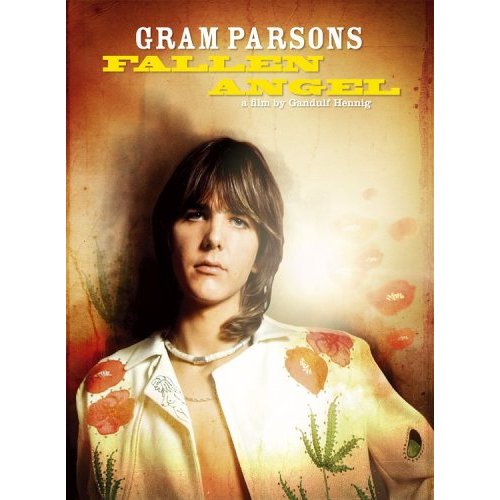
Si on parle de famille stonienne élargie, on met Gram Parsons. Ce documentaire, que je viens de visionner, complément idéal aux rééditions Rhino de ses albums solo, est une bien grande chose. Témoignages entrecroisés d'amis, famille et musiciens (dont Keith), c'est passionnant et très touffu, on ne décroche pas une minute pendant deux heures. En sus, larme à l'oeil garantie.
Keith : "Quand il chantait, il faisait pleurer toutes les filles, il réussissait même à émouvoir les vieilles serveuses blondes décolorées".

lundi, août 14, 2006

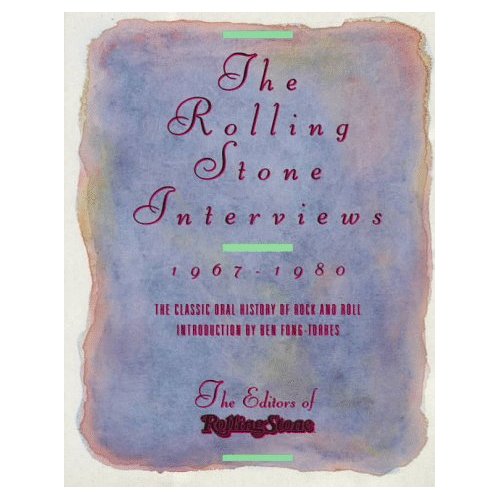
Rolling Stone : livre d'interviews


Je n'ai jamais eu le courage de taper sur micro, pour la mettre ici, toute l'interview de Keith à Nellcôte (par Robert Greenfield). Elle fait je ne sais combien de pages. Elle est sans doute la plus mythique. Pour ma part, l'ayant lue tardivement après bien d'autres, je n'avais pas eu le sentiment d'y apprendre tant de choses que cela en la découvrant il y a deux ou trois ans. Il faudrait que je la relise.
Toujours est-il que je découvre seulement maintenant, au hasard d'une recherche, que Rolling Stone a publié en 89 (ou réédité en 89 ?) un bouquin de ses fameuses interviews, qui l'inclut.
Qui sait si l'interview, que je n'avais pas réussi à trouver sur le net, ne s'y trouve pas aujourd'hui d'ailleurs.
Le bouquin quant à lui est dispo sur amazon.com
Les heureux nominés sont :
Donovan 1967 (J Carpenter) Bob Dylan 1967 (Gleason) B.B. King 1968 (Gleason) Eric Clapton 1968 (Wenner) Pete Townshend 1968 (Wenner) Mick Jagger 1968 (J Cott) Jim Morrison 1969 (J Hopkins) Phil Spector 1969 (Wenner) Bob Dylan 1969 (Wenner) Little Richard 1970 (D Dalton) Van Morrison 1970 (H Traum) Grace Slick & Paul Kantner 1970 (B Fong-Torres) Rod Stewart 1970 (J Morthland) John Lennon 1971 (Wenner) Keith Richards 1971 (R Greenfield) Jerry Garcia 1972 (Wenner & C Reich) Paul Simon 1972 (J Landau) Chuck Berry 1972 (P W Salvo) Keith Moon 1972 (J Hopkins) James Taylor & Carly Simon 1973 (S Werbin) Ray Charles 1973 (B Fong-Torres) Johnny Cash 1973 (R Hilburn) Stevie Wonder 1973 (B Fong-Torres) Elton John 1973 (P Gambaccini) Paul McCartney 1974 (P Gambaccini) Jimmy Page & Robert Plant 1975 (C Crowe) Neil Young 1975 (C Crowe) Mick Jagger 1978 (J Cott) Linda Ronstadt 1978 (P Herbst) Bob Dylan 1978 (J Cott) Paul McCartney 1979 (P Gambaccini) Joni Mitchell 1979 (C Crowe) James Taylor 1979 (P Herbst) Pete Townshend 1980 (G Marcus) Billy Joel 1980 (T White).

dimanche, janvier 15, 2006

Stick-up (suite) : dans Crossroads

Belle critique, même s'ils se mélangent quelque peu les pinceaux entre le bassiste et le chanteur (non mais !) dans le Crossroads de ce mois-ci, de l'album de
STICK UP : chemical reaction
Dans le numéro 39 de Crossroads [janvier 2006], Rubrique Hot Stuff, page 44, avec le grand Ray Davies en couv'.

mardi, novembre 29, 2005

group'ami

ça t'colle à la peau !...
Sortie de l'album de Stick-Up : "chemical reaction" du groupe de mon ami Jean-Michel Mazella, qui, après m'avoir obtenu un autographe de Bill Wyman, m'a fait le suprême honneur de me dédicacer son disque, et plus encore même (mais je n'en dis pas plus, souhaitant garder ici l'anonymat lol).
Le site de Stick-up :
Le chanteur a une voix qui ressemble à s'y méprendre à celle de Jagger...
Je ne suis plus trop dans les Stones aujourd'hui, mais c'est vraiment bon, à écouter sans modération...
L'autre groupe de Jean-Mi, pour un clin d'oeil du côté Gramparsonien de la chose :

mardi, août 16, 2005

faux ennemis


Courrier international - 16 août 2005
MUSIQUE - Deux Beatles pris en flagrant délit de jouer du Rolling Stones
Le quotidien britannique The Independent
s'enthousiasme pour "ce qui est considéré comme étant la seule séquence filmée d'une chanson des Rolling Stones jouée par des membres des Beatles" et "qui va être diffusée pour la toute première fois après être restée cachée au fond des tiroirs durant des décennies." Le DVD montrant cette séquence sera en vente au Royaume-Uni le 24 octobre prochain.

La prise, qui date de 1971, montre George Harrison et Ringo Starr faisant un bœuf avec Eric Clapton et Leon Russell sur la chanson "Jumpin'Jack Flash" lors de la préparation d'un concert de solidarité pour le Bangladesh. "Alors que les Rolling Stones ont enregistré des chansons des Beatles, le contraire n'est pas vrai." Non seulement Mick Jagger et Keith Richards ont enregistré "I want to be your man", mais ils "ont aussi prêté leur voix aux chœurs sur ‘All you need is love' en juin 1967".

lundi, décembre 27, 2004

bar au mètre

Classements en tous genres ces derniers temps. Enfin pu trouver le Rolling Stone, qui vient s'ajouter au spécial Rock & Folk. Au départ dubitative sur le principe de classer des chansons plutôt que des albums, finalement j'aime bien.
Celui de Rock et Folk vaut surtout par les classements thématiques des journalistes. Celui de Rolling Stone, 500 chansons, est plus large et permet une délicieuse plongée dans les abîmes des seventies et parfois des sixties.
Juste pour les premiers :
Rolling Stone :
1 - Like a rolling stone - Dylan (10)
2 - Satisfaction - Stones (2)
3 - Imagine - Lennon (7)
4 - What's going on - Marvin Gaye
5 - Respect - Aretha Franklin
6 - Good vibrations - Beach Boys (4)
7 - Johnny B Goode - Chuck Berry
8 - Hey Jude - Beatles
9 - Smells like teen spirit - Nirvana (1)
10 - What'd I say - Ray Charles
Image Hosted by ImageShack.us
Rock & Folk :
1 - Smells like teen spirit - Nirvana
2 - Satisfaction - Stones
3 - Whole Lotta Love - Led Zeppelin
4 - Good vibrations - Beach Boys
5 - My generation - The Who
6 - Walk on the wild side - Lou Reed
7 - Imagine - Lennon
8 - You really got me - The Kinks
9 - Light my fire - The Doors
10 - Like a rolling stone - Dylan
On pourrait noter les points communs (5 sur 10, je trouve ça assez énorme), mais aussi les divergences, et notamment l'absence de Noir dans les 10 premiers chez nous. Le côté plus roots du classement américain (ils savent mieux d'où vient le rock ? ils nous donneraient des leçons d'histoire ? tiens tiens...), mais aussi plus... américain.
Les seventies sont très présentes ici.

dimanche, novembre 21, 2004

Rolling Stone 2004

The Stones in Exile in 1972
50 moments that changed the history of rock & roll
This is how singer Mick Jagger described his long, hot summer of 1971 at Nellcôte, guitarist Keith Richards' nineteenth-century villa on the French Riviera, as the Rolling Stones made their greatest album, the 1972 double LP Exile on Main Street: "We recorded in Keith's disgusting basement, which looked like a prison. . . . The humidity was incredible. I couldn't stand it. As soon as I opened my mouth to sing, my voice was gone. It was so humid that all the guitars were out of tune by the time we got to the end of each number."
"It was 120 degrees," Richards recalled. "Everyone sat around sweating and playing with their pants off. That's when I got into Jack Daniel's. You're trying to get backup vocals finished . . . and the voice starts to go: 'This'll give you another half hour.' It's those fumes that do it, man."
A triumph of dedicated primitivism and alcoholic, overheated chaos, Exile on Main Street nailed Jagger, Richards, drummer Charlie Watts, bassist Bill Wyman and guitarist Mick Taylor at their absolute peak and captured the atmosphere at Nellc?te with messy faithfulness. Exile wasn't a studio album (although final overdubs and mixing were done at Sunset Sound in Hollywood) -- it was a rock & roll field recording, much like the old Delta-blues sides over which Jagger and Richards had bonded as schoolboys. As the Stones hammered out the outlaw gallop of "Rocks Off" and the epic dirty soul of "Tumbling Dice" in the cryptlike cellar kitchen, mikes and amps were wired up to tape machines in a mobile studio outside. "You were just going into an era where the music industry was full of these pristine sounds -- and we were going the other way," Richards said, cackling with pride thirty years later.
The Stones literally made Exile on the run. In May '71, they moved to France, citing the excessive taxation and police harassment in their native Britain. Many of the Jagger-Richards songs on Exile reflect the exhaustion and madness of the Stones' personal and public lives at the time ("Torn and Frayed," "Soul Survivor"). Jagger's marriage to Nicaraguan model Bianca Perez Morena de Macias on the eve of the Exile sessions irritated Richards, who wanted his singer's full attention during recording; Richards was at the height of his 1970s heroin addiction and spending a lot of time with American country-rock icon Gram Parsons.
Three weeks after Exile's release on May 12th, 1972, the Stones took that accumulated madness with them on a two-month North American tour that opened with a gate-crashers' riot in Vancouver. An equipment truck was bombed before a show in Montreal; there were no arrests. Jagger and Richards, however, were busted in Rhode Island for allegedly assaulting a photographer and briefly jailed. Backstage, the Stones' entourage included high-tone celebrities such as Andy Warhol, Zsa Zsa Gabor and Truman Capote, and the band's jet became a movable feast of drugs and mile-high sex. Exile cover photographer Robert Frank filmed the high jinks for a documentary, Cocksucker Blues, but a Christmas-season opening in New York was canceled when Frank and the band fell out over issues of control and editing. Three decades later, Cocksucker Blues remains commercially unavailable.
"There was this one bit that seemed to upset a few people, concerning a nude young lady that we had for lunch one afternoon on the plane," said longtime Stones roadie and pianist Ian Stewart. "To be honest, it was all staged for the cameras. After all, this was the Rolling Stones on tour here, mate. We had to make things at least a little bit naughty."

La belle-soeur... circa 2000

Brotherly love

When Marsha Hansen decided to incorporate her music skills and theological education into a ministry, her brother-in-law gave support and advice. Encouragement from a family member may not seem like much ... unless you happen to be related to Keith Richards.
A year after Marsha married Rodney Hansen, an ELCA pastor, her sister-in-law married Richards, the guitarist for the Rolling Stones, suddenly making her related to one of rock 'n' roll's most notorious men.
But Hansen has never seen the side of Richards that the public does. "I met Keith in 1982 when he and Patti were dating," Hansen said. "I couldn't have named one member of the band back then. From the beginning I was so impressed with his character. He's been so consistent as a good family member.
"It's funny to see it from the inside because you couldn't ask for a better person to know or to trust."
Hansen said when she told Richards about her desire for a music ministry, he encouraged her to sing in front of more people and to feel secure about her talent.
Since then Hansen has followed his advice, performing in churches throughout the San Diego area. She also assists her husband when he is a guest pastor (Rodney Hansen is currently between calls).
"I think music is not an adjunct to worship but part of it," Hansen said. "Sharing music that is not only Christian but also represents my cultural heritage helps bring more of my experience of the role Christ [has played] in my life."
Hansen, with a little help from Richards, is working toward her first record deal and is recording her second CD. But Richards has been more than just a musical adviser.
"Marrying into this Norwegian family, I felt like an outsider," Hansen recalled. "Keith ... made me feel comfortable. He would be the one to lean over and whisper, 'It's OK,' and squeeze my hand." Hansen's CD, I Know the Lord's Laid His Hands on Me (Orchard), is available through.
Building a Bridge to Babylon
Marsha Hansen Brings a New Dimension to the Extended Rolling Stones Family
by Jill Underwood
Summer may be officially over but, somewhere in Connecticut, a barbecue is still smoking and music is still blasting. Not that unusual, except that the music is old African-American spirituals and the home belongs to Rolling Stone Keith Richards. Both are music to the ears of Marsha Hansen.’Keith would open all the doors up so everybody could hear the singing and playing,’ says the Chula Vista singer and mother of three. Richards’ listening sessions were what gave Hansen the inspiration to give up teaching and pursue her dream of singing spirituals professionally.The leap of faith came with encouragement from Richards, who also happens to be Hansen’s brother-in-law. ‘I love her dearly. We started singing around the family,’ remembers Richards. ‘That’s where music comes from. It comes from the heart. When she started getting into it I said, ‘Good luck and get going and I’ll keep an eye on you.’’Richards’ reputation isn’t exactly that of a choir boy. But as a child he was a member of a prestigious youth choir in England that performed before Queen Elizabeth II. Hansen herself is a product of the Southern-pewed singing set. When they met almost 20 years ago, the two heard beautiful music. ‘She’s got a great feeling as a sister,’ says Richards. ‘When we get together, we start to hang around the piano and the guitar and pick out and choose songs.’Hansen returns Richards’ respect and affection, whatever his reputation. ‘You get to know a person’s character over the years,’ defends Hansen. ‘If he says something, you can count on it. He has a lot of integrity and he’s very kind. All the children love Uncle Keith.’ Hansen says she has no problem allowing her lambs to lay down with the lion.And why should she? This is a woman with degrees in theology, sociology and human relations. When she met Rod Hansen 20 years ago, she was a Naval officer in Japan. She knew him as a Navy chaplain long before realizing he was also the brother of international supermodel, Patti Hansen. The two married in 1981 on the aircraft carrier Midway. Patti and Keith married in 1983. At the time, his sister’s union gave Rod Hansen little satisfaction.’I represent the establishment,’ says the 48-year-old Hansen. ‘Quite a different world from where Keith lives, and my first thought was, ‘Of all the people in the world you had to fall in love with, Patti, look what you did!’But the two families eventually grew close and learned how to have fun together. Now, with five children between them, the families have flourished. The Hansen’s even have a favorite Rolling Stones song: ‘Brown Sugar,’ admits Marsha. ‘When our daughter was born, I said, ‘Oh look, Keith. She’s ‘Brown Sugar,’ isn’t she? She even had that played when she walked out as the Homecoming Princess last year.’But it’s her own music Marsha concentrates on these days. Her first CD of African-American spirituals, I Know the Lord’s Laid His Hands on Me, was released late last year. ‘These are songs that are from the pre-Civil War [era],’ Hansen explains. ‘They’re sacred folk songs which rose up from enslaved African-Americans with a rural bent. It distinguishes them from Gospel. Gospel grew from an urban experience.’The project came about after Richards gave Hansen a DAT recording machine and introduced her to keyboardist, Rob Whitlock. Together, Hansen and Whitlock co-produced the debut. Its completion left Hansen flying high, but there were still clouds of concern: Would Richards like it? After all, his musical opinion means more to her than almost anyone’s. ‘He’s an encyclopedia in his knowledge of music. I really don’t know anybody who has the music knowledge he does,’ says Hansen.She didn’t have to worry. Hansen’s disc was like a revelation to the rocker. ‘It’s quite pure as compared to a lot of Gospel singers I know,’ says Richards. ‘It kind of intrigues me, too.’But would Richards have told her if he didn’t like it? ‘Now and again I’ll say ‘You’ve got to hit there on another key,’’ Richards admits. ‘But that’s just me being an old record producer.’And Marsha Hansen can take it. Neither sticks nor Stones will break the bones of her sound, which she describes as ‘personal.’ ‘I like the ethnic characteristics in my voice,’ says Hansen. ‘It’s passionate and rich. You can tell you’re listening to an African-American woman sing.’And she’ll be singing a lot more. A second CD is in the works. And she’s leaving space on at least one track for a few guitar licks -- licks that Richards has promised to fill. What’s this? Keith Richards jamming for the robed one?’I love music, no matter what it is,’ says Richards. ‘Music is music to me. It’s not necessarily the message to me. Whether it’s church music or comes from the Honky Tonks, I don’t mind as long as it’s good.’ Richards even made his own record of soul music years ago, Wingless Angels.So how do you repay a Rolling Stone? If you’re Marsha Hansen, with a gift from the heavens. ‘I gave him a hymn book for his house,’ Hansen laughs. ‘He did sing sacred songs as a little boy, but there was never a hymn book around when I was looking for one. So I said, ‘You have to have this now!’’ You can buy Marsha Hansen’s CD, ‘I Know the Lord’s Laid His Hands on Me,’ at Sam Goody stores or at www.MarshaHansen.iuma.com

Gram Parsons

Un extrait d'un site consacré aux Byrds... (On est en 1968)
In London, Mick Jagger and Keith Richards, who knew McGuinn and Hillman from earlier tours together, entertained the band. Parsons was quite taken with their hosts, and privately spoke to them about the tour of South Africa scheduled for July. Richards remembers talking to Parsons about apartheid and telling him bluntly, "Well, put it this way: We wouldn't go."
In July, the Byrds returned to England for a charity concert at the Royal Albert Hall, after which they were to leave for South Africa. The night before their departure, Parsons announced he would not be going along because of South Africa's racial policies. In response, McGuinn and Hillman fired him from the band.
None of his friends or associates believed that anti-apartheid sentiment was the real reason Parsons quit, perhaps because of his history of stretching the truth. Hillman, who was furious with Parsons for leaving the band in such a jam, believed that he just wanted to hang out with the Rolling Stones. Byrds roadie Carlos Bernal, who subbed for Parsons on the South African tour, thought that Parsons quit the band because "he couldn't have things just exactly how he wanted them.... He wanted a steel guitar to do a lot of his tunes. He wanted a lot of things the band wasn't prepared to jump into overnight."
The most charitable theory was that this was an early manifestation of his fear of flying, triggered by the thought of the long flight from London to Johannesburg via the Canary Islands. Hillman also thinks this may have been a contributing factor.
In any event, Parsons retreated to Redlands, the country estate of Keith Richards. There the two got to know each other, while Parsons enthused to Richards and Jagger about his favorite country records.
After the Byrds:
Back home, Nancy Ross had recently given birth to a daughter, Polly Parsons. Parsons had planned a large wedding -- a Hank Williams-style media event -- and commissioned a $1,000 wedding dress from Nudie's Rodeo Tailors. Despite, or perhaps because of, the birth of their child, Parsons and Ross had drifted apart. The dress was never used, though it was immortalized years later in the Parsons song "$1,000 Wedding."
In the late summer of '68, Richards and Parsons rejoined Jagger in Los Angeles, where the Rolling Stones were mixing Beggars' Banquet (Abkco, 1968). Jagger had hired a charismatic ex-con named Phil Kaufman to be his "executive nanny." Kaufman, who would become a close friend of Parsons before long, remembers him giving "country music lessons" to the curious Stones during their '68 visit:
"...Gram was teaching the Rolling Stones country music.... Quite often we'd just sit around the house -- Gram, Mick, Keith and I. They had been to Ace Records and bought every country album they could find: George Jones, Merle Haggard, Dave Dudley, Ernest Tubb -- you name it. Gram would say, 'Here is an example of this,' and he'd tell me which record he wanted and I'd play the record. They'd listen to it, tap their toes to it, listen to the chords and then Gram had me play George Jones, etc... That was what Gram was doing. I recorded Gram and Keith singing together, but sadly those tapes are long gone."
Kaufman disputes assertions that Parsons was a "Rolling Stones groupie": "Nothing could be further from the truth. Gram was one of the only guys in the world who hung out with famous people like the Stones and who carried his own weight, i.e., he paid his own way. If anything, Keith was the 'groupie' of Gram.... They wanted to learn country music, and Gram had it."
Before long, Richards and Jagger returned home, and Parsons went back to organizing the long-haired country band he had been planning.

dimanche, octobre 24, 2004

Peellaert & Cohn

Image Hosted by ImageShack.us

Encore des images pieuses...

jeudi, octobre 07, 2004

Marianne Faithfull - 2002

Portrait

Marianne Faithfull, 56 ans, anglaise. La chanteuse, égérie des Rolling Stones, est toujours revenue d'être allée trop loin.
Sister phénix

Par Marie-Dominique LELIEVRE
jeudi 30 janvier 2003

Marianne Faithfull
en 9 DATES
29 décembre 1946
Naissance à Hampstead.
1963
Rencontre John Loog Oldham à une fête.
1968
«La Motocyclette», film de Jack Cardiff, avec Alain Delon.
10 novembre 1965
Naissance de son fils Nicholas.
1978
Album «Broken English» (Island).
1985
Hospitalisation aux Etats-Unis.
12 juillet 1993
Naissance de son petit-fils Oscar.
3 octobre 1998
Naissance de son petit-fils No.
2002
Album «Kissin' Times» (Virgin).

«My father promised me roses, my mother promised me storms» : son père lui promettait des roses, sa mère des orages. Marianne Faithfull chante Like Being Born, une ballade nostalgique de son dernier album, Kissin' Times. Sa silhouette scintille dans une chose griffée Chanel Haute Couture offerte par Karl (Lagerfeld), derrière elle trois musiciens mal éclairés massacrent les morceaux. Dans l'obscurité de l'Olympia, des stylistes de mode, des attachées de presse, des publicitaires, des petites actrices précautionneusement trash.

Shootée à l'aspartam, une voix réclame Sister Morphine. La chanson de 1969, fabriquée alors que Marianne n'avait pas encore touché à l'héroïne, et qui lui vaut quelques stock-options dans la haute finance rock. Marianne Faithfull s'enflamme contre le consommateur de sensations fortes, qu'elle fouette à grandes salves de «fuck». C'est son show, bullshit, son show à elle, qu'il aille se faire foutre, dit-elle, sophistiquée et crue, très Dietrich transformée en Renaud. «Chanter Sister Morphine, c'est promouvoir la morphine. Il voulait me voir jouer ce rôle», dira-t-elle plus tard, dans le lobby du Plazza Athénée où sa maison de disques la loge durant sa tournée, comme un Rolling Stone. La morphine ? Elle a déjà bien assez de mal avec le patch de nicotine que lui tend son fiancé-manager, François Ravard, et qu'elle tente de coller à la saignée du coude. Avec sa voix rauque, elle peut tout chanter, pop, jazz, folk, rock, opéra. Elle chante aussi bien avec les Chieftains, un groupe traditionnel irlandais (harpe et cornemuse) qu'avec Metallica (heavy metal) et interprète Kurt Weill. Pas seulement des tubes vintage.

L'Olympia, Marianne y est venue la première fois à 19 ans. Elle chantait en première partie de ce type, le Dylan français. «Hugues Aufray, yes, yes, oh, il chante encore ?»Elle venait d'avoir son fils Nicholas, elle prononce «Niquelasse». Elle l'allaitait dans les coulisses, en vissant sur sa tête de bébé un petit chapeau pour lui éviter la surdité. Bruno Coquatrix et sa femme venaient les chercher dans leur luxueuse DS, plus fabuleuse qu'une Rolls ou qu'une Bentley. Secouez-là, elle est pleine de souvenirs, qu'elle raconte avec des mains qui s'envolent, une minuscule hirondelle tatouée à la naissance du pouce. Elle les ponctue de rires effrayants achevés dans des quintes de toux, méritant son surnom : «the famous cough». Kleenex, please, François.

Nounou, manager, souffre-douleur, Ravard est vêtu d'une veste rayée, à la doublure effilochée : celle de Gainsbourg, livrée il y a des lustres par le même tailleur. Ravard a été le manager de Téléphone, «les French Rolling Stones». En 1963, Andrew Loog Oldham, le producteur des Stones, croise Marianne dans une fête : «J'ai rencontré un ange avec des gros seins et je l'ai signée.» Il voulait bricoler une petite chanteuse sur le modèle des Françaises comme Françoise Hardy. A 17 ans, Marianne venait d'épouser John Dunbar, un marchand d'art très hype. Managés par Oldham, les Rolling Stones n'étaient alors qu'un groupe de rhythm'n'blues de banlieue, qui adaptait des standards américains, comme Johnny en France. As Tears Go By, la chanson que les Stones écrivirent pour le premier single de Marianne à la demande d'Oldham, est le premier titre qu'ils aient créé. En août 1964, Marianne entre au Top 10. Outre des seins de madone, elle a une jolie voix travaillée au couvent. Née dans le très chic Hamsptead, elle est une fille de bonne famille. Son père, le major Glynn Faithfull, un excentrique fauché, a déçu les rêves de sa mère, la baronne Eva von Sacher-Masoch. Viennoise en exil, divorcée, elle élève Marianne comme une princesse promise au bonheur éternel. Promesse tenue, à sa façon euphorisante, par l'héroïne, que Marianne consomme jusqu'à l'âge de 40 ans. «Je n'ai aucun sens des limites.» Hospitalisée et sevrée aux Etats-Unis, elle découvre la vie réelle. Un exemple : elle subit une rage de dents des semaines durant, sans une plainte, parce qu'elle imagine que, sans drogue, souffrir est normal. L'affaire finira par une opération ouverte de la mâchoire. «La race des gladiateurs n'est pas morte. Tout artiste en est un. Il amuse le public avec ses agonies», écrivait Flaubert.

Le patch se décolle, Marianne allume une Marlboro light. Elle porte des babies offertes par Marc (Jacobs), un sac Chanel matelassé donné par Karl (Lagerfeld). Elle ne ressemble plus à la fille en cuir qui jouait avec Delon dans la Motocyclette, mais blonde au visage fin, elle est très mignonne. Si la diacétylmorphine fait partie de sa légende, elle s'en passerait bien. Dans les riches heures de la vie de Marianne figurent sa présence, nue sous une couverture de fourrure, au moment de l'arrestation de Jagger et Richard pour possession d'amphétamines ; sa liaison avec Mick (Jagger, 1967-1970) ; sa vie de SDF, au début des années 70 ; ses années de défonce. Elle s'y est cabossée. Y a perdu la garde de son fils «Niquelasse». Lequel, aujourd'hui, se venge en écrivant de très sérieux best-sellers économiques. Mais Marianne a ses
filleules adoptives. C'est le genre de personne qui est allée très loin, trop loin, et qui fascine ceux qui n'iront jamais nulle part. Dans Sliding through Life on Charm, écrite avec Jarvis Cocker, le chanteur de Pulp, elle se demande pourquoi en banlieue, les filles de 17 ans veulent vivre une vie comme la sienne. «Alors que ça n'a pas été drôle du tout.» Kate Moss, Carla Bruni, Zazie : Marianne est le protomodèle des top models qui font carrière dans la rébellion chic. De Marianne, elles samplent des fragments comme un DJ duplique des sons, sans connaître la musique. Fiancés popstars, accessoires, coupes de cheveux, tout est recyclable. «J'aime beaucoup Kate, elle est adorable. Elle est plus intelligente que moi : elle a eu des ducs et des millionnaires, mais surtout elle a gagné sa vie.» Des filles à petits seins, avec les pieds sur terre : à l'opposé de la définition de Loog Oldham.

Marianne, elle, ignore où elle s'installera à la fin de sa tournée. Après cette vie sur note de frais, ses possessions sont stockées à Dublin, dans une chambrette. Son rêve ? Choisir un réfrigérateur. On lui apporte un paquet enrubanné, accompagné d'une carte. Une admiratrice lui fait un cadeau. Elle déballe, son petit nez très fin en émoi. Une énorme bague en strass en forme d'étoile.

Lorsqu'elle l'enfile, la bague se brise. Elle n'ose pas balancer les débris. Un leurre encombrant, comme le star system.