Affichage des articles dont le libellé est entourage. Afficher tous les articles

mercredi, septembre 06, 2006

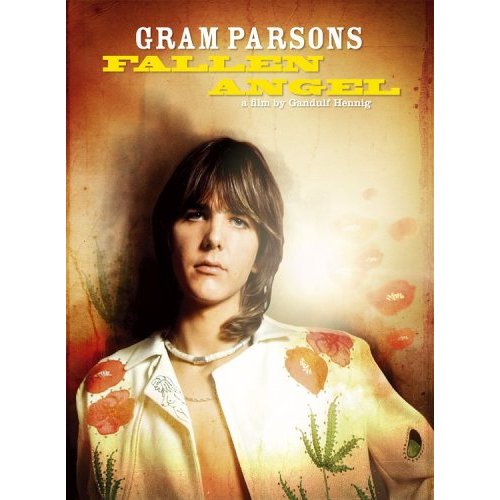
Gram Parsons


Si on parle de famille stonienne élargie, on met Gram Parsons. Ce documentaire, que je viens de visionner, complément idéal aux rééditions Rhino de ses albums solo, est une bien grande chose. Témoignages entrecroisés d'amis, famille et musiciens (dont Keith), c'est passionnant et très touffu, on ne décroche pas une minute pendant deux heures. En sus, larme à l'oeil garantie.
Keith : "Quand il chantait, il faisait pleurer toutes les filles, il réussissait même à émouvoir les vieilles serveuses blondes décolorées".

vendredi, juin 09, 2006

lézégéries

Poussière d'anges
Le journaliste Fabrice Gaignault nous donne rendez-vous avec les « égéries des années 60 » et leurs témoins illustres. Souvenirs d'un éblouissement.
Marc Lambron
Plusieurs d'entre elles se croisent autour de 1964 dans l'agence de mannequins de Catherine Harlé. Cascades de cheveux raides, ombre à paupières, jupes Courrèges : ces chimères scrutent leurs reflets dans le miroir brisé de l'après-guerre. Elles se nomment Anita Pallenberg ou Nico, Zouzou ou Dani, Marianne Faithfull ou Tina Aumont. Les nuits de satin blanc, la bohème internationale, l'autodestruction, tel sera le programme de ces flamboyantes pionnières, « égéries des sixties » qui vont narguer les fournaises jusqu'à s'y brûler. Fabrice Gaignault, journaliste à Marie-Claire, leur consacre un livre remarquable.
Au départ, il y a pour lui des reliques, photos, disques, films, et les silhouettes de ces femmes fatales qui s'accrochaient au bras de Brian Jones ou de Bob Dylan. Gaignault connaît les images, mais il veut la vérité. Adepte d'un journalisme campé et visuel, il a mené l'enquête. « Les filles étaient les sixties », écrit-il. Que reste-t-il de ce temps où Godard filmait les Rolling Stones, où « la bataille d'Angleterre se rejouait avec des amplis Marshall et des guitares Telecaster », un temps où une certaine jeunesse paraissait superbement inapte aux amenuisements ? Il en reste des visages et des voix. Gaignault les interroge. Son livre ressemble à un documentaire en trompe-l'oeil, une sorte de « Monsieur Arkadin » au pays des années 60 : le passé reste le sujet, mais le présent fait le voyage. Au générique, il a inscrit une kyrielle de témoins illustres. Bill Wyman et Bernardo Bertolucci, Donovan et Alejandro Jodorowski, François Weyergans et Jean-Marie Périer disent très bien comment un éblouissement peut traverser la pâte du temps. C'était quelque chose, Zouzou la Twisteuse, quand elle déboulait sous une casquette de petit mec dans la cave de Castel...
Le meilleur du livre de Gaignault est là : dans la réfraction du passé sur des visages que le souvenir éclaire. Le cinéaste Paul Morrissey raconte les actrices de la Factory de Warhol. Au fond d'un vieux palais marocain, le décorateur Bill Willis retrace la saga de Talitha Getty, la Nadja pop de Marrakech. Albert Koski, double enfant terrible de Londres et de Paris, alterne tendresse et pertinence (« On ne dira jamais assez l'importance des restaurants italiens dans l'explosion des Swinging Sixties »). Si les photos certifient, la mémoire restitue. Il y a chez tous ces témoins masculins quelque chose d'ébloui, de surexposé. Une supernova féminine a explosé autour de 1965, ils en restent irradiés. Soudain, les filles des sixties sont de nouveau là, vivantes, sous leur profil 2006, éternel retour des Eurydice rock'n'roll. Voici Patti Boyd, ex-épouse de George Harrison et d'Eric Clapton, croisée dans un salon de Londres, toujours belle. Amanda Lear fait des mots (« Je préfère avoir influencé Madonna qu'Annie Cordy »). Anita Pallenberg et Marianne Faithfull paraissent lucides, assumées, détachées. Jane Birkin dit comment le Paris de Gainsbourg lui paraissait « un monde qui relevait de la fiction ». Elles parlent les unes des autres, les bobines tournent, la fresque prend de la profondeur - l'une des corrections de perspective étant ici la réévaluation de Paris, aux côtés de Londres et peut-être avant New York, comme plaque tournante des années 60. Quant au « Mick » qu'elles mentionnent toutes, personne n'ignore plus qu'il s'agit d'un chanteur milliardaire récemment anobli par la reine d'Angleterre...
D'une certaine façon, ces pionnières de la prospérité ne savaient pas comment traiter la pulsion de mort dans une société de paix civile : sexe, drogues et rock, cette génération aura connu délices et champs d'horreur. Le livre de Gaignault est ainsi un acte chamanique où des ombres sortent du feu, un texte orphique qui retourne dans l'enfer du temps pour en ramener des beautés perdues. Au milieu de cette galerie de nymphes, une photo manque et semble justifier toutes les autres. Fabrice Gaignault se souvient d'une mère « belle, blonde, fêtarde, accumulant les nuits blanches avec une merveilleuse opiniâtreté ». Sans doute en est-elle morte trop tôt. L'enfant d'une étoile filante dessine dans le sable le profil de maman. Sur le marbre du mémorial, le vent disperse une poussière d'ange

samedi, novembre 27, 2004

Anita dit

"Ce que je pense, en revanche, c'est que je faisais peur aux gens. Peut-être parce que je ne venais pas du même milieu social que bien des musiciens, et ne parlons pas de leurs femmes. La culture, l'éducation, le savoir-vivre sont souvent ressentis comme une agression, voire une perversion par ceux qui en manquent." Anita Pallenberg (2002)

dimanche, novembre 21, 2004

Exile (le livre) citations

Extracts From Exile's Ninety Thousand
It wasn't like we were a young married couple on our honeymoon.
We were two guys working. We certainly weren't a bunch of hippies like everyone says. We didn't have time to be hippies. There was too much to do.
Anita Pallenberg

Suddenly there we all were, living in the South of France. And contrary to what the newspapers thought, which is that we were all joined at the hip and were this big group that lived together, we had never socialised that much. But here, we were suddenly all thrown together in a foreign country, having to see more of each other.
Astrid Lundström (épouse de Bill)
John Lennon came once, but just for one afternoon. As soon as he came, he went off to Keith's bedroom for about three quarters of an hour. Then he came downstairs to say "goodbye", vomited on the carpet and left.
Dominique Tarlé
I noticed one day that the vents in the floors were decorated with swastikas. When I asked Keith about it, he said, "Oh, it was the Gestapo headquarters during the war. But it's all right - we're in here now."
Andy Johns
It was all very primitive, and if we were in the middle of a take at two o'clock in the morning and there was a thunderstorm and lots of lightning, we'd have power failure sometimes. We'd sit around in that dingy basement, talking by candlelight until the power came back again. The whole idea of doing an album like that these days would be laughable.
Mick Taylor
Once we finished a session and then, on the Saturday night, we got a message that some kids had come in and stolen all the guitars and other things. Thirteen or seventeen guitars and a bass. They came and asked, "Where is Keith?" "Oh, he is in the other room, watching telly." So they came in and nicked everything. They were so free and easy there.
Bill Wyman
The cop said, "I have time to spend, here are the five depositions, I'll leave you to read them. Smoke a cigarette or drink a cup of coffee and I'll come back in ten minutes. Tell me what you have to say." One deposition I might argue about, even two or three, but five I couldn't deny. So I went to jail for six months and waited for my trial to come up.
Rene d'Amico
Judges and lawyers came by and remonstrated, "Madame!" But Bianca is like a tiger, she turned on them and said, "C'est mon mari," in other words, "Just try and stop me, my husband's in there!" Everybody backed off.
June Shelley

I went down to Nellcôte with rough mixes of all the material I'd found and remember them listening to them and saying, "God, that's pretty good, what is all this?" One of the tracks that I specifically remember was "Shake Your Hips" which definitely came out of that bunch of tapes. Another one was "Stop Breaking Down", and all the ones with Stu on the piano. There was also a version of the Jimi Hendrix song "Red House".
Trevor Churchill
Mick and I... He found out that I could play a little and he could sing a bit. "I dig to sing," he said, and he also knew Dick Taylor from another school they'd gone to and the thing tied up so we'd try and do something. We'd all go to Dick Taylor's house, in his back room, some other cats would come along and play, and we'd try to play some of this Little Walter and Chuck Berry stuff. No drummer or anything. Just two guitars and a little amplifier. Usual backroom stuff. It fell into place very quickly.
Keith Richards from his 1971 Nellcôte Interview (RS)

La belle-soeur... circa 2000

Brotherly love

When Marsha Hansen decided to incorporate her music skills and theological education into a ministry, her brother-in-law gave support and advice. Encouragement from a family member may not seem like much ... unless you happen to be related to Keith Richards.
A year after Marsha married Rodney Hansen, an ELCA pastor, her sister-in-law married Richards, the guitarist for the Rolling Stones, suddenly making her related to one of rock 'n' roll's most notorious men.
But Hansen has never seen the side of Richards that the public does. "I met Keith in 1982 when he and Patti were dating," Hansen said. "I couldn't have named one member of the band back then. From the beginning I was so impressed with his character. He's been so consistent as a good family member.
"It's funny to see it from the inside because you couldn't ask for a better person to know or to trust."
Hansen said when she told Richards about her desire for a music ministry, he encouraged her to sing in front of more people and to feel secure about her talent.
Since then Hansen has followed his advice, performing in churches throughout the San Diego area. She also assists her husband when he is a guest pastor (Rodney Hansen is currently between calls).
"I think music is not an adjunct to worship but part of it," Hansen said. "Sharing music that is not only Christian but also represents my cultural heritage helps bring more of my experience of the role Christ [has played] in my life."
Hansen, with a little help from Richards, is working toward her first record deal and is recording her second CD. But Richards has been more than just a musical adviser.
"Marrying into this Norwegian family, I felt like an outsider," Hansen recalled. "Keith ... made me feel comfortable. He would be the one to lean over and whisper, 'It's OK,' and squeeze my hand." Hansen's CD, I Know the Lord's Laid His Hands on Me (Orchard), is available through.
Building a Bridge to Babylon
Marsha Hansen Brings a New Dimension to the Extended Rolling Stones Family
by Jill Underwood
Summer may be officially over but, somewhere in Connecticut, a barbecue is still smoking and music is still blasting. Not that unusual, except that the music is old African-American spirituals and the home belongs to Rolling Stone Keith Richards. Both are music to the ears of Marsha Hansen.’Keith would open all the doors up so everybody could hear the singing and playing,’ says the Chula Vista singer and mother of three. Richards’ listening sessions were what gave Hansen the inspiration to give up teaching and pursue her dream of singing spirituals professionally.The leap of faith came with encouragement from Richards, who also happens to be Hansen’s brother-in-law. ‘I love her dearly. We started singing around the family,’ remembers Richards. ‘That’s where music comes from. It comes from the heart. When she started getting into it I said, ‘Good luck and get going and I’ll keep an eye on you.’’Richards’ reputation isn’t exactly that of a choir boy. But as a child he was a member of a prestigious youth choir in England that performed before Queen Elizabeth II. Hansen herself is a product of the Southern-pewed singing set. When they met almost 20 years ago, the two heard beautiful music. ‘She’s got a great feeling as a sister,’ says Richards. ‘When we get together, we start to hang around the piano and the guitar and pick out and choose songs.’Hansen returns Richards’ respect and affection, whatever his reputation. ‘You get to know a person’s character over the years,’ defends Hansen. ‘If he says something, you can count on it. He has a lot of integrity and he’s very kind. All the children love Uncle Keith.’ Hansen says she has no problem allowing her lambs to lay down with the lion.And why should she? This is a woman with degrees in theology, sociology and human relations. When she met Rod Hansen 20 years ago, she was a Naval officer in Japan. She knew him as a Navy chaplain long before realizing he was also the brother of international supermodel, Patti Hansen. The two married in 1981 on the aircraft carrier Midway. Patti and Keith married in 1983. At the time, his sister’s union gave Rod Hansen little satisfaction.’I represent the establishment,’ says the 48-year-old Hansen. ‘Quite a different world from where Keith lives, and my first thought was, ‘Of all the people in the world you had to fall in love with, Patti, look what you did!’But the two families eventually grew close and learned how to have fun together. Now, with five children between them, the families have flourished. The Hansen’s even have a favorite Rolling Stones song: ‘Brown Sugar,’ admits Marsha. ‘When our daughter was born, I said, ‘Oh look, Keith. She’s ‘Brown Sugar,’ isn’t she? She even had that played when she walked out as the Homecoming Princess last year.’But it’s her own music Marsha concentrates on these days. Her first CD of African-American spirituals, I Know the Lord’s Laid His Hands on Me, was released late last year. ‘These are songs that are from the pre-Civil War [era],’ Hansen explains. ‘They’re sacred folk songs which rose up from enslaved African-Americans with a rural bent. It distinguishes them from Gospel. Gospel grew from an urban experience.’The project came about after Richards gave Hansen a DAT recording machine and introduced her to keyboardist, Rob Whitlock. Together, Hansen and Whitlock co-produced the debut. Its completion left Hansen flying high, but there were still clouds of concern: Would Richards like it? After all, his musical opinion means more to her than almost anyone’s. ‘He’s an encyclopedia in his knowledge of music. I really don’t know anybody who has the music knowledge he does,’ says Hansen.She didn’t have to worry. Hansen’s disc was like a revelation to the rocker. ‘It’s quite pure as compared to a lot of Gospel singers I know,’ says Richards. ‘It kind of intrigues me, too.’But would Richards have told her if he didn’t like it? ‘Now and again I’ll say ‘You’ve got to hit there on another key,’’ Richards admits. ‘But that’s just me being an old record producer.’And Marsha Hansen can take it. Neither sticks nor Stones will break the bones of her sound, which she describes as ‘personal.’ ‘I like the ethnic characteristics in my voice,’ says Hansen. ‘It’s passionate and rich. You can tell you’re listening to an African-American woman sing.’And she’ll be singing a lot more. A second CD is in the works. And she’s leaving space on at least one track for a few guitar licks -- licks that Richards has promised to fill. What’s this? Keith Richards jamming for the robed one?’I love music, no matter what it is,’ says Richards. ‘Music is music to me. It’s not necessarily the message to me. Whether it’s church music or comes from the Honky Tonks, I don’t mind as long as it’s good.’ Richards even made his own record of soul music years ago, Wingless Angels.So how do you repay a Rolling Stone? If you’re Marsha Hansen, with a gift from the heavens. ‘I gave him a hymn book for his house,’ Hansen laughs. ‘He did sing sacred songs as a little boy, but there was never a hymn book around when I was looking for one. So I said, ‘You have to have this now!’’ You can buy Marsha Hansen’s CD, ‘I Know the Lord’s Laid His Hands on Me,’ at Sam Goody stores or at www.MarshaHansen.iuma.com

Jean-Pierre Rassam

Encore des cheminements qu'on aimerait explorer, là c'est ce personnage assez fascinant, Rassam. Un site met en ligne un article d'Antoine de Baeque (Libé). Jean Yanne et Keith ensemble, j'aurais aimé voir ça... :

http://paris70.free.fr/rassam.htm

Il y aurait aussi le "filon" Scorcese, qui a beaucoup fréquenté tout ce monde là dans les années 70 notamment.

dimanche, octobre 10, 2004

Archéo (James Phelge)

No Stone Unturned
Author James Phelge provides a first-handlook at the early days of the Rolling Stones
by Chris Parcellin
Have you ever wondered what Keith Richards and Mick Jagger were like before the models, private jets and drug busts? Well, get ready, because your questions are about to be answered...in graphic detail. Just released in the United States Nankering with the Stones (originally titled Phelge's Stones ) chronicles the early, poverty-stricken days of Rolling Stones Keith Richards, Mick Jagger and Brian Jones---living in a small flat in London's Edith Grove section. The man who provides us with this window into the making of the legendary rock group is James Phelge. Phelge was a roommate and friend to the Stones in the early-'60s, and had a front row seat as they evolved from an unknown local band into international superstars. And Phelge proves to be more than up to the task of capturing the real people behind the public facade. His biting humor and incisive commentary show the Stones as three-dimensional human beings, as no other biography has. And his genuine fondest and respect for the band shows through at all times. D-FILED had the privilege of speaking to Phelge recently, and he did not disappoint.
How long did it take you to write Nankering with the Stones?
James Phelge: I suppose the real answer is thirty-five years, although physically, it was only three. There were lots of little myths and facts about the Stones that were getting out of perspective, or just being told totally wrong. I decided to write the book just to correct some things and also tell what actually happened. It became an evening job after I returned home from running my business. I did have 'off' periods though, where I did nothing for two or three months.
Was it something that you'd planned to do for a long time?
JP: I had thought about it occasionally over the years but it was really a part of my life that was extinct. I'm not a great believer in going back. You usually get disappointed
When you first heard the Stones---what did you think?
JP: I thought they were great. Maybe it was just that they were playing a different kind of music compared to the pop pap being put out at the time. And playing it good. Maybe it was because they were my age and part of my local scene. Whatever it was, they had an air of rebellion about them. Maybe we all did back then, and it was a mutual recognition among those visited the clubs on Stones nights. On the other hand maybe it was just the fact that it was cheap to get in.:-))
It seems like Bill Wyman didn't like you very much. What was his problem?
JP: Wyman is aware that they never wanted him the band from the start. One of the Stones office staff told me after Bill left the band that Wyman had himself said that it had stayed like that for thirty years. Although he was in the band, I still don't think he ever grasped or understood what the Stones were about. Maybe it was because he was boring......yawn.
It sounds like--from reading your book---that even in the early days, Keith was someone who'd never backdown from a fight. Did you see him get into many scraps?
JP: Not really. It is just that he would stand up for himself. He was never afraid to be outspoken. I could not imagine him giving way to someone if he thought he was right or had just been insulted. Sometimes people would find with Keith they'd bit off more than they could chew and backdown. Talk is cheap as they say...unless you're Marlon Brando, then it's about ten dollars a word. In Stanley Booth's book The True Adventures of the Rolling Stones he gives a brief overview (mostly from Keith's perspective) of the same era your book covers.
Did he have his facts straight?
JP: Dunno. I never read it. Nothing against his book but I have never read any Stones book. Never felt the need. Most of the people who write about them don't or won't ever really know them. Anyone from the outside is going to already be tarnished by the hype around band. They will never get to grips with the normality of the guys as ordinary people. They never knew them then of course.
Is the stuff about Jagger wandering around Edith Grove in a housecoat true? Do you think his sexuality was questionable---or was he just goofy?
JP: He had a womans nylon dressing gown he wore occasionally. I think he nicked it from one of the girls downstairs. His sexuality is not worth arguing over. Mick's been in the papers for 30 years with a different chick each week and the same before he was famous.
Where does this gay bit come in...? Do you think Brian Jones has gotten a bad rap over the years?
JP: There is no doubt that his memory has been maligned over the years. It's sad to still see that no one ever quotes anything nice about him. I don't mean just in terms of his music ability which would have grown over the years and moved with the progressive music, he was that capable. People always quote his drugs problem and the various kids etc. He could be difficult to deal with, sure, but so are many people. I can think of one or two others who have had a drug problem not to mention illegitimate kids. Should be easy to pick two names to go in that last sentence. Maybe the fact that Brian's memory won't die bugs some people.
Did success change those guys a lot?
JP: I can still see the original guys and their attitudes come through on occasion. They were bound to have changed in someways - maybe a few airs and graces with Jagger. As I said earlier, most people never knew them so would not know what to look for. They are expected to be entertainers now and that is what they do. They still have their original attitudes, if you know where to look. I sometimes see the fleeting looks that cross their faces when they're pissed off, although the mask only drops for second.
Has the book been a big success for you?
JP: Not as much as I would have liked. Distribution was the problem. Big book stores won't buy books anyway, they want them on consignment. Like, I wanna sponsor Barnes and Noble? Things have improved for me. The US rights have been sold to a Chicago publisher and the new American Edition came out April 1, 2000. It is now called Nankering with the Rolling Stones. Not my choice of title, but I guess it's better than Eating Shit with Keith, Maybe not tho'...
Where can fans order it?
JP: It is now available from any US bookstore, as well as Amazon.com. It is also now part of official Stones merchandising and will be available from their website soon. More details are on my website.
Any plans for a follow-up book?
JP: I'm working on a second, but nothing to add to that at the moment.
Have you heard any reaction to Nankering with the Stones from Keith or the other Stones?
JP: Not at all, apart from the fact Jane Rose rang after a year saying 'If I give Mick my house he won't sue.' Just kidding. She rang about it becoming official merchandise, so I guess it's okay. Wyman actually bought a copy while I was in America. I gave another copy to Keith personally, but he was on his way to gig. Knowing him, he probably lost it.
©2000 Chris Parcellin, All rights Reserved.

jeudi, octobre 07, 2004

Anita Pallenberg - The Times 2004

From The Times May 08, 2004
Anita Pallenberg - romancing the Stones
Performance closed the 1960s with a Molotov cocktail of drugs, debauchery and death — off screen as well as one, Anita Pallenberg tells Chris Sullivan
“This film is about the perverted love affair between Homo sapiens and Lady Violence.” So read a telegram sent by the director of Performance, Donald Cammell, and his star, Mick Jagger, to the president of Warner Brothers early in 1970, attempting to convince him to release their film. “It is necessarily horrifying, paradoxical, absurd. To make such a film means accepting that the subject is loaded with every taboo in the book.”
Warners had thought that it was buying a crime caper starring the lead singer of the world’s biggest rock combo, that would capture “swinging London” and allow them to break into the coveted teen market. Instead, it received a violent, hard-nosed London gangster flick; a sado-masochistic, homoerotic, free-loving, psychotropic bag of snakes that didn’t introduce its most bankable asset (Jagger) until halfway through, and caused the wife of one of their executives to throw up at a test screening.
Performance, which is re-released this week in selected cinemas by the British Film Institute, is the twisted tale of Chas (James Fox), a smart-suited gangland heavy who falls foul of the Mob boss Harry Flowers (Johnny Shannon). Chas hides out in the spooky Notting Hill townhouse of the reclusive former rock star Turner (Mick Jagger) and his insatiable inamoratas — the gorgeous Pherber (Anita Pallenberg) and the androgynous Lucy (Michèle Breton). As Chas is sucked into Turner’s sybaritic world, he is plied with hallucinogenic mushrooms, becomes the butt of the trio’s twisted revelry and accepts the sexual advances of all three.
“Performance was Donald’s vision,” says Pallenberg now, still living in Chelsea and resplendent in a black Bella Freud pullover that proclaims “Ginsberg Is God”. “He was notoriously into threesomes, rock stars and criminal violence. He injected all of his deviant sexual fantasies into the movie.”
Cammell had been part of the Chelsea Set which was, as Nik Cohn so eloquently describes in his book Today There Are No Gentlemen: “A gaggle of public schoolboys, in search of a riot. Some of them dabbled in chicanery, some made exotic marriages, some turned homosexual.” Rumoured to be the godson of the notorious black magician Aleister Crowley, Cammell had been a painter in London but moved to Paris in the early 1960s to pursue a career in film. “That is where I met him,” says Pallenberg, who became involved in a ménage à trois with Cammell and his model girlfriend, Deborah Dixon. “He was completely star-struck and had all these mad movie scenarios, mostly about rock stars.”
When Pallenberg started her much publicised relationship with the Rolling Stone Brian Jones in 1965, Cammell was enraptured and became a frequent visitor to the court of King Brian. “I guess Turner was based on Brian,” says Pallenberg. “But it was all very superficial; Brian would ask me to do his hair and his make-up. He wanted to look like Françoise Hardy.”
If basing Turner on Jones was inspired, then recruiting Jagger to play him was a stroke of genius. After the infamous drug bust in February 1967 at Redlands, Keith Richards’s country house, both the police and the press were all over the band like a tattoo. By the time that Cammell and his co-director, Nicolas Roeg, started shooting, the mischievous singer was perceived by half the population as a glamorous, enigmatic desperado, and by the other half as the manifestation of every social evil. Having sold the movie as a Jagger vehicle, Cammell enrolled the services of Pallenberg who, as filming progressed in the late summer and autumn of 1968, found herself in the middle of a nightmare. “Donald was a real prima donna,” she recalls. “He would go into fits of rage and then disappear, while Nic Roeg would spend seven hours lighting one shot as we waited in the basement. I was often so stoned that even though I wrote my own dialogue, I didn’t know whether or not I had done my lines.”
The other problem was Keith Richards, who had saved Pallenberg from the physically abusive Jones in Tangiers in the spring of 1967, and with whom she was now living. He was scornful of the movie and jealous of her intimacy with Jagger. So, after returning home from filming, she would have to listen to Richards’s jibes, before jumping out of his bed the next morning and returning to Jagger’s four-poster.
So, how real were those sex scenes? Pallenberg now admits that they went beyond the call of duty. “But I put it down to method acting.” At one point she spent a whole week in bed with both Jagger and Breton: “There was a camera under the sheets. It was like a porno shoot.” Cammell and Roeg flanked the happy trio with a 16mm wind-up Bolex, and Roeg has said that even today he can see Cammell’s smiling face emerging from beneath the bed linen asking: “How was it for you?” Some of the footage was so explicit, however, that the film processing lab called to say that it flouted the obscenity laws and they were legally obliged to destroy it — which they did, with hammer and chisel.
Cammell, meanwhile, thrived on the friction. “Donald wanted my character to wind everyone one else up, which I was more than happy to do. I used to tease James Fox by saying that I had spiked his coffee with LSD. It was not an harmonious shoot, but that’s what Donald wanted: chaos, paranoia and grief,” recalls Pallenberg. “It was horrendous.”
The on-set shenanigans took their toll. They have been variously blamed for Fox’s rejection of acting for the next decade in favour of Christian vocational work, for Breton never performing again and for Cammell’s suicide in 1997 — he shot himself in the head, re-enacting the movie’s climax. Pallenberg is unconvinced. “James had already considered the road to Jesus when he had a breakdown and Michelle was never an actor anyway. As for Donald, he was always on the edge. But the myth is so much better.”
Rumours also abound that the actors were taking as many drugs as their on-screen counterparts. Spanish Tony, the Rolling Stones’ infamous drug dealer, claimed that both Jagger and Fox were smoking DMT between takes, a strange psychotropic drug that produces a 15-minute trip. “I didn’t see anything like that, but I wouldn’t be surprised. In those days things were a bit hush-hush,” says Pallenberg. “Spanish Tony was bringing me other things. By the completion of filming I was heavily into drugs.”
The other point of debate has been which co-director should take the greatest credit for the movie: the mercurial, doomed Cammell; or Roeg, who went on to have the more glittering career? Sanford Lieberson, the film’s producer, is emphatic that “Donald and Nic worked together in an immensely positive way. They discussed everything, and were inseparable. It was Donald’s concept. He wrote the screenplay, but the interpretation was a collaboration.”
“Nic and I had been friends for years,” said Cammell in a rare interview not long before his death. “We both read the same books, which to my mind is more important than seeing the same films.” Certainly Roeg’s dazzling use of different lenses, stocks and camera angles helped give the film its unique look. Whatever the case, their combined genius managed not only to paint an authentic portrait of London’s Bohemia, but also another 1960s archetype — the London gangster. They based Harry Flowers on Ronnie Kray, who by that time had an apartment in Chelsea and could be seen most nights mixing with the likes of Lord Boothby at the Krays’ gambling club, Esmerelda’s Barn in Wilton Place.
David Litvinoff, who was given the title of Dialogue Consultant and Technical Advisor, acted as their guide to the underworld. Marianne Faithfull described him as “a genuine mob boss”, and he was certainly a good friend of Ronnie’s. According to Christopher Gibbs, the film’s design consultant: “He didn’t have an affair with Ronnie Kray, but he used to pick up boys with him.”
It was Litvinoff’s job to help the decidedly posh Fox prepare for the role of Chas. “There was a sort of decisive moment,” said Fox. “Donald and Nic got terribly fed up with me being me. They sort of kicked me out and said: ‘Don’t come back until you’re Chas.’” Fox hung out at the gangsters’ favourite haunts and was trained in the pugilistic arts at the Thomas a Beckett pub on the Old Kent Road by Henry Cooper’s corner man, Johnny Shannon, a former heavyweight boxer who would eventually play Flowers.
“I made sure he worked the bag,” remembers Shannon. “He also did a bit of skipping and some sparring. When I first met him, he used to dress very flamboyant — floppy hats, long hair, flowery scarves, all that. I suggested to him that the “chaps” really don’t walk round like that. That was it. He wore his nice suits everywhere after that.”
Litvinoff also recruited the acting talents of John Bindon, who once bit off a man’s ear in a brawl — when he was berated by his friends, he gave it back to his lopsided adversary in a cigarette box. Bindon later killed a gangster named John Darke outside a pub in Putney. With Ronnie Kray as their model, and a gang of non-actors as the villains, Cammell and Litvinoff exhibited the distinctly homoerotic side of the capital’s underworld. “Donald was very interested in all of that,” says Pallenberg. “He was most upset when he had to cut the scene where Jagger and Fox kiss each other.”
In the autumn of 1969 the finished cut was sent to Warner Brothers. Utterly appalled, they destroyed the print and ordered the directors to Los Angeles to re-edit. Roeg, however, had to fly to Australia to make Walkabout, leaving Cammell and the experienced editor Frank Mazzola (a former LA gang member who taught James Dean how to wield a switchblade for Rebel Without a Cause) to rework the film. In trying to fulfil the studio’s brief of losing much of the sex and violence, the pair employed a series of rapid cuts that proffered less of the offending material, but which also effectively upped the tension and revolutionised for ever the art of film-making.
Released in the US in the summer of 1970, Performance was panned by the critics. Richard Schikell of Time magazine called it the “the most disgusting, the most completely worthless film I have seen since I began reviewing”. Britain, though, was more understanding. In January 1971, after a charity premiere for the drug charity Release, it was embraced by the underground press, the youth turned out in droves and it became an instant cult classic.
“The movie seems to me to be about the end of an era of hippy innocence, free love and sexual experimentation,” reflects Pallenberg. “It’s about how all these exterior forces personified by Chas came in and changed everything.” Its uncanny prescience had become only too apparent by the time of its release: Jones had by then been dead for two years; the Kray Brothers were in prison; and the murder at the Rolling Stones concert in Altamont had chilled the international psyche.
Still as powerful and perplexing today as it was on release, Performance is best summed up by its succinct tagline: “This film is about madness. And sanity. Fantasy. And Reality. Death. And life. Vice. And Versa.”
Performance is out on selected release; visit www.bfi.org.uk or phone (020-7255 1444) for further details

Anita Pallenberg 1984

Lu ça une fois et il y a longtemps... c'est pas pour me dédouaner, c'est certainement de la merde. Déjà le titre...
ROCK WIVES by Victoria Balfour 1984 (Part I)
Although Anita Pallenberg has an impressive list of acting credits behind her-including roles in the films Barbarella and Performance-she is far better known for her real-life role as the woman who bewitched first Brian Jones, then Keith Richards of the Rolling Stones.Anita's long and notorious association with the Stones began in 1965, when she managed to finagle her way backstage at one of their concerts in Munich. Right then and there, Brian Jones took a fancy to her, and soon they were rendezvousing for romantic weekends all over Europe. When, some months later, Brian, whose position within the group was crumbling, brought Anita to England to live with him, the arrival of this long-legged, multilingual Italian-born German beauty immediately elevated Brian's status with the others. In any case, Anita and Brian, with their identical bleached-blond Beatle-style bobs, were a mischievous pair: Anita persuaded Brian on one occasion to pose for the cover of a German magazine wearing a Nazi SS uniform while crushing a doll underfoot. But there was a dark side to Brian: He had a tendency to beat up his women. Eventually Anita grew tired of Brian's abusive ways and in 1967 fled into the sympathetic and willing arms of Keith Richards. That union-which lasted a dozen years or so-produced Marlon, now fifteen, and Dandelion Angela, twelve (a third child, son Tara Jo Jo Gunne, died in 1976 at the age of two months).At some point in their relationship, both Anita and Keith became heroin addicts, and it seemed like that whenever they got their names into the papers, it was because of one drug arrest or another. In 1977 Canadian customs officials found a heroin-encrusted spoon in Anita's luggage (and a package of Tic Tacs, which they confiscated for examination); this led to a raid on Keith's hotel room in Toronto, where police found an ounce of heroin. As a result, Keith kicked junk and managed to stay out of trouble. Anita was not so lucky. In 1979, a seventeen-year-old boy shot himself in her bed in the Westchester home that she shared with Keith. Disturbing as that incident was (Anita was eventually cleared of having any part in the boy's death), people seemed to be more shocked by the photographs of Anita taken as she was escorted from court: Vastly overweight and dull-eyed. Anita was virtually unrecognizable from her acting days.Not long after that incident, Keith and Anita began to drift apart. From time to time, Keith was seen in the company of other women. Then he met freckle-faced American model Patti Hansen, and that was that. Keith and Patti married on December 18, 1983.Since there has been no news of Anita for some time, many people have assumed that she has become just another pathetic victim left behind by the Rolling Stones.
True of False: In 1985 Anita Pallenberg is:(a) Fat(b) A practicing black witch(c)A hopeless junkie(d) Happy, and in love with someone who is not even remotely connected with theRolling Stones.Answers:(a) False. The Anita Pallenberg who arrives at the Plaza Hotel in New York for the interview is model-slim and looking quite glamorous in a full-length black-and-white fur coat. She has just been for a brisk walk in the cold December air around Central Park, and in fact, she looks downright healthy.(b) False. Although Anita has always been interested in the occult ("I do believe in forces") and was, by her own admission, at one time "messed up about it," these days Anita is just sticking to reading about the stuff.(c) False. Anita, it seems, has finally kicked the debilitating heroin habit she once shared with Keith. For a while, she even stopped drinking, and produces an Alcoholics Anonymous card from her wallet to prove it. "But I was too hyper, too active," she says. "I was annoying everybody. So I just have a drink once in a while."(d) True. One of the first things to come out of Anita's mouth is that she is happy-"Which is something I didn't know, never." That's hard to believe: Anita can't seem to stop smiling, and her gaze is direct. And she is in love. "I met a guy who had nothing to do with the Rolling Stones or music," she says with a big smile on her face. "I have to have somebody to love. It keeps you going."

ROCK WIVES by Victoria Balfour 1984 (Part II)

So much for the rumors. Now for the story:Anita Pallenberg was a war baby. She was born in Rome in the middle of World War II at a time when Italy was being heavily attacked by the Nazis. Because of this, Anita says she remembers being in sort of a permanent state of shock all the time. "My dad had to go to Germany and my mom took us up in the mountains, up close to Austria. We drove through all the burning cities. My mom must have been mad, but she was just trying to get us away from the Nazis. So this is how I learned to walk and talk. I don't think I even spoke Italian or German-I talked in some terrible language."So by the time Anita was eight and back living in Rome after the war, she felt much older than her years. "When I was eight, I felt like an eighty-year-old person. I felt wise, I felt the pain of everything weighing on me. " And to add to her troubles, Anita's older sister was a bully. "I was at her mercy for many years." Anita points to the joints of her fingers and says, rather dramatically, "She cut my fingers when I was about two months old so I couldn't suck them anymore. She broke my arm. She sent me down a hill on a sled. And I was tiny, rickety, a very bony little girl. She just wanted to get rid of me." But one night Anita decided to take action against her sister. "I used to have insomnia at night and used to share a bedroom, so I played the flute under the covers. She was complaining, obviously, so I banged her on the head, and she passed out." Anita smiles like a mischievous little girl. "So I finally found out that she was vulnerable. And from then on I grew up really wild. I skipped school very early on. I used to say good-bye and then not go, so eventually they put me in a live-in school in Germany."At first, Anita liked it there. "My performance was really good. I read Kafka at an early age and all the classics and I wanted to study medicine." At some point, though, Anita lost interest in school. "I was precocious and I wasn't happy, either. I just liked to go sailing and out into the wild. Skipping school, they kind of threw me out of that school as well"-only half a year before she was set to take her university entrance examinations. "I really thought it was terribly unfair," says Anita, suddenly becoming indignant. Then after a pause, she seems to change her mind. "Well, I must have deserved it somehow," she says with a little shrug of her shoulders. Since university was out of the question, Anita decided to go to art school in Munich. "A real fun town. There I had my first sexual encounter. I'm a real late bloomer, I guess." As Anita tells it, it was not a pleasant introduction to sex. What happened was, one day Anita went to get some art books from a friend. The friend, however, had mistakenly handed over her books to a strange man. "I said, 'Well, I'll go pick them.' He tried to rape me. That was a big shock for me." After that, Anita didn't go near men for quire some time. "I went totally antimen," she says. "I found them to be very obnoxious, so I just ignored them." Which is not to say that Anita led a chaste existence. "I went with women," says Anita, with that impish smile of hers. "In Italy it's like a pastime. It's in the summer when the sun shines out. Everybody does it!" By the time Anita was nineteen, she was, as she says mdestly, "quite attractive." Attractive enough, certainly, to arouse the interests of film directors in Rome, who began to offer her parts in their movies. "I thought, 'Well, in the summertime, when I'm not studying, I might get some little role and not tell my parents.' And then my dad found out and he said, 'You're just a slut." So I left home, because I really didn't want to give in to what he was saying." By this time, Anita must have gotten over her fear of men, because she had hooked up with an Italian artist by the name of Mario Schifano (who, coincidentally, would some years later have a fling with Marianne Faithfull, Mick Jagger's girlfriend). "We were good pals and everything and we decided to go to America and see Rauschenberg and all the pop artists."They arrived in New York in 1963, right about the time of John F. Kennedy's assassination. Anita remembers how somber the mood of the city was at that time, but she also recalls how, in spite of that, she managed to have a good time at jazz clubs and hanging out with artists like Jasper Johns and Andy Warhol. Things with Schifano, however, didn't work out, so Anita eventually went to work for an Italian photographer who worked for Vogue and Harper's Bazaar. Sometimes she would stand in for models who were late or ill. Apparently, someone in a high place must have liked Anita's look, because before she knew it, she was a full-time model. Anita says she was never that thrilled with being a model, though. "I've got straight hair, and in those days you had to have curlers and false eyelashes, and I refused all that. And I never had a good relationship with photographers, I must say. I thought they were slightly male chavinist. So, I'd just walk our. My reputation was a bit odd, but I still used to make tons of money. The first money I made I went out to Paris to buy myself a snakeskin jacket." (Which she would later lose on the road with the Stones-"With my lifestyle, I lost everything, especially the things I liked, " she says.)In 1965, Anita went back to Europe and modeled all over the continent. She was in Munich on a fashion job when she read that the Stones were going to do a concert there. A photographer smuggled her backstage, where she met Brian Jones, the sensitive and musically gifted Stone, who, by the age of twenty-three, had fathered three illegitimate children. And that wa the beginning of Anita Pallenberg's long association with the Rolling Stones. For the next few months, Brian and Anita renezvoused all over Europe. "When I think about it, in the early days it was kind of fun," says Anita. "' I will meet you in that town,' and then I would fly by myself and I would see them in the other town. But then when things started to get bigger, I didn't enjoy the lifestyle at all. I didn't like the whole scene. Honestly, I can say now if I knew they'd become that famous, I'd have moved out and disappeared long before."

ROCK WIVES by Victoria Balfour 1984 (Part III)

Within a short time, however, Anita was installed in Brian's house in London. The domestic situation there would not prove to be exactly harmonious. "I think Brian was a terrible person really," she says. "And I put up with a lot. I was really fascinated with his talent. Why I stuck first to Brian and then to Keith was because of the music. But all the side effects...he was a tortured personality, insecure as hell. He was ill very early on from when I met him. He was totally paranoiac." They argued, especially over things like Anita's career. "He didn't like the fact that I was working. So when I came home with this big fat script, he tore it in half. Jealousy. English people are odd in the head, you know? Eccentric. But I went on." Anita landed a role in German director Volker Schlondorff's first fiction movie, A Degree of Murder (he went on to direct The Tin Drum) and talked Brian into doing the music for the movie. "That movie had success," says Anita. It went on to Cannes Film Festival."In spite of their collaboration, things between them were rapidly falling apart. Brian was drinking heavily and, as the story goes, could be terribly abusive. Finally, when Anita couldn't take his behavior anymore, she left him for Keith. "I found there was an enormous talent in Keith, and Keith was really a shy little guy in those days, couldn't come out of himself. And I had all this kind of Italian energy and outgoing personality, so it was really easy for me. And somehow it finally came out. Then he started to write songs and he started to sing them himself. I though it was wonderful."Would Anita say that she was the inspiration for some of Keith's songs? "I couldn't say that, " she answers. "I was writing songs with them. We wrote together 'Honky Tonk Women' and 'You Can't Always Get What You Want.'" Anita also played critic: If she did not like their music, she was not afraid to say so to the Stones. "I'd always tell them, and to my amazement they would listen. Nobody else would. They were all yes-men. I call them 'shampoo people'-guys with three-piece suits and curlies." In general, she thinks that most of the Sones' hangers-on were afraid of her-"I've always done what I wanted, and that scared them. And I do have my temper."Compared with Brian, Keith was a far easier person to live with, but still "Keith had the same problem as Brian with doing the movies," says Anita. "I got to do Candy in Rome, so I got to meet Marlon Brando. So Keith heard that Marlon Brando and I had a scene, so he took the first plane and he was out there. It was the same story, so eventually I tried to time it out to work where Keiht was working. But he'd always stand me up. So eventually I gave up and I didn't show up on a couple of sets. And then I had kids, so I slowly moved out."Anita's increasing dependence on durgs didn't exactly help her career, either. "We started on acid and all that stuff. Wherever I was, I was getting busted. For nothing! I got busted for Tic Tacs. Ridiculous. Very embarrassing, really," she says.What got Anita into drugs in the first place, was, she says, a combination of "loneliness and boredom." But she syas it was her sense of discipline that kept her from self-destructing entirely. "I'm really amazingly German in that way," she says. "I think I had a notion of what excess it, so I never really took blindly. It's not like Marilyn Monroe, who forgets how many barbs she's taken. I couldn't do anything like that. I remember. But," she adds, her green eyes twinkling, "I thik I know the art of falling over. And everybody seems to love it. Marianne Faithfull know it some more. She knows it to perfection. I always was jealous how she used to get carried around. So why didn't they carry me around?"Anita maintains that, throughout the roller-coaster years with the Stones, she and Keith were "always basically down-to-earth, keeping things very simple. All the other people can say wheat they want," she says, a little huffily. "The example I can say is my son [fifteen-year-old Marlon, who lives with her on Long Island]. He could be a snotty little kid and he's really down to earth. We lived together because Keith was always on the road, so we've been stuck together for years, and to see how he comes out, it's great. He's got no airs. He wants to be an archaeologist. For me, children are the best thing I ever had. Everybody was slashing me when I had Marlon, saying, 'You must be crazy to have children. How can you have a child on the road?' I thought it was better to be with the parents than by himself. Marlon learned to walk on stage, practically."If Marlon thrived on the road, Keith and Anita's twelve-year-old daughter, Angela, did not. When the subject turns to her daughter, Anita sighs. "With her, I don't know. On the road, she used to go off by herself, pick up guys, bring them back-'Mommy, here.' Big guys. And I'd get really scared. And she'd go out of the hotel rooms, and I'd find her sitting on the lap of somebody. That's why I decided not to have her on the road anymore." For now, Angela is being brought up by Keith's mom, Doris Richards, in England. Explains Anita, "I lost one child, right? So at the time when I lost him, I went through a heavy nervous breakdown. For about three months I was very upset. So Doris offered herself to look after her. Now the problem is eh's keeping her in a shell. She seems to be more conscious of who she is, who Keith is. Like Marlon is Keith's mate, and they've always been mates, but it seems to be more difficult with her. I meet Keith now and tlake about it and see what we can do. We're trying to redeem her. Surprisingly, up until this point in the interview Anita has not made a single reference to Mick Jager, with whom she reportedly had an affair on the set of Peformance. When this is brought to her attention, Anita smiles naughtily and rubs her hands together, as if getting ready to tear him apart. "From when I first met him, I was Mick was in love with Keith. It still is that way." In Anita's opinion, Mick would like to be the way Kieith is, "tough and macho." And she says she helped him out with his acting when they worked together on Performance. "He'd never done a movie and he didn't know how to react to a camera at all. He had a problem with it. I'd say, 'Relax!'" But she adds kindly, "He's really quite sweet. He tries very hard. He's learned a lot. He's become very cultured and very kind of gentleman-ish and well educated."How did her lengthy relationship with Keith Richards finally come to an end? Answers Anita, "They lawyers told us we were no good for each other because of the drugs and all that" (reportedly some people in the Stones' camp blamed Anita for Keith's 1977 drug bust in Canada). "They say we're a bad influence on each other." What Anita says next is unexpected: "I always had my boyfriends on the side! It was loneliness. I didn't think anything bad. I used to introduce them to him. He met them all. But I think the relationship was good, you know? It's not like Bianca and Mick or Angie and David. It was nothing like that with Keith. He's very understanding, a very human person and he appreciates home and he's really a rewarding person."Anita took the breakup hard. "For a while it was a nightmare," she says. "All my life was practically in the same bag. So I couldn't really make out what was what. I didn't know where my sanity was and where my identitywas at that point. I think it was the pain of love. That's what really hurts. Then I was still being harassed by the police and I really didn't find any reason. In London they tried to do that. I had to go to court again, and that really hurt me. "I thought I could never have another love in my life," she continues. "I really thought, 'That's it.' I'm jaded. Where can you go after you've been in love with Keith Richards? What else is there? But it heals, it really does. You can actually get over a person. And then I met a guy who had nothing to do with the Rolling Stones or music," Anita purrs. "English people are wonderful. My cup of tea. It sounds like roses, doesn't it?"It certainly does. And in other ways Anita's life has changed. For one thing, she is no longer a "preacher for the Rolling Stones sound and the Rolling Stones everything." (In fact, she thinks they should retire, "gracefully.") "Now I just started to discover other bands."Lately she has been traveling all over the world because she feels that in spite of all he rtime on the road with the Stones, she never got to see it properly. "I went to all these airports and all these hotels, but I actually nevery really saw what I want to see. I tried to go by myself, but I always got right in trouble because of security." And she wants to see the world soon "before it shuts down. You do understand that there's going to be a Third World War, don't you?"Anita has no plans to return to acting, althought she would like to try her hand at moviemaking again (she produced a movie in Italy in the sixties that starred Mick and Keith called Human, Not Human and won a couple of awards), this time a documentary on the life of Leni Reifenstahl, the official government photographer during the Third Reich. Her relationship with Keith these days is quite amicable. "He doesn't ignore me. He doesn't put me through any bullshit [that is, alimony haggles] like Bianca. We already had so many legal hassles as it was. Who wants to go through more? He comes and visits and says, 'Hello,' brings goodies for Marlon, brings me tapes to play. He's mellowed out a lot. He's had lots of girlfriends from when we kind of split up, and I met them all. There was now way out of it. And I've been around him so long anyway. But Patti's the only one I think is okay. She takes care of him. I'm really happy, because you do feel you have to look after them. At least, that's the way I felt. I felt I had to protect him. He was flying so high in the music world. Anything material, anything that was going on, he couldn't recognize a face or anything."That said, Anita begins to gather up her things, saying that the car is waiting out in front of the Plaza. Then, rummaging in her purse, she produces a package of Tic Tacs. "You see, I'm still on them," she jokes, and pops one into her mouth.

Patti Hansen

Ca date d'il y a déjà quelques années. Patti donc. Passionnant ? On a jamais dit ça.
Patti Hansen in "Health for Women" magazine
Patti Hansen was the subject of a cover story in the April issue of American Health for Women magazine.
Thanks to Alyson Sadofsky from Undercover for this article!
Curled up on the couch in a friend's home wearing a floppy gray sweater and slacks sprinkled with dog hair, Patti Hansen - supernova of models in the '80s and wife of Rolling Stones guitarist Keith Richards - wears almost no makeup. Her only adornment is a delicate gold cross lined with tiny garnets. Her beauty is classic and profound. It's hard to connect this shy woman with the model who photographer Francesco Scavullo describes in his recent book: "She was completely uninhibited, always running around naked on location shots...nothing fazed her."
But something does faze Hansen the mother, something that never concerned Hansen the model. For years she has been a stay-at-home mom in Connecticut with her two daughters, Alexandra, 11, and Theodora, 13. Now modeling again at 42, Hansen is disturbed by what she sees as the industry norm of uber-thinness. "Recently, I went to a fashion show where it was awful to see the shape of some girls," Hansen says. "One girl looked frighteningly thin."
[snip]Certainly Hansen was not as voluptuous as Monroe, but everything about her photos in the 70's and 80's radiated sexuality. As Polly Mellen, creative director of Allure, puts it, "Patti just has that animal thing." Hansen clearly has always had something. She was discovered at 16, selling hot dogs at a stand on Staten Island. A Wilhemina scout brought her to a party at the famed modeling agency; three months later she was on the cover of Seventeen.
When Hansen met Keith Richards in 1979 at Studio 54, she swears she didn't exactly know who he was. She was 23 and he was 36. "I knew who the Rolling Stones were," she says, "but I didn't listen to that music. I loved the Supremes, Smokey Robinson - soul." Hansen was smitten. "I just loved this man," she says. "I loved the way he looked, his eyes, his strength - everything about him."
Four years later, Hansen and Richards wed. He has two children from a previous marriage; their daughters were born in 1985 and 1986. By all accounts theirs is one of the most solid marriages in the entertainment industry. But now that the Stones are back on tour, and she's over 40, doesn't she worry a bit about the temptations of the road? After all, she's married to the guy who co-wrote "Let's Spend the Night Together."
"Last time he was on tour, I took the kids out of school for a year and we traveled with a tutor," she says. "This time they don't want to do that. So I'm trying to fly wherever he is and see him at least every two weeks. But he's good. At least," she laughs, "I don't read about anything."
Considering her wild past, Hansen is surprisingly conservative now, both politically (she voted for Bob Dole) and temperamentally. A born-again Christian who attends a Bible study group (religion is one area where she and Richards agree to disagree), Hansen doesn't let her daughters see most movies purported to be for kids their age; she forbids cursing and she preaches abstinence before marriage.
As for drugs, Hansen says, "I tell them about the things I've done, because I don't want them to read about me later and be shocked. So I say, 'When I was drinking a lot, I was dancing on top of bars, acting like a fool. I drank so I could be the life of the party.' I tell them, 'You don't need the crutches.' People said I was a free spirit. Well, I was out of my mind. In control [professionally], but out of my mind."
Hansen is very much in control of her life now. At 5'9 1/2", her weight fluctuates between 135 and 145, up from her modeling weight of 121 to 130. Now that her daughters are older, Hansen is returning to the modeling scene, and she knows that while a wild child in her 20s is still an employable model, a 42-year old party girl is not: "I'm not eating pizza in the middle of the night anymore. You can only do that for so long." Aside from the occasional evening when she shares a steak at midnight with her nocturnal, meat-and-potatoes husband, most days she eats a lot of fruit and salad and drinks plenty of water.
[snip]Hansen worked out with a trainer until last March, when much of her energy was turned to focus on the eldest of her seven siblings, who was diagnosed with esophageal and lung cancer. Hansen was devastated when her sister died in September. She is just now gearing up to go back to her workout routine.
If Hansen is a role model for staying sensible about food and exercise in an industry that's overly focused on the superficial, she's also a poster woman for aging gracefully. "I'm fighting surgery big time," she says. "I'd like to be natural." Not that she ruled out the possibility of the surgeon's arts. "I tell people that when Keith goes for a face lift, I'll go for a face lift," she says.
[snip]While Hansen is grateful for her looks, she also genuinely believes that her perfect face and slender body - those sublime accidents of birth - have played no real part in her happiness. She says her greatest joys come from the parts of her life that are available to most women. "My marriage, my children - they've changed my life for the better," she says. "I mean, I had fun times; it's been an awesome life. And I'm thankful I survived it."
Sidebar "Patti's Vitals"
· Age: 42
· Occupation: Supermodel
· Family life: Married for 15 years to Rolling Stones guitarist Keith Richards; mother of Alexandra, 11, and Theodora, 13
· Biggest sins in the 70's: Sex, drugs and rock'n roll
· Biggest sin in the 90's: Pizza
· What she worries about: Teens' adulation and emulation of models
· How she de-stresses: Takes a "hard, hot shower"
· Biggest beauty secret: Drink lots of water
· Her heaven on earth: Noelle Spa for Beauty and Wellness, Stamford, CT
· Advice to her children: "Do as I say, not as I did."

Stash - 1999

C'est du remplissage... Stanislas Klossowski de Rola très loin des Stones (quoique ?)
An Interview with Stanislas Klossowski de Rola
Joseph Caezza

An Interview with a true son of Hermes
Joseph Caezza
"Stanislas Klossowski de Rola", the name invokes awe among all students of alchemical wisdom. A true son of Hermes, he carries himself with the aristocratic grace and charming innocence of Antoine de Saint Exupery's "Little Prince". He is the son of Count Balthasar Klossowski de Rola, acclaimed by some as one of the greatest living painters of this century. Stanislas inspired a reevaluation of the alchemical tradition with his two books, Alchemy :The Secret Art and The Golden Game. He was a close personal friend to Eugene Caneliet, the direct disciple of the legendary adept, Fulcanelli. Stanislas lived for many years in Sri Lanka and was personally acquainted with the renowned authority on Eastern wisdom, Lama Anagarika Govinda. More recently he has been involved with the motion picture industry and lives with his son in Malibu, California. During the recent Bohemian Golden Salamander tour of September 1998, the hermeticist, Dan Kenney, acted as my agent and at great personal sacrifice followed Stanislas from Prague to a hunting lodge just outside the ancient mining village of Kutna Hora. There he engaged this revered author with my questions.
D.K./J.C. As the son of the famous painter, Balthus (Count Balthasar Klossowski de Rola), do you still stand in your father's shadow or have you carved out your own piece of space?
S.K.R. Well it depends: on the one hand all children of famous people are invariably forced to deal with this problem and with the inevitable, often unfavorable, comparisons made by others between themselves and their forbears. Also, there are people whose interest in one stems only from who one's father is. But, on the other hand, I have benefitted tremendously from being my father's son. He is truly an exceptional human being who has instilled in me standards of the highest order. Then again I very much have gone my own eccentric way to live my own life. Still, he does cast a long shadow...
D.K./J.C. Medieval painters often elaborated their own pigments out of metallic ores. Examples include Naples Yellow (lead antimoniate Pb3(SbO4)2), Vermillion (cinnabar HgS) and Orpiment (yellow arsenic sulfide As2S3). Could you explain the role of the artist's amplified effort of perception required for hermetic insight and describe the role of color in alchemical work?
S.K.R. I don't know what you mean exactly by the "artist's amplified effort of perception required for hermetic insight..." By "Artist" I presume you mean an Alchemist. If so, provided one prosecutes one's research work in the correct fashion, hermetic insights do not require amplified efforts of perception, but diligent study of the best books, including prayer and meditation, which in turn gives birth to these mysterious insights that strike like lightning...However, unless you seize them, and make them fast, they are very fugitive. In other words truths that seem unforgettable are indeed forgotten.The role of color is well known in the alchemical work. There are three basic colors. Everybody knows that... The Nigredo, or black, being the first sign of success, the second sign comes with Whiteness or Albedo, and the final Perfection, Tyrian Color or Rubedo, is when the final fixity is attained. There are other colors of importance such as green which symbolizes the living state, the life force. Alchemists oppose greenness, a life to death, to suggest that metals that are taken from the mine and can be bought from a shop are dead metals and have to be reincruded, in other words, brought back to life. That's the green and there are a number of other colors which are the fugitive colors, symbolized by the peacock's tail. They appear and they disappear. The best summary in English, of the succession of colors is in an exposition upon Ripley's Vision by Philalethes which I included in ALCHEMY: THE SECRET ART.
D.K./J.C. Cyliani's classic Hermes Unveiled contains a masterful riddle. At the threshold to the temple, the celestial nymph explains that he can accomplish nothing without solving it: "From One, By One, Which Is Only One Are Made Three, From Three, Two, And From Two, One." This seems to be a reference to the Golden Mean proportion, often designated by the Greek letter phi. This living function defines how all things grow in Nature. What has "growth" got to do with the Great Work of Alchemy? How does it relate to practical procedures?
S.K.R. The role of growth, as it is phrased, is an obvious one. It's parallel is a wedding of two opposite natures, they have a child, the child must be fed and grows. In that sense, the role of growth is an analogical one. Art is helping Nature to achieve its stated aim. Everything grows.The process itself is about growth. It's about growing one thing from another thing. In other words, the Stone of the Philosophers must become the Philosopher's Stone. So it's a journey from the One to the One. You have to identify the first One, which is the Alpha, and the Omega is the Philosopher's Stone.
D.K/J.C. Cyliani's aeronautical voyage seems reminiscent of Peter Pan's journey to NeverNever Land in the recent movie, " Hook". It also calls to mind a recently published account of a yogi, Swami Satyeswarananda Giri, in his biographical, Babaji, The Divine Himalyan Yogi. This yogi spent 12 years doing intense sadhana in the Himalyan mountains, after which he was approached by a semi-divine saint who took him on a similar aerial voyage. This same account describes how, at one point, this semi-divine saint momentarily transformed himself into a woman and then back into a man. It recalls Canseliet's description of a similar episode with Fulcanelli in Spain. Is the actual historic reality of these accounts as significant as their archetypal symbolic value?
S.K.R. Well, I can only really talk about the Fulcanelli episode because Canseliet has told me a lot about it. Canseliet explained how, a long time after the philosophical death of his master, he was invited to go to Spain and there he was taken to a mysterious estate where people walked about dressed in ancient costumes. The story is somewhat reminiscent -although he wasn't aware of it for a long time, - of the famous story of two ladies who were in Versailles and saw all sorts of 18th century happenings. Canseliet was coming out of this lab that he had been given to work in and he had his braces hanging off his shirt and shoulders, his shirt was untucked, he was sort of scruffy and he felt bad because suddenly, around the corner, came this Queen who was accompanied by a couple of women. They were dressed in magnificent costumes. There had been children playing, also dressed in these ancient costumes, and he thought "Oh, how marvelous that these kids are looking after these clothes so well." And as the Queen went by and he was sort of frozen on the spot, she turned her head and smiled. He was shocked to recognize his Master. So how that applies is that: Fulcanelli, at that stage, was the incarnation of Lady Alchemia herself. That's the best interpretation of that. Now, again, it is up to each person to whom these things occur to give whatever "spin" they want on such an incident.
D.K./J.C. Jean-Julien Champagne, Pierre Dujols and Rene Schwaller de Lubicz hold nominations as candidates for the identity of the personage behind the Fulcanelli myth. Schwaller appears as a leading contender because of the striking parallels between his work on the Egyptian temple at Luxor which bears cathedral symbolism and the material presented in Fulcanelli's The Mystery of the Cathedrals. Could you please comment on this?
S.K.R. I certainly can: My first reaction is to exclaim that all these theories are quite ludicrous and are not convincing, either. But you must understand that because of my friendship with Canseliet I witnessed his sadness and indignation when we discussed Champagne's name in that connection. I have already told Kenneth Rayner Johnson that it was absolute nonsense. However at the beginning of this year I read AL-KEMI: A MEMOIR, HERMETIC, OCCULT, POLITICAL and PRIVATE ASPECTS OF R.A. SCHWALLER de LUBICZ by Andre Vandenbroeck. This work quotes Schwaller giving a lot of details about Fulcanelli which relate to Champagne. Nevertheless something is wrong, it just does not quite hang together. In FULCANELLI DEVOILE by Genevieve Dubois she reproduces a fascinating letter precisely written by Canseliet to Schwaller de Lubicz (dated December 1932), wherein he writes: "It is possible that my name on the back of the envelope may not be absolutely unknown to you, as closely connected to Mr. Champagne in the last years of his life, you might have heard of me. Since his death, I am pursuing the goal of a seven year collaboration which had us rent two adjoining garrets, 59bis Rue Rochechouart. I had both the luck and the pleasure to receive in the last few days the loan of a most interesting book: ADAM L'HOMME ROUGE and thus to learn what our mutual friend had omitted to tell me that you are the author of this curious and learned work. You are displaying therein a profound knowledge of the subject of primitive androgyny as well as highly philosophical preoccupations, the very ones that Mr Champagne embraced when he returned from Plan de Grasse, (Schwaller's home and laboratory), and which seem to have upset his former conceptions..." Canseliet goes on to describe how they both yielded to this new direction and went back to studying the caput mortem of the first work...Champagne and Schwaller had worked on discovering the secrets of medieval stained glass. They actually elucidated the enigma, pierced the mystery and were able to reproduce it. After nineteen years of work, they managed to discover the great secret. Now Canseliet, in that letter, would not address Schwaller as "Possibly you know who I am, etc. ect." if Schwaller had been Fulcanelli in the first place. Furthermore, Genevieve Dubois suggests that Canseliet himself was the victim of some mystification... She came to the conclusion that Schwaller, Dujols and Champagne were in fact, the authors, a triumvirate -in other words, the works were not the work of one man but of three people together, hidden under the identity of Fulcanelli. This can not be correct because everything Canseliet has told me about the matter refutes that. And what he wrote about Fulcanelli would point out that Fulcanelli was about 80 years old in 1922. So, you can count back and look at the dates of Schwaller, Champagne and Dujols. They don't correspond to anything like that. At any rate, ultimately, does it really matter? The answer is: It doesn't. And today people spend so much time looking at the outer reality and searching for that, instead of studying the Work. People want to know the autobiographical details about people and "pin things down". Well, they can't and it doesn't matter. The hermetic philosopher, at a certain point, transcends his identity and doffs off his ego-mortality, and enters into the Absolute. And the bargain for that is that you totally abandon who you were because it's totally irrelevant. It's like a husk that drops away.
D.K./J.C. When we consider the value of an alchemical tome, for example, The Rosary of the Philosophers, is the text an end in itself or is laboratory work required? Do you have any favorite hermetic tracts that you continuously read?S.K.R. Good texts are extremely useful and there can be no practice without a sound basis in theory. And the only way to acquire this theory is by diligently reading, reading, rereading again and praying and working. So practice eventually completes all this reading. On the other hand, alchemy goes far beyond theory and practice into a living reality of its own.The Hermetic Triumph is one of my favorites. Hermes, Sendivogius, Basil Valentine, Bernard Le Trevisan, d'Espagnet, Zachaire -these are the ones I read and reread and Fulcanelli, of course.
D.K./J.C. The Hermetic Triumph, like Paracelsus' Alchemical Catechism, argues against vulgar mercury and gold as ingredients for elaborating the Philosopher's Stone. However, Henri de Lintaut's 1700, L'ami de L'Aurore (Friend of the Dawn), documents the technical details of this practice. When vulgar mercury is incubated with vulgar gold by a competent operator for a certain duration under precise temperature control and astrological influence, it becomes animated and fermentable. It may be a practical possibility, but does it obscure more profound metaphysical principles? Was it the clarification of these principles that motivated the author of the Hermetic Triumph?
S.K.R. He doesn't say that...he doesn't say that, at all. I mean, there is an argument in the War of the Knights which is the first part of the Hermetic Triumph which is in three parts. The interview between the two protagonists which follows is an elucidation upon this treatise. So in that first part gold and mercury are arguing their worth against that of the Stone saying "you're a vile thing, etc. etc".These questions are asked in the Hermetic Triumph. Philalethes brings up what you're mentioning here, but it is a very deceptive way to work. There's a certain process whereby one can take -its not vulgar mercury -but one can take gold and reincrudate it and extract its seed. That process is extremely difficult to do -very interesting, but very, very costly. And the chances of erring are tremendously great. What can happen there is that you loose the whole thing and you'll end up with nothing but scoriae that are absolutely worthless. I've discussed this before with Canseliet at length, but I do not believe that it is a very good idea to deal with vulgar mercury in the first place. And vulgar mercury, by the way can be a reference to the first mercury. So it's a difficult thing because, again, we get into the tremendous semantics of alchemical literature.
D.K./J.C. The recently published Opus Magnum catalogue which chronicles Czech alchemy features never before published illustrations from a Bohemian tract, Symbola Chiroglyphica. Could these illustrations also appropriately accompany the Hermetic Triumph? Do they document the same process?
S.K.R. (Leafing through the catalogue): They are very good, classically based -but the style is rudimentary -but they are very interesting hieroglyphs...with precious indications...Of course, you could say they illustrate the same process since...they deal with exactly the same thing. But could they illustrate the Hermetic Triumph? I don't think so. They're not at all in that kind of style... but, in a way, they could. I mean, it's a Yes and No kind of answer. We're looking at them as we speak. It's hard to know what you mean. "Do they illustrate the same process?" They illustrate the whole process of alchemy... See (pointing to an illustration), the salamander and the pelican...what is very interesting is this (pointing to another)...this sign all over the place -very, very good...that I've never seen...always the orb -it's a very good indication (closing the book). It is a good manuscript to study and the iconography is, although not of high artistic quality, certainly very eloquent.
D.K./J.C. You were personally acquainted with Lama Anagarica Govinda, a towering pinnacle of authority on Eastern wisdom. His introductory forward appears in W.Y. Evans-Wentz's classic TIBETAN BOOK of the DEAD. His FOUNDATIONS of TIBETAN MYSTICISM remains to be an acclaimed source work. All his writings constitute true gems of wisdom. You knew him personally. What was he like? Did his relationship with his wife, Li Gotami, actualize the alchemical concept of the "Soror Mystica"? Could you explain that kind of relationship?
S.K.R. Lama Govinda was, perhaps, the greatest man that I've ever been gifted with meeting. He was a tremendously gentle and delightful man. When I first showed up on his doorstep at his Kesar Devi ashram in Almora, in the Himalayan foothills -which was more like a hermitage than an ashram, he opened the door. I introduced myself, and he said "oh please come in , I know exactly who you are." And he made me sit down in this delightful drawing room and then he pulled out a book by Rilke -but I mean, It was almost instantaneous: he reached up, pulled out this book by Rilke, opened it, put on his glasses and he said "oh yes, de Rola, right?" I mean the whole reference was right there -it was absolutely astonishing. And I felt as if I was a long lost relative, but in the highest sense of the word. I was very naive in those days and he always took time to explain things and show things in the most eloquent manner. He used a lot of visual techniques to teach me things which were very, very useful. He taught me, for instance, when I asked him about the Outside at a very precarious moment, he came out with this beautiful definition and said: "Well, the Outside is the Inside veiled in mystery." That's very nice. Li Gotami was a Farsi from Bombay. She looked like a silent movie star. She had that Clara Bow kind of look and was dressed in Tibetan cloths. She cut a most charming figure. She was absolutely adorable. She was a Soror Mystica in the sense that she was tremendously supportive of her husband, admired him deeply and was always very discreet and was a source of joy and gaiety in one's life there. But that's all I can say about it right now.
D.K./J.C. You lived for many years in Sri Lanka which, according to popular Tamil myth, is a small surviving land mass of an ancient submerged continent, possibly destroyed by the misuse of alchemical technology. Sri Lanka even today remains the domain of the Hindu divinity, Muraga, a patron of Buddhism as well as the Tamil Siddhar yogic-alchemical tradition. The iconography of Muraga seems reminiscent of the western magnum opus. For example, according to popular myth, Muraga slays two great demons which he transforms respectively into a rooster and a peacock. The rooster, hermetic herald of dawn, adorns his battle flag and the peacock becomes his mount or vehicle. The peacock often appears with a serpent clutched in its talons, implying the fixation of mercury. Muraga brandishes weapons of war in many of his 12 arms which invoke the idea of the hermetic secret fire. His chief weapon, a broad bladed lance, is popularly recognized as the ascending kundalini or transmutative serpent fire. Could all of this be accidental coincidence or a folly of misapplied hermetic interpretation?
S.K.R. There's a French expression which we taught Lubos Antonin today. Its called tremendously "tire par les cheveux", meaning "pulled by the hair". Because in India -or rather Ceylon -the peacock doesn't have at all the same signification as in western occultism. By the way, going back to the last question, one more thing I wanted to say about Lama Govinda, through whom I obtained a certain number of Tibetan initiations, is that thanks to his tremendous knowledge of western esotericism, he was very much instrumental in my turning back towards western esotericism, after a lengthy plunge in Tibetan secret doctrines.To return to the second question, I don't see any connection -except fortuitous ones in the universal unconscious. Certainly you can read it that way if you want to, there's no harm in it. But that's not necessarily what it means.
D.K./J.C. Could you tell us about your film making projects?
S.K.R. I made a film called The Shining Blood which fell into distribution Hell. It recently again, has drawn attention back to itself by critics who initially disliked it, who couldn't "forget it" after seeing hundreds of films. Hundreds of films later, they've requested to see it again because, they said, they couldn't get it out of their minds. The reason for that is that it attempted to use film-making in a classical fashion of an exoteric story having a completely esoteric content. Therefore, as everything had a secondary meaning -and the color was very meaningful in it and used on purpose in that manner -it was a mystical road movie, based really on the Arthurian legend and on the principle of "Amor Vinci Omnia". Love vanquishes all, -Love with a capital "L", transcendent Love, etc. So its not an easy film because its not an overt art-movie or a strictly action film. But everything in the film is linked in a very thought out way. There is no detail in the film that is insignificant. But perhaps this is not apparent. It hasn't been apparent to everybody on the first showing. On the other hand, people steeped in Castanada and interested in these matters have been utterly fascinated. And there are tremendous devotees of this picture.I wanted to follow it up with a story which I've written on a sort of modern version of the myth of Venus and Tannheuser which is replete with hermetic imagery and deals with the conflict between the conception of love and desire, with small letters, as opposed to Divine Love and Divine Desire and the despotic rule of love. Again it's a form of initiation story and deals, like The Shining Blood, with the transmutation of consciousness. I have several other projects in different veins. I've adapted Crowley's Moonchild which is also in the pipeline. You know, in Hollywood and elsewhere, projects take forever. My interest in these things is to cast as many bottles into the sea as I can. If I get help to realize any of those, it'll be good, but I'm not setting all my hope on it because I have other duties.
D.K./J.C. What kind of contributions to hermetic understanding can we expect from you in the future?
S.K.R. I have several books I'm preparing, a number of translations, including the forthcoming Hermetic Triumph. I am still hoping to resolve this problem that we've had with Thames and Hudson over my work on the Splendor Solis and to come up with an acceptable compromise for all parties so that the many years invested in this project will come to fruition, otherwise I'll have to do it with another publisher. But I'm hoping to do it with Thames and Hudson. I also wanted to expand and present the material that I've discovered at the Vatican Library in a more complete fashion in a new book on alchemy in general. Furthermore I have a project presenting the iconography of alchemy in the 18th century, especially with the imagery of several manuscripts that are in France and representing some 160 odd pictures or more, and a number of 18th century prints, etc. That's just sort of the tip of the iceberg I'm working actively on. Plus on this trip with my companions, we're constantly discovering new things.
Thanks to Michal Pober and Dr. Lobos Antonin(1) we've been able to look at some extraordinary things which, of course, I'd like to include in a forthcoming publication. I should also mention Vladislav Zadrobilek(2) with whom we had a very important meeting at his house, which is full of treasures. He showed me a number of extraordinary source materials which could add extensively to another expanded book on alchemy.
D.K./J.C. Stash, I'd like to thank you not only for making time here for us today but also for your life's work of keeping the dream alive. Thank you, Stash.

(1) Dr Lobos Antonin was interviewed in the Stone, issue No. 27 see also:http://www.levity.com/alchemy/caezza5.html(2) Vladislav Zadrobilek was interviewed in the Stone, issue No 28 see also:http://www.levity.com/alchemy/caezza6.html

This interview was conducted on the evening of September 6th, 1998 at the hunting lodge of Count Sporck, the 18th century father of Czech Masonry, on the outskirts of the ancient mining village of Kutna Hora in the presence Art Kompolt, Lobos Antonin, Michal Pober and his dog Marushka. I must acknowledge profound thanks to Dan Kenney, the hermeticist who engaged Stash with my questions. Grateful thanks also to William Hollister, Dr. Lubos Antonin and Michal Pober for assistance in arranging this interview. Finally a special thanks also to my Atalanta Fugiens, my Soror Mystica, Miss Natalie Collins who serves as my deepest inspiration.
Vladislav Zadrobilek's monumental volume, OPUS MAGNUM: THE BOOK OF SACRED GEOMETRY, ALCHEMY, KABBALA and SECRET SOCIETIES OF BOHEMIA, mentioned in this interview is presently available from the book dealer, Todd Pratum, www.pratum.com or knowledge@pratum.com . It is reviewed at length in his recent catalogue No. 47 and in The Stone, No. 28.
This interview originally appeared in issue No. 32 of THE STONE, May-June 1999.